Choosing the Best Cosmetic Clinics in Melbourne: A Clinical Perspective for 2026
May 29, 2026
PDO Threads: A Clinical Comparison of Non-Surgical Lifting and Rejuvenation
May 31, 2026
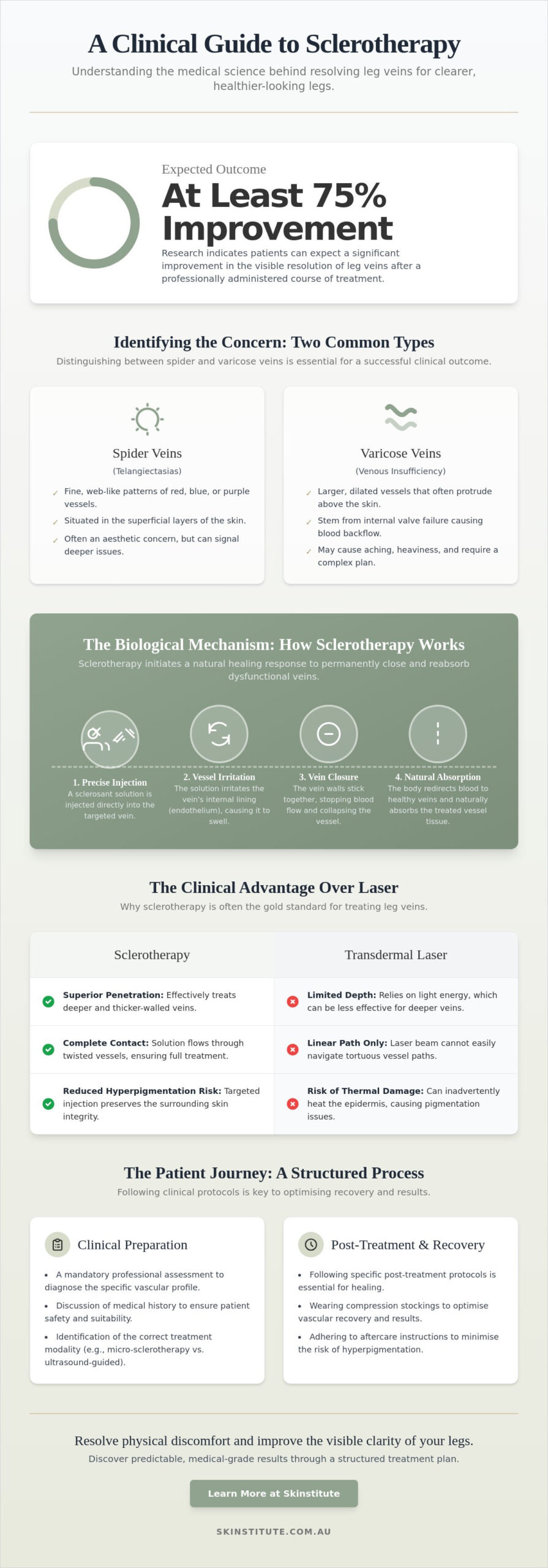
Research indicates that patients can expect at least a 75% improvement in the visible resolution of leg veins following a professionally administered course of sclerotherapy. For many individuals in Melbourne, the development of spider and varicose veins is rarely a matter of vanity alone; it often involves a genuine sense of physical heaviness and a loss of confidence in one’s appearance. You likely recognise the frustration of concealing your legs or enduring the dull ache that accompanies prolonged standing, yet you may feel uncertain about which treatments offer clinical results rather than temporary cosmetic fixes.
This guide provides a rigorous medical overview of how modern vein treatments utilise advanced biological closure to restore vascular integrity. We’ll examine the specific mechanisms of sclerosant interaction with the vessel wall, the physiological benefits of successful vein absorption, and the technical standards that define a high-quality clinical outcome for your leg health. By moving beyond surface-level descriptions, this article ensures you understand the precise science behind achieving clearer, healthier-looking legs through established medical protocols.
Key Takeaways
- Understand the physiological mechanism of endofibrosis and how specialised sclerosant agents initiate the permanent biological closure of compromised vessels.
- Learn to distinguish between micro-sclerotherapy and ultrasound-guided techniques to identify the most effective application of sclerotherapy for your specific vascular profile.
- Identify the essential clinical preparation steps and post-treatment protocols required to minimise the risk of hyperpigmentation and optimise vascular recovery.
- Discover how evidence-based medical interventions can resolve persistent physical discomfort while significantly improving the visible clarity of the legs.
- Gain perspective on the professional standards and technical mastery required to achieve predictable, medical-grade results through a structured treatment plan.
Defining Sclerotherapy: The Clinical Standard for Vein Closure
Sclerotherapy represents a cornerstone of vascular medicine, specifically engineered to address the structural failure of small to medium-sized leg veins. By Defining Sclerotherapy as a targeted chemical intervention, we recognise its primary function: the controlled irritation of the vessel’s internal lining to induce permanent closure. This procedure involves the precise injection of a specialised sclerosant solution directly into the lumen of the dysfunctional vein. Once introduced, the agent triggers a biological response that leads to the collapse of the vessel wall, eventually allowing the body to naturally reabsorb the tissue over several weeks.
This method remains the global gold standard for treating leg veins that are too large for superficial lasers but do not yet require invasive surgical intervention. Clinical data indicates that most patients can expect at least a 75% improvement in the appearance of their legs after completing a structured course of treatments. The efficacy of the procedure relies on the practitioner’s ability to match the concentration of the sclerosant to the specific diameter and pressure of the target vessel, ensuring a predictable and safe resolution of the vascular malformation.
Spider Veins vs. Varicose Veins: Identifying the Concern
Distinguishing between these conditions is essential for clinical success. Spider veins, or telangiectasias, present as fine, web-like patterns of red, blue, or purple vessels situated within the superficial layers of the dermis. While they’re often viewed as a purely aesthetic concern, they can sometimes signal deeper issues. In contrast, varicose veins are larger, dilated vessels that frequently protrude above the skin surface. These often stem from underlying venous insufficiency, where the internal valves fail to prevent the backflow of blood. A professional clinical assessment is mandatory to determine whether the concern is localised or part of a systemic vascular failure that requires a more complex management plan.
The Clinical Advantage over Laser Treatments
In the context of leg vein resolution, sclerotherapy frequently surpasses transdermal laser treatments due to its superior vessel penetration. Lasers rely on light energy to heat the blood within a vessel, which can be less effective for deeper or thicker-walled veins. Sclerosants maintain direct contact with the endothelium as they travel through the vessel’s natural path. This allows the treatment to reach tortuous or twisted vessels that are inaccessible to the linear path of a laser beam. Additionally, the procedure carries a reduced risk of post-inflammatory hyperpigmentation for many skin types. Thermal lasers can inadvertently damage the surrounding epidermis; however, targeted injections focus the biological response entirely within the vessel lumen to preserve the integrity of the skin surface.
The Biological Mechanism: How Sclerosants Resolve Vascular Imperfections
The success of vascular resolution is predicated on the precise chemical interaction between a sclerosant agent and the vascular endothelium. Unlike surgical ligation which physically removes a vessel, sclerotherapy relies on a controlled endovascular injury to initiate a biological healing response. When the sclerosant is introduced into the lumen, it acts as a specialised irritant that disrupts the cellular integrity of the vein’s internal lining. This process ensures that the vessel can no longer support blood flow, effectively decommissioning the dysfunctional vein while the circulatory system redirects blood to deeper, healthier pathways.
For patients in Melbourne, safety and predictability are maintained through the use of TGA-approved medications. These clinical-grade solutions are formulated to produce a consistent physiological response, reducing the likelihood of adverse reactions or incomplete vessel closure. Understanding the nuances of this biological transition is a key component of The Patient Journey, as it helps manage expectations regarding the timeline of visible results. The transition from a functional vessel to a resolved imperfection is not instantaneous; it follows a deliberate path of endofibrosis and subsequent metabolic absorption.
TGA-Approved Sclerosants: Liquid vs. Foam Agents
Clinicians typically utilise two primary agents in Australia: Sodium Tetradecyl Sulfate and Aethoxysklerol (Polidocanol). The choice of delivery format is determined by the vessel’s diameter and hemodynamic pressure. Liquid sclerosants are often the preferred modality for fine, superficial spider veins where the vessel volume is minimal. Conversely, “foam” sclerotherapy is utilised for larger varicose veins. By agitating the liquid agent with air or a physiological gas, the clinician creates a stable foam that displaces blood within the vessel. This ensures maximum contact with the vein walls and prevents the medication from being diluted too quickly by the bloodstream.
The Sclerosis Process: From Injection to Absorption
The transformation of the treated vessel occurs in three distinct clinical phases:
- Phase 1: Endothelial Irritation. Within seconds of injection, the sclerosant causes the vein walls to become “sticky,” leading to the immediate collapse of the vessel lumen.
- Phase 2: Endofibrosis. Over the following days, the body initiates a localized inflammatory response, converting the collapsed vein into a small, internal fibrotic cord. This sclerosis ensures the vessel is permanently sealed.
- Phase 3: Lymphatic Reabsorption. During the final stage, which spans several months, the body’s lymphatic system gradually metabolises and removes the fibrotic tissue.
This methodical biological progression is why professional sclerotherapy protocols prioritise patience and structured follow-up appointments to monitor the rate of absorption and ensure optimal vascular health.
Clinical Modalities: Micro-Sclerotherapy vs. Ultrasound-Guided Techniques
The selection of a specific clinical technique is a diagnostic decision based on the patient’s unique venous anatomy. A thorough resolution of vascular concerns often requires a multi-modal approach; addressing only the visible surface vessels without investigating the underlying “feeder” veins frequently leads to sub-optimal results or rapid recurrence. By categorising vessels based on their depth, diameter, and hemodynamic pressure, practitioners can apply the most effective form of sclerotherapy to ensure permanent biological closure across the entire vascular network.
While some patients may only require aesthetic refinement for fine surface patterns, others present with deeper structural failures that necessitate advanced imaging. In Australia, the clinical standard involves a methodical assessment to determine if the concern is localised to the dermis or if it stems from incompetent valves deeper within the leg. This distinction is vital for patient safety and determines whether the procedure is classified as a cosmetic refinement or a medically necessary intervention.
Micro-Sclerotherapy for Aesthetic Refinement
Micro-sclerotherapy is the definitive precision treatment for telangiectasias, commonly referred to as spider veins. This modality utilises high-magnification loupes and ultra-fine needles to access vessels that are often less than a millimetre in diameter. During this “direct vision” procedure, the clinician injects liquid sclerosants into the superficial vessels and their associated reticular veins. Reticular veins are the slightly deeper, blue-green vessels that act as the high-pressure source for surface-level clusters. By neutralising these source vessels, the practitioner reduces the risk of “matting,” a side effect involving the development of fine red vessels that occurs in approximately 10% of patients. A typical session involves 30 to 45 minutes of focused injections, followed by the immediate application of local compression.
Ultrasound-Guided Sclerotherapy (UGS) for Complex Veins
For vessels that cannot be identified through the skin surface, Ultrasound-Guided Sclerotherapy (UGS) provides the necessary visual mapping to treat deeper vascular pathology. This technique employs real-time sonography to guide the needle into incompetent trunk veins or malfunctioning valves with absolute precision. By visualising the internal anatomy, the clinician ensures the sclerosant is distributed exactly where the venous reflux originates, which is essential for preventing the recurrence of superficial veins. In the Australian medical landscape, Medicare provides rebates for the treatment of symptomatic varicose veins larger than 2.5mm in diameter, highlighting the clinical significance of UGS. This modality allows for the comprehensive management of complex, deeper vessels without requiring surgical incisions or general anaesthesia, maintaining a high standard of vascular comfort and safety.
The Patient Journey: Clinical Preparation and Post-Treatment Protocols
Achieving optimal vascular resolution requires a collaborative effort between the practitioner’s technical skill and the patient’s adherence to clinical protocols. While the injection phase of sclerotherapy is relatively brief, the physiological preparation of the target area and the subsequent management of the treated vessels are what determine the permanence of the results. In a clinical setting, we view the procedure as a sequence of events designed to minimise complications like hyperpigmentation or “matting” while maximising the rate of vessel absorption.
The procedure itself takes place in a methodical, controlled environment. After a final skin assessment, the practitioner uses ultra-fine needles to administer the sclerosant into the identified vessels. You’ll likely feel minor pinprick sensations, but the process is generally well-tolerated without the need for anaesthesia. Once the injections are complete, the clinician applies immediate local pressure and fits the required compression garments. This step is vital to ensure the vein walls remain in contact while the biological “stickiness” induced by the sclerosant begins to seal the vessel lumen.
Pre-Treatment Clinical Checklist
Preparation begins seven days before your scheduled appointment. It’s essential to discontinue the use of anti-inflammatory medications, such as ibuprofen or aspirin, and blood-thinning supplements like fish oil or vitamin E. These substances significantly increase the risk of post-procedural bruising and can interfere with the sclerosing process. On the day of treatment, the skin on your legs must be completely free of moisturisers, body oils, or tanning products. These can interfere with the adhesive dressings and the antiseptic preparation of the injection sites. A thorough review of your vascular history during the initial consultation ensures that any contraindications are professionally managed before we proceed.
Compression and Activity: The First 14 Days
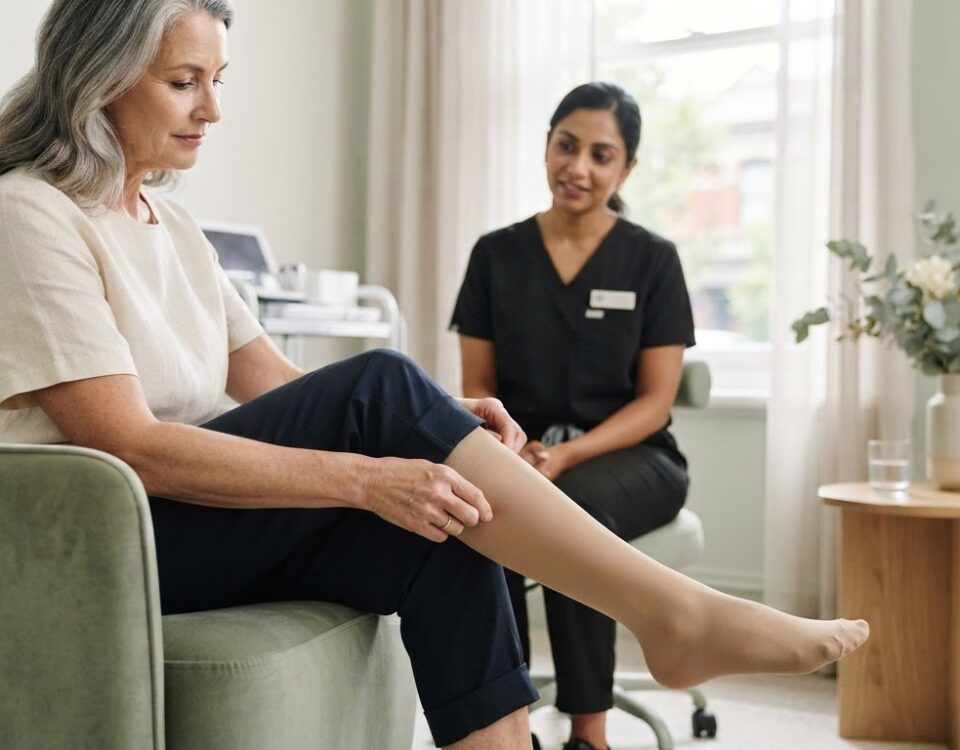
Adherence to post-treatment instructions is the single most influential factor in your recovery. Class 2 medical-grade compression stockings are non-negotiable; they provide the graduated pressure necessary to prevent the treated veins from reopening or filling with trapped blood. In the Melbourne climate, patients often find it more comfortable to schedule treatments during the cooler months. The requirement to wear stockings for up to 14 days can be challenging during an Australian summer. If you’re treated during warmer periods, it’s vital to remain in climate-controlled environments to avoid heat-induced vasodilation.
Daily activity is equally critical for a safe outcome. We recommend at least 30 minutes of walking every day to promote healthy circulation in the deep venous system. Conversely, you must avoid high-intensity heat, including saunas, hot baths, and vigorous exercise, along with direct UV exposure on the treated areas for at least two weeks. Thermal energy and sun exposure can trigger inflammation and lead to persistent staining of the skin. If you’re ready to begin your clinical journey, you can book a sclerotherapy consultation to receive a personalised treatment plan tailored to your vascular needs.
Specialised Vein Management at Skinstitute Melbourne
Skinstitute Melbourne operates with a 26-year legacy in medical-grade aesthetic and regenerative treatments, positioning our clinic as a cornerstone of vascular excellence in the local community. We don’t view sclerotherapy as a standalone cosmetic fix, but as a sophisticated medical intervention that requires a deep understanding of circulatory physiology. Our commitment to clinical precision ensures that every procedure is underpinned by evidence-based protocols, prioritising long-term vascular health over immediate, surface-level changes. By maintaining a serious and grounded approach, we provide patients with a reassuring sense of stability and technical proficiency throughout their treatment journey.
Selecting a clinical environment for vascular work is a decision that impacts both safety and the quality of the final resolution. At Skinstitute, we provide a professional, medical-grade setting where the focus remains entirely on technical mastery and patient wellbeing. This environment allows us to integrate vascular treatments into a broader, holistic skin health plan, ensuring that the resolution of leg veins complements the overall health and appearance of the lower limbs.
Expert Assessment in a Clinical Environment
A successful outcome begins with a detailed diagnostic approach. Our Melbourne practitioners prioritise an exhaustive initial assessment to map the specific patterns of your vascular concerns. With over two decades of industry experience, we possess the refined expertise necessary to manage complex vascular networks that less experienced providers might overlook. We identify the precise depth and pressure of target vessels to select the optimal sclerosant concentration, reducing the likelihood of incomplete closure or recurrence. Safety remains our primary objective; we adhere to rigorous standards for sterile technique and patient monitoring, ensuring that every injection is performed with the highest level of clinical integrity.
Your Personalised Vascular Treatment Plan
Every patient requires a tailored strategy to achieve optimal clearance. While some localised concerns may resolve quickly, clinical data suggests that most patients require two to three sessions to achieve the desired 75% improvement in leg clarity. We coordinate your sclerotherapy sessions with other advanced rejuvenation therapies when appropriate. For example, patients seeking comprehensive lower limb refinement may benefit from High Intensity Focused Ultrasound (HIFU) to address skin laxity or Rejuran to improve the biological quality of the skin tissue. This integrated approach ensures that the resolution of your veins occurs within the context of total skin health. To begin your journey toward healthier, clearer legs, we invite you to Organise a clinical consultation at Skinstitute Melbourne to discuss your specific vascular requirements.
Restoring Vascular Integrity and Confidence
Achieving a successful resolution for spider and varicose veins requires a deep understanding of endovascular biology and the precise application of chemical sclerosants. We’ve explored how the transition from a dysfunctional vessel to permanent biological reabsorption relies on the methodical selection of clinical techniques, whether through micro-precision or ultrasound-guided mapping. By adhering to rigorous post-treatment protocols and medical-grade compression, you can ensure that the results of your sclerotherapy are both predictable and enduring.
At Skinstitute Melbourne, our approach is defined by 26 years of clinical experience and a commitment to evidence-based vascular protocols. We utilise medical-grade aesthetic technology to provide a safe, structured environment for your recovery. Taking the first step toward improved vascular comfort and clearer skin begins with a professional diagnostic assessment tailored to your unique circulatory needs. We look forward to partnering with you in your journey toward healthier legs. Book Your Clinical Vein Assessment at Skinstitute Melbourne today.
Frequently Asked Questions
Is sclerotherapy painful, and will I need anaesthetic?
Sclerotherapy is a minimally invasive procedure that doesn’t require local or general anaesthetic. Patients typically experience a mild pinprick sensation as the ultra-fine needle enters the skin, followed by a brief stinging or cramping sensation as the sclerosant interacts with the vessel lining. These sensations are transient and resolve shortly after the injection is complete. Most individuals find the process manageable and can maintain a comfortable conversation throughout the treatment.
How many sclerotherapy sessions are typically required for leg veins?
Most patients require a series of two to three sessions to achieve optimal clearance of the target vessels. While initial improvements are visible after the first appointment, clinical data suggests that a structured course is necessary to reach at least a 75% improvement in the appearance of the legs. The exact number of sessions depends on the density of the vascular network and the body’s individual rate of biological absorption.
When is the best time of year to have sclerotherapy in Melbourne?
The cooler months between April and September represent the ideal window for sclerotherapy in Melbourne. This timing allows patients to wear the required medical-grade compression stockings comfortably without the discomfort of the summer heat. Additionally, treated areas must be protected from direct UV exposure to prevent hyperpigmentation, which is more easily managed when the legs are covered by winter clothing.
Are the results of sclerotherapy permanent, or will veins return?
Vessels that are successfully treated and absorbed by the body are permanently resolved and cannot reopen. However, the procedure doesn’t alter the underlying genetic or lifestyle factors that contribute to venous insufficiency. While the specific veins treated are gone, it’s possible for new spider or varicose veins to develop in the surrounding tissue over time, necessitating occasional maintenance sessions to preserve the results.
Can I return to work immediately after my sclerotherapy treatment?
You can typically return to your professional duties immediately following your session, provided your role doesn’t involve heavy lifting or strenuous physical exertion. Sclerotherapy is a walk-in, walk-out procedure that requires no clinical downtime. We actually mandate a 30-minute walk immediately after the appointment to promote healthy circulation. If your work involves prolonged standing, you’ll need to ensure you can take regular walking breaks.
Are there any side effects like bruising or “trapped blood” after the procedure?
Transient bruising at the injection sites is a common physiological response that typically resolves within two weeks. Some patients may experience “trapped blood” within the closed vessel, which may require a simple clinical drainage during a follow-up visit. Other potential side effects include temporary skin staining or the development of fine red vessels known as matting, which studies show occurs in approximately 10% of cases.
Does Medicare or private health insurance cover sclerotherapy in Australia?
Medicare provides a rebate for the treatment of symptomatic varicose veins that exceed 2.5mm in diameter. Patients can claim for up to six such treatments per calendar year when the procedure meets specific clinical criteria. Purely cosmetic treatments for fine spider veins generally don’t qualify for Medicare assistance. Private health insurance coverage varies significantly between providers, so we recommend contacting your insurer to verify your specific policy entitlements.
What happens if I don’t wear my compression stockings as directed?
Failure to adhere to the compression protocol significantly increases the risk of the treated vein reopening or filling with trapped blood. Compression is essential to keep the irritated vein walls in contact so they can fuse together during the fibrotic phase. Without this external pressure, you’re more likely to experience persistent skin staining and a less effective overall resolution of the vascular imperfections.