Fractional CO2 Laser: Understanding Skin Resurfacing Results
June 9, 2026
What to Expect During Your Cosmetic Injectable Appointment
June 11, 2026
What if the most critical factor in your aesthetic journey isn’t the volume of product used, but the clinical rigour of the prescription behind it? For many patients, the desire for facial rejuvenation is often tempered by a legitimate concern regarding unnatural results or the complexities of current Australian health regulations. Understanding the landscape of prescription injectables melbourne is no longer just about aesthetics; it’s about navigating a highly regulated medical environment where safety and anatomical precision are paramount. You’ve likely noticed that the industry is changing, and you deserve a clear explanation of what these medical standards mean for your care.
You likely recognise that a successful outcome depends on more than just a surface-level application. This article provides a comprehensive, medical-grade overview of the regulatory landscape, biological mechanisms, and safety protocols essential for prescription cosmetic treatments. We’ll examine the specific impact of the March 2024 TGA advertising updates and the September 2025 AHPRA guidelines. We also detail how these substances interact with your skin’s underlying physiology to produce subtle, sustainable contouring. By the end of this guide, you’ll have the technical insight necessary to choose a practitioner who prioritises clinical excellence and long-term skin health.
Key Takeaways
- Understand why aesthetic treatments are classified as Schedule 4 medicines and how recent TGA updates prioritise clinical consultations over marketing.
- Gain technical insight into the biological interaction of prescription injectables melbourne with your facial anatomy to achieve subtle, natural results.
- Recognise the clinical overlap between cosmetic rejuvenation and therapeutic treatments for medical concerns like bruxism or excessive sweating.
- Learn how to evaluate a clinic’s safety standards through mandatory facial mapping protocols and a rigorous medical assessment process.
- See how long-term skin health is supported by combining medical-grade injectables with advanced technologies like HIFU and fractional CO2.
Understanding the Regulatory Framework for Prescription Injectables in Australia
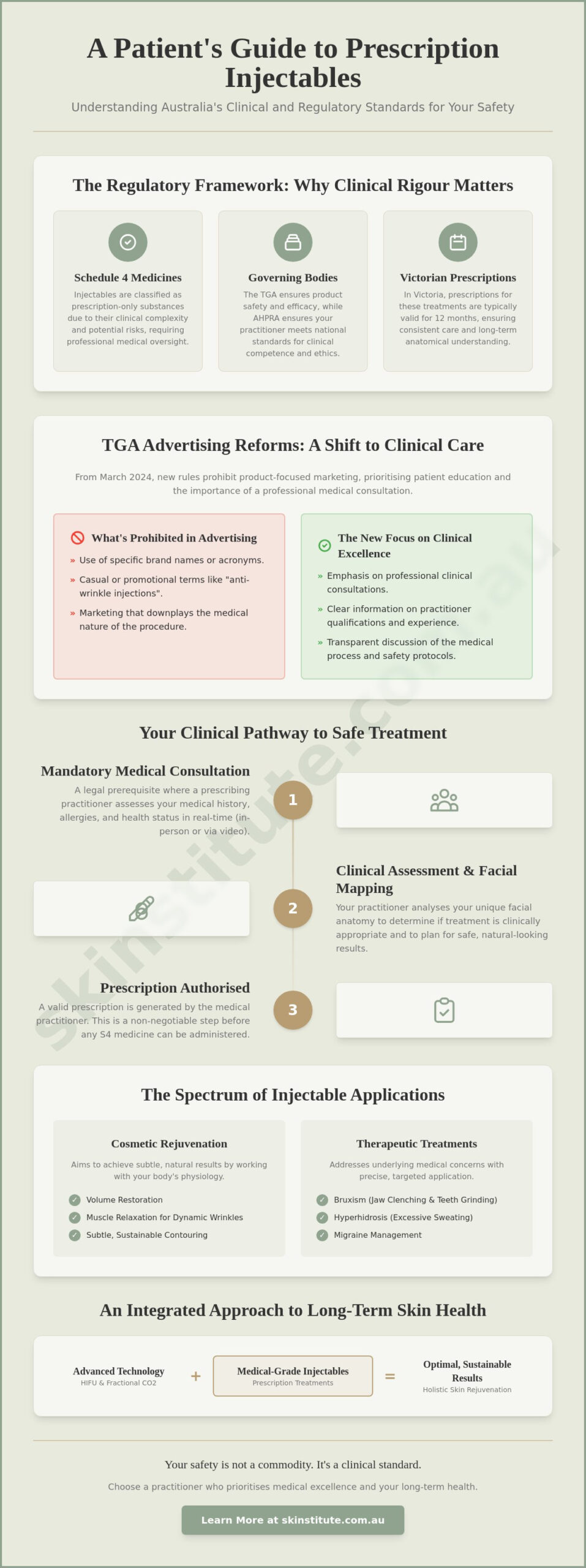
In Australia, substances used for volume restoration or muscle relaxation are classified as Schedule 4 (S4) medicines. This classification identifies them as prescription-only substances that possess a higher level of risk and clinical complexity than over-the-counter products. The Therapeutic Goods Administration (TGA) maintains strict oversight of these substances to ensure they meet rigorous safety and efficacy standards before being approved for use in the Australian market. For patients seeking prescription injectables melbourne, it’s vital to understand that these treatments are medical procedures, not simple beauty services. Every administration must be preceded by a formal prescription from a registered medical practitioner or nurse practitioner who is currently registered with the Australian Health Practitioner Regulation Agency (AHPRA). This registration ensures that your injector has met the national standards for clinical competence and ethical practice.
The Victorian regulatory environment requires specific adherence to state-based drug and poison legislation. While some national guidelines provide a baseline, Victoria maintains its own requirements for how these substances are stored, prescribed, and administered. For example, prescriptions for these medicines in Victoria are generally valid for 12 months. This duration allows for a consistent treatment plan under the supervision of a single prescriber, ensuring continuity of care and a deeper understanding of your facial anatomy over time.
The Legal Requirement for Medical Consultations
A patient’s journey begins with a comprehensive medical assessment. This is a legal prerequisite. During this consultation, a prescribing doctor or nurse practitioner evaluates your medical history, including allergies, current medications, and previous aesthetic treatments. This process ensures that the biological profile of the chosen injectable filler or neuromuscular blocker is compatible with your health status. A clinic cannot legally treat you without a valid prescription generated from such a consultation. This assessment must occur in real-time, either in person or via a secure video link, to ensure the practitioner can accurately map facial anatomy and discuss potential contraindications. Your safety depends on this initial diagnostic phase, where the practitioner determines if the treatment is clinically appropriate for your specific physiological needs.
TGA Advertising Guidelines in 2026
As of March 7, 2024, the TGA introduced stringent updates to advertising guidelines for health services. Clinics are now prohibited from using specific brand names, acronyms, or even general terms like “anti-wrinkle injections” in their promotional materials. These changes aim to move the focus away from product branding and toward professional clinical consultation. Patients can identify reputable providers by looking for clear information regarding practitioner qualifications and a transparent explanation of the clinical process. While you won’t see brand names on a clinic’s website, you should expect a detailed discussion of the specific prescription-only medical treatments available during your private consultation. This regulatory shift ensures that your choice of clinic is based on medical expertise and safety standards rather than marketing claims or brand recognition.
The Biological Mechanism: How Aesthetic Injectables Interact with the Body
Understanding the biological interaction of prescription injectables melbourne requires a detailed look at cellular signalling and tissue integration. These substances are not merely superficial additions; they are pharmacological agents that alter physiological processes within the dermis and underlying musculature. When administered, these medicines engage with specific receptors to either modulate muscle activity or provide structural scaffolding. Because every patient possesses a unique anatomical profile, the way these substances are metabolised and integrated varies significantly. Patients should consult AHPRA’s patient safety fact sheet to understand the clinical risks associated with these pharmacological interactions before proceeding with treatment.
Neuromodulators and Muscle Function
Neuromodulators function by intercepting the chemical messages sent from nerves to muscles, a process known as acetylcholine blockade. When a practitioner injects these medicines into targeted muscle groups, the substance prevents the release of acetylcholine at the neuromuscular junction. This temporary inhibition reduces the muscle’s ability to contract, which in turn softens the appearance of dynamic wrinkles on the skin’s surface. Precision in both dosage and placement is mandatory to maintain natural facial expression. An excessive dose or incorrect anatomical placement can lead to a ‘frozen’ appearance or unintended muscle weakness in adjacent areas. The duration of this effect typically spans three to four months, though individual metabolic rates and the strength of the target muscle will influence how quickly the body restores normal nerve signalling.
Bio-Stimulation and Tissue Regeneration
The next generation of prescription injectables melbourne moves beyond temporary volume replacement toward active tissue regeneration. Bio-stimulators, including polynucleotides and exosomes, work by activating fibroblasts, the cells responsible for producing collagen and elastin. Unlike traditional fillers that provide immediate physical volume, these substances signal the body to repair its own extracellular matrix. For instance, the use of rejuran melbourne utilises salmon-derived DNA fragments to improve skin elasticity and hydration at a cellular level. This mechanism supports long-term skin health by thickening the dermis and improving the skin’s overall structural integrity.
The metabolic clearance of these substances is a gradual process involving enzymatic breakdown and the body’s lymphatic system. Hyaluronic acid fillers are eventually broken down by hyaluronidase, a naturally occurring enzyme, while bio-stimulators are integrated into the tissue before their components are recycled or excreted. Establishing a long-term treatment plan with an experienced practitioner allows for the careful monitoring of these biological changes, ensuring that prescription injectables continue to support your unique facial structure safely and effectively.
Navigating the Spectrum: Cosmetic vs. Therapeutic Injectables
It’s essential to distinguish between the various classes of prescription injectables melbourne patients might encounter in a clinical setting. While metabolic injections for weight management have gained significant public attention, they operate on hormonal pathways entirely distinct from aesthetic medicines. Aesthetic injectables primarily target the neuromuscular system or the dermal matrix to restore facial volume and improve skin quality. Understanding this distinction is the first step in clinical safety, as the physiological objectives and potential side effects of these two categories are fundamentally different. A patient seeking facial rejuvenation requires a practitioner who understands the specific bio-mechanics of the face, rather than one focused on systemic metabolic regulation.
Many aesthetic applications of these medicines are considered “off-label” use. This means the substance is being utilised for a purpose other than its original TGA-approved indication, such as treating the lower face with medicines originally approved for the upper face. While off-label prescribing is a common and legal part of medical practice, it requires a higher threshold of practitioner expertise to manage the complexities of facial anatomy. Managing patient expectations is critical when combining different modalities; for example, a patient might require both volume restoration and muscle relaxation to achieve a cohesive result. The practitioner must balance the biological impact of each substance to ensure they complement each other without compromising the natural movement of the face.
Therapeutic Applications in Cosmetic Clinics
Neuromodulators, often associated with wrinkle reduction, have extensive therapeutic utility. In a clinical setting, these medicines are frequently utilised to manage bruxism, a condition characterised by involuntary teeth grinding and jaw clenching. By injecting the masseter muscles, practitioners can reduce the force of contraction, which alleviates dental wear and can also slim the lower face. Similarly, hyperhidrosis, or excessive sweating, is effectively managed by blocking the chemical signals that activate sweat glands. This is particularly relevant in Melbourne’s variable climate, where patients seek reliable relief from physical discomfort. Chronic migraine management also falls under this medical umbrella, requiring precise anatomical mapping to achieve therapeutic efficacy.
Why Specialisation Matters
Seeking aesthetic results from medical providers who don’t specialise in cosmetic medicine carries inherent risks. While many practitioners are authorised to prescribe prescription injectables melbourne, the art of facial contouring requires an intimate understanding of aesthetic proportions and light reflection on the skin. Skinstitute prioritises the intersection of regenerative medicine and aesthetics, moving beyond a “one-size-fits-all” model. A bespoke clinical plan considers your unique bone structure and skin thickness, ensuring that therapeutic treatments, such as masseter injections, don’t inadvertently compromise your facial harmony. This level of technical mastery ensures that every intervention supports long-term skin health while addressing specific physical concerns with precision and safety.
Clinical Assessment and Safety: The Melbourne Patient’s Checklist
Selecting a provider for prescription injectables melbourne requires more than a cursory review of social media portfolios. It demands a systematic evaluation of the clinical environment and the practitioner’s medical protocols. A high-quality assessment starts with a comprehensive facial analysis, where the practitioner maps the unique vascular and muscular architecture of your face. This mapping is essential to ensure that the placement of substances avoids critical structures and achieves the desired physiological outcome. Every patient should expect a transparent discussion regarding the specific medicines being prescribed, their biological function, and the expected timeline for results. For a detailed overview of what this process involves from start to finish, our guide on what to expect during your cosmetic injectables Melbourne appointment provides a thorough clinical walkthrough of each stage.
Identifying High-Quality Clinical Environments
A dedicated medical clinic must adhere to strict sterilisation and hygiene standards that mirror those found in surgical settings. S4 medicines are sensitive to temperature and light; therefore, they must be stored in monitored medical refrigerators to maintain their pharmacological integrity. The “back room” of a non-medical facility, such as a hair salon, cannot provide the necessary environment for safe administration or the management of medical emergencies. Advanced clinics in Melbourne now utilise portable ultrasound technology to visualise deep tissue structures and blood vessels in real-time. This technology adds a critical layer of safety by ensuring that injections avoid intra-arterial placement, which significantly reduces the risk of severe complications.
Risk Mitigation and Complication Management
While minor bruising or swelling is a common physiological response to the injection process, more serious complications like vascular occlusion require immediate medical intervention. A vascular occlusion occurs when a substance inadvertently enters or compresses a blood vessel, impeding blood flow to the surrounding tissue. Reputable clinics must have emergency protocols in place, which include having dissolving agents like hyaluronidase readily available on-site. This enzyme can rapidly break down hyaluronic acid fillers to restore circulation if a complication is detected. Follow-up appointments are not optional; they allow the practitioner to monitor the integration of the medicine and ensure the tissue is healing as expected. If you are ready to begin a structured, medical-grade rejuvenation plan, you can book a clinical consultation with our experienced team to discuss your specific anatomical needs.
Adherence to pre-treatment and post-treatment clinical instructions is vital for mitigating risks. For example, avoiding blood-thinning supplements before your appointment can reduce the likelihood of significant haematomas. Patients should view these treatments as part of a long-term maintenance strategy rather than a one-time intervention. A staggered approach allows for subtle adjustments that respect the natural ageing process and preserve facial harmony over several years. This methodical pace ensures that the skin and underlying tissues adapt gradually, resulting in a more sustainable and natural aesthetic outcome.
The Skinstitute Approach: 26 Years of Medical Aesthetic Excellence
Skinstitute’s presence in the Melbourne aesthetic industry spans over two decades, providing a foundation of clinical stability that is rare in the current market. With 26 years of experience, our approach to prescription injectables melbourne is rooted in an evidence-based framework that prioritises safety and patient longevity. This legacy allows us to move beyond the superficial application of medicines, drawing on decades of clinical data to predict how different skin types and anatomical structures will respond to treatment over time. We operate with the quiet confidence of a seasoned medical practice, valuing technical mastery and ethical responsibility above marketing trends.
Our guiding philosophy, ‘Regeneration over Alteration,’ dictates that every medical intervention should support the skin’s natural architecture rather than distorting it. We don’t aim for the radical changes often seen in trend-driven clinics; instead, we utilise precise pharmacological agents to restore what time has diminished. This approach ensures that the results are not only subtle and natural but also biologically sustainable. By focusing on the underlying health of the dermal matrix, we help patients achieve a refreshed appearance that respects their unique facial character.
Synergistic Treatments for Superior Results
To achieve superior results, we often integrate multiple modalities that work in harmony with the body’s natural processes. While injectables address volume loss and muscle activity, technologies such as HIFU (High Intensity Focused Ultrasound) provide deep structural lifting that pharmacological agents alone cannot replicate. For patients requiring mechanical support, PDO thread lifting can be utilised to reposition tissue, creating a firmer foundation for subsequent volume restoration. We also frequently incorporate fractional CO2 laser resurfacing to improve skin texture and tone. This combination ensures that the skin’s surface quality matches the structural improvements provided by prescription injectables melbourne, resulting in a cohesive and healthy aesthetic outcome tailored to your specific age group.
Your Journey at Skinstitute
Your journey at our Melbourne centre begins with a thorough medical assessment. This initial consultation is a deep dive into your skin’s physiology and your long-term health goals. Transparency is the cornerstone of our process; we provide an honest representation of what medical science can achieve for your specific concerns. We believe that an informed patient is a safe patient, which is why we take the time to explain the ‘why’ behind every clinical recommendation. Following your treatment, we establish a monitoring plan to track your skin’s health and ensure that your results remain optimal over the coming years. If you are seeking a partner in your aesthetic journey who values precision and medical integrity, we invite you to book a consultation with our experienced clinical team to discuss your personalised rejuvenation plan.
Your Next Step Toward Medically Sound Facial Rejuvenation
Navigating the world of prescription injectables melbourne requires more than aesthetic curiosity; it demands a clear understanding of regulatory compliance, biological mechanisms, and the clinical rigour that separates safe, sustainable outcomes from superficial interventions. The regulatory framework exists to protect you, and choosing a practitioner who operates transparently within it is the single most important decision you’ll make in this process.
Three principles should guide your decision: verify that your provider holds current AHPRA registration, confirm that a formal medical assessment precedes any treatment, and seek a clinic whose philosophy prioritises regenerating your skin’s natural architecture rather than simply altering its surface appearance.
At Skinstitute, our team of AHPRA-registered practitioners brings over 26 years of medical aesthetic experience and genuine specialisation in regenerative skin therapies to every consultation. We believe an informed patient achieves the best long-term results, and we’re ready to build a clinical plan that genuinely suits your anatomy and health goals.
Book a clinical consultation with Skinstitute and take the first confident step toward medically precise, sustainable facial rejuvenation.
Frequently Asked Questions
Do I need a GP referral for prescription injectables in Melbourne?
No, you do not require a referral from a General Practitioner to access these treatments. However, because these substances are classified as Schedule 4 medicines, a formal clinical consultation with a prescribing medical practitioner or nurse practitioner is a legal requirement. This assessment occurs within the clinic to ensure the treatment is medically appropriate for your physiological profile before a prescription is issued.
How long do the results of cosmetic injectables typically last?
The longevity of results depends on the specific substance used and your individual metabolic rate. Neuromodulators typically maintain their effect for three to four months as the body gradually restores nerve signalling to the muscles. Dermal fillers generally provide structural support for six to eighteen months, though highly mobile areas like the lips may process the product more rapidly than the cheeks or jawline.
Are prescription injectables painful, and what is the recovery time?
Most patients report only minimal discomfort, often described as a brief pinching or stinging sensation during the administration process. We utilise fine-gauge needles and topical anaesthetics to manage sensitivity effectively. Recovery time is negligible for the majority of patients, allowing for an immediate return to daily activities, though minor localised swelling or bruising may persist for forty-eight hours after the procedure.
Can I get cosmetic injections while pregnant or breastfeeding?
No, clinical treatments involving prescription injectables melbourne are not performed on patients who are pregnant or breastfeeding. There is currently insufficient clinical data to confirm the safety of these pharmacological agents for foetal development or their presence in breast milk. Ethical medical standards dictate that these elective procedures be postponed until after the pregnancy and breastfeeding period are complete.
What is the difference between anti-wrinkle injections and dermal fillers?
Anti-wrinkle injections function by temporarily blocking the chemical signals that cause muscle contractions, thereby smoothing the dynamic lines caused by facial expressions. In contrast, dermal fillers are gel-like substances injected beneath the skin to restore lost volume, smooth deep folds, or enhance facial contours. While one modulates muscle activity, the other provides physical scaffolding to the dermal and sub-dermal tissues.
How can I tell if my injector is properly qualified in Victoria?
You should verify that your practitioner is registered with the Australian Health Practitioner Regulation Agency (AHPRA) by searching their public register. In Victoria, only registered medical practitioners, dentists, or nurses acting under medical supervision are authorised to administer these substances. A reputable clinic will be transparent about their staff’s clinical credentials and their adherence to national safety standards for prescription injectables melbourne.
What should I avoid doing immediately after my injectable appointment?
Avoid vigorous physical exercise, alcohol consumption, and exposure to extreme heat, such as saunas or direct sunlight, for at least twenty-four hours. These activities increase blood circulation and can exacerbate swelling or bruising at the injection sites. You should also refrain from massaging the treated areas or lying flat for four hours post-treatment to ensure the medicine remains in the precise anatomical location intended by the practitioner.
Are there any long-term risks associated with prescription injectables?
While these treatments have a high safety profile when administered by seasoned professionals, potential long-term risks include the development of delayed-onset nodules or unintended tissue changes. Choosing a practitioner with extensive experience in regenerative medicine ensures that your treatment plan accounts for the cumulative biological impact on your skin. Consistent monitoring during follow-up appointments is essential to maintain tissue health and ensure natural-looking results over several years.