PDO Thread Lift Recovery Time: A Clinical Timeline and Aftercare Guide
August 9, 2026
City Skin Clinic vs Skinstitute for Fillers: A Clinical Comparison for Melbourne Patients
August 11, 2026
Did you know that while clinical studies show patient satisfaction for thread lifts can reach 99% after six months, approximately 5% of cases involve thread exposure? It’s natural to feel a degree of scepticism toward marketing that promises a surgical-grade lift without discussing the underlying biological complexities. You’re likely concerned about the potential for permanent scarring or facial damage, and you’re right to prioritise safety over convenience.
This article provides a detailed medical analysis of the risks of thread lifting procedures, focusing on the specific side effects and clinical protocols used to mitigate them. We’ll explore the physiological differences between transient healing responses, such as the 26% incidence rate of bruising, and serious complications that require professional intervention. By examining the technical mechanics of PDO materials and the latest AHPRA guidelines, we’ll give you a clear framework for distinguishing between normal recovery and genuine clinical issues. You’ll gain the knowledge necessary to navigate the Melbourne aesthetic market with confidence, understanding exactly how to identify a practitioner who values anatomical precision and evidence-based results over superficial trends.
Key Takeaways
- Understand how Polydioxanone (PDO) functions as a biocompatible polymer to provide both immediate mechanical support and long-term biological collagen synthesis.
- Learn to distinguish between expected transient side effects, such as minor swelling or bruising, and the more serious risks of thread lifting procedures like infection or thread migration.
- Discover the importance of anatomical precision and how an experienced practitioner navigates facial “danger zones” to protect vital nerves and vascular structures.
- Identify the essential clinical protocols, including mandatory pre-treatment consultations and aseptic techniques, that are required to ensure a safe and predictable outcome.
- Gain insights into the Melbourne standard of care, where 26 years of clinical expertise and medical-grade materials are used to prioritise patient safety and skin health.
Understanding the Mechanism of PDO Thread Lifting
Polydioxanone (PDO) is a synthetic, absorbable polymer characterized by its high initial tensile strength and excellent biocompatibility. While it has been utilized in cardiovascular and orthopaedic surgeries for decades, its application in aesthetic medicine provides a sophisticated method for facial contouring. This thread lift overview highlights how the procedure serves as a minimally invasive alternative to traditional surgery by repositioning sagging tissue without extensive incisions. The material is entirely non-pyrogenic and is eventually broken down by the body through natural processes.
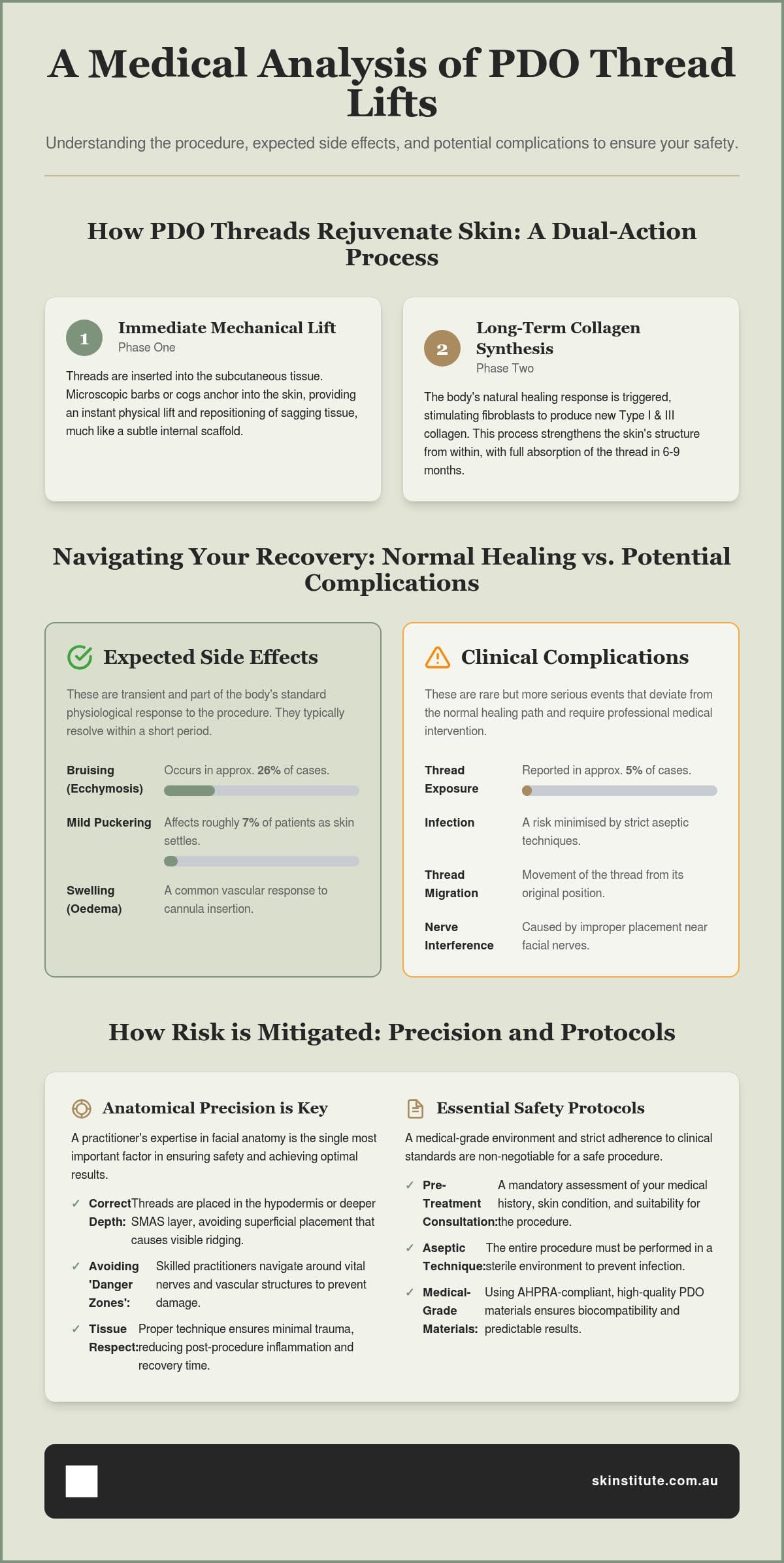
The procedure functions through a dual-action mechanism. Initially, the physical placement of the thread provides a mechanical lift by anchoring into the subcutaneous tissues using microscopic barbs or cogs. This is followed by a secondary biological phase where the material induces a localized inflammatory response. Understanding the risks of thread lifting procedures begins with recognizing how these threads interact with the body’s natural healing systems to create structural change.
The Biological Interaction of PDO
As the PDO material resides within the tissue, it triggers a controlled foreign body response. This process stimulates fibroblasts to synthesize new collagen, specifically Type I and Type III fibres, which reinforce the skin’s structural matrix. The threads do not remain indefinitely. They undergo natural hydrolysis, a chemical process where the polymer is broken down by water within the body. Typically, the thread is completely absorbed within six to nine months. The newly formed collagen scaffold persists well beyond this period, providing sustained tissue support.
Anatomical Layers and Thread Placement
Precision in depth is vital for clinical success and safety. Threads are generally positioned within the hypodermis, the fatty layer beneath the dermis, which provides sufficient purchase for the thread’s anchoring mechanisms. If the placement is too superficial, patients may experience visible ridging or “tethering,” where the thread’s path is discernible on the skin’s surface.
Deeper placement often involves the Subcutaneous Musculoaponeurotic System (SMAS). The SMAS is the fibrous layer that connects facial muscles to the skin. Targeting this layer allows for a more robust and structural rejuvenation of the mid-face and jawline. Failure to respect these anatomical boundaries is a primary factor in the risks of thread lifting procedures, potentially leading to suboptimal aesthetic outcomes or nerve interference if the practitioner lacks sufficient anatomical expertise.
Categorising the Risks: Transient Side Effects vs Clinical Complications
Distinguishing between a standard physiological healing response and a genuine adverse event is essential for patient safety and psychological wellbeing. Professional Melbourne practitioners prioritise clinical transparency, ensuring patients understand that an inflammatory response is a necessary component of tissue remodelling. Identifying the risks of thread lifting procedures requires a clear understanding of what constitutes a normal recovery trajectory versus a deviation from expected clinical outcomes.
Clinical data provides a structured roadmap for these expectations. A meta-analysis of thread lift complications involving over 2,800 patients indicates that while some side effects are statistically common, major complications remain rare when performed in a medical environment. The initial 72-hour post-procedure window is the most critical period for monitoring. During this time, practitioners assess the patient’s progress to ensure that any early signs of complication are addressed before they escalate into more significant issues.
Transient Side Effects (Normal Healing)
Most patients will experience some degree of oedema (swelling) and ecchymosis (bruising), with bruising reported in approximately 26% of cases. These are standard vascular responses to the insertion of the cannula and thread material. You might also notice mild skin puckering or dimpling, which occurs in roughly 7% of patients as the tissue adjusts to the new mechanical tension. These effects typically resolve spontaneously within 14 days as the threads settle. A sensation of tightness or restricted movement is also common while the inflammatory phase initiates collagen synthesis.
Clinical Complications (Adverse Events)
True complications are infrequent but require immediate medical management. Thread extrusion, or “spitting,” occurs in about 5% of cases and often results from the body’s attempt to reject the material or incorrect placement depth. Infection and the formation of biofilms, though occurring in only 2% of patients, are serious risks that are mitigated through strict aseptic techniques. Nerve injury or paraesthesia (numbness) can occur in 10% of cases if threads interfere with sensory branches; however, these are often temporary if managed correctly. Vascular compromise is the most severe, albeit extremely rare, clinical emergency requiring urgent intervention. If you’re concerned about your recovery, seeking a professional clinical assessment can provide clarity and ensure your safety remains the priority.
Anatomical Precision: How Practitioner Expertise Mitigates Risk
The safety of a thread lift is fundamentally dependent on the practitioner’s understanding of three-dimensional facial anatomy. While the procedure is minimally invasive, the risks of thread lifting procedures escalate significantly when threads are placed without regard for underlying vascular and neural networks. A thorough clinical assessment is the first step in mitigating these risks, as it allows the practitioner to evaluate skin laxity and determine if the patient’s tissue can support the mechanical load of the threads. This stage is vital for identifying patients who may be better suited for alternative treatments like HIFU or prescription injectables.
We must distinguish between the “fox eye” lift, often marketed through social media, and medically sound lateral brow rejuvenation. The former frequently involves aggressive vectors that may compromise tissue integrity or lead to unnatural puckering. In contrast, a clinical approach focuses on restoring the lateral brow’s position by anchoring threads into stable anatomical structures, ensuring a result that respects the natural ageing process. This precision ensures that the lifting effect remains subtle and harmonised with the rest of the facial features.
Navigating Facial Danger Zones
Navigating the face requires avoiding specific “danger zones” such as the parotid gland and the temporal branch of the facial nerve. A clinical report on thread lift complications demonstrates that many adverse outcomes, such as persistent pain or motor deficit, stem from a failure to identify these landmarks. Practitioners rely on constant tactile feedback during the insertion of the cannula to sense the resistance of different tissue layers. This sensory awareness ensures the thread remains in the safe subcutaneous plane, avoiding the angular artery and branches of the trigeminal nerve that provide facial sensation.
Material Selection and Integrity
The integrity of the materials used is just as critical as the technique. Medical-grade PDO threads are manufactured under strict sterility protocols to prevent the introduction of pathogens. The design of the cogs and barbs is engineered for optimal tissue engagement, providing the necessary friction to hold the skin in its new position without tearing the surrounding fascia. Using unregulated or sub-standard materials increases the risks of thread lifting procedures, particularly regarding thread breakage or delayed inflammatory reactions. Our 26 years of experience ensures that only high-specification, TGA-compliant materials are utilised within our Melbourne clinic to maintain the highest standards of patient safety.
Clinical Protocols for Minimising Adverse Outcomes
The transition from a high-risk aesthetic procedure to a predictable clinical outcome is achieved through the implementation of rigorous medical protocols. Minimising the risks of thread lifting procedures begins long before the first cannula is inserted. It requires a systematic approach to patient selection, sterile environment maintenance, and structured post-operative supervision. By following a methodical sequence of clinical checkpoints, practitioners ensure that the biological integration of the PDO material occurs without interference from external pathogens or mechanical failure. This disciplined framework prioritises safety over speed, reflecting the professional standards expected in a clinical environment.
Pre-Treatment Safety Screening
A comprehensive medical history check is the fundamental cornerstone of patient safety. In accordance with AHPRA guidelines that took effect on 2 September 2025, all practitioners must conduct a real-time consultation to assess suitability and perform mandatory psychological screening. We specifically screen for contraindications such as active systemic infections, uncontrolled autoimmune disorders, or localised skin conditions that might compromise the healing process. Additionally, managing blood-thinning medications or supplements is vital to reduce the 26% incidence rate of ecchymosis identified in recent clinical data. This phase also involves aligning patient expectations with realistic physiological outcomes, ensuring that marketing claims are replaced with evidence-based projections of what the procedure can actually achieve.
Strict aseptic techniques are maintained throughout the procedure to prevent bacterial entry. This involves the use of medical-grade skin preparation solutions and a sterile field to mitigate the risk of biofilm formation. Because PDO threads are foreign bodies, the introduction of even minor contaminants can lead to delayed infections that are difficult to treat. Our commitment to surgical-grade cleanliness is a non-negotiable standard that distinguishes clinical practice from less regulated environments where safety protocols may be less stringent.
The Golden Rules of Thread Aftercare
The first seven days following the procedure are critical for the mechanical stability of the threads. Because the microscopic barbs require time to become securely encased in new collagen fibres, patients must adhere to specific restrictions to prevent thread migration or snapping. We recommend restricting exaggerated facial expressions and excessive jaw movement, such as heavy chewing or dental work, for at least one week. Sleeping in a supine position with the head slightly elevated helps to avoid unilateral pressure on the threads, ensuring the symmetry of the lift is maintained during the initial integration phase.
Identifying “red flag” symptoms is equally important for long-term success. While mild swelling and tenderness are expected transient effects, symptoms such as increasing heat, localised throbbing, or the sudden appearance of a visible thread end require immediate clinical attention. Our follow-up protocol includes a mandatory review to monitor the threads’ integration and the skin’s response. This proactive approach allows for early intervention if any complications arise. To ensure your procedure is managed with this level of clinical oversight, you can book a professional consultation with our experienced Melbourne team.
The Skinstitute Standard: Medical-Grade Safety in Melbourne
The clinical environment at Skinstitute is defined by over 26 years of industry experience, a duration that has allowed for the refinement of technical protocols and a deep understanding of patient safety. When evaluating the risks of thread lifting procedures, our approach prioritises anatomical precision and the use of medical-grade Polydioxanone (PDO) materials. We operate as a practitioner-led clinic, which means every treatment plan is developed through a lens of medical responsibility rather than commercial interest. This commitment to professional integrity ensures that patients receive an objective assessment of their suitability for the procedure, grounded in established scientific principles.
Longevity in the aesthetic field provides a unique perspective on the biological behaviour of various skin types. Our practitioners utilise this experience to identify subtle anatomical markers that might increase the risk of complications, such as thin dermal layers or pre-existing vascular concerns. By maintaining a sober and focused clinical register, we provide a reassuring sense of stability for patients who may be sceptical of “too good to be true” marketing claims. This authoritative guidance is essential for navigating the complex landscape of modern facial rejuvenation.
A Holistic Approach to Rejuvenation
We recognise that structural lifting is often most effective when supported by therapies that improve the overall health of the skin matrix. For patients requiring both tissue repositioning and epidermal refinement, we may suggest combining threads with fractional CO2 laser resurfacing Melbourne. This integration allows us to address deeper structural sagging while simultaneously treating surface irregularities and solar damage. The synergy between these methods creates a more comprehensive result than a singular intervention could achieve.
Furthermore, the biological integration of PDO threads can be enhanced through the use of polynucleotides, which stimulate cellular repair and hydration. You can find a detailed explanation of this process in our clinical guide to Rejuran in Melbourne. By customising treatment plans to respect the individual’s facial architecture, we ensure that the mechanical lift is harmonised with the skin’s natural regenerative capacity. This multi-layered strategy is designed to produce sustainable, evidence-based results while minimising the risks of thread lifting procedures associated with poor skin quality.
Your Consultation at Skinstitute
A professional skin assessment at our Melbourne centre follows a logical, instructional rhythm. During this consultation, we perform a thorough physical examination of the subcutaneous tissues and review your medical history to identify any potential contraindications. We take the time to explain the “why” and “how” behind our recommendations, ensuring you understand the mechanics of the proposed treatment. This transparency is a cornerstone of our practice, allowing you to feel informed and respected as a partner in your aesthetic journey.
Our focus remains steadfastly on long-term skin health and technical mastery. We avoid the persona of a trendy innovator, opting instead for the image of a reliable professional who relies on proven medical standards. If you are seeking a knowledgeable guide to help you achieve a refreshed appearance with a focus on safety and precision, we invite you to schedule your clinical consultation at Skinstitute. We look forward to providing the technical insight and stability required for your facial rejuvenation.
Prioritising Clinical Safety in Your Aesthetic Journey
Navigating the complexities of facial rejuvenation requires a transition from superficial marketing claims toward a deeper understanding of clinical safety. We’ve examined how anatomical precision and the use of high-specification PDO materials are fundamental in mitigating the risks of thread lifting procedures. By distinguishing between expected transient side effects and genuine clinical complications, you’re now equipped to monitor your recovery with technical clarity rather than anxiety. This knowledge allows for a more objective assessment of the procedure’s value within your personal skin health strategy.
Safety is not an inherent feature of the procedure itself but a variable controlled by the practitioner’s expertise and the rigour of their clinical protocols. With over 26 years of medical aesthetic experience, our clinically led Melbourne practice remains dedicated to providing a stable and informative environment for every patient. If you’re ready to explore how PDO thread lifting can be integrated into a bespoke rejuvenation plan with anatomical precision, we invite you to Book a Professional Clinical Assessment in Melbourne. Achieving a refreshed appearance is a collaborative process rooted in transparency and technical mastery.
Frequently Asked Questions
Are the risks of a thread lift permanent?
Most risks of thread lifting procedures are transient because Polydioxanone is a bio-absorbable polymer that the body naturally hydrolyses within six to nine months. Permanent issues like scarring or chronic contour irregularities are rare and typically occur due to poor technique or sub-standard materials. While the lifting effect is temporary, any serious physiological damage depends on the depth of the initial injury and the patient’s individual healing response.
Can a thread lift cause nerve damage in the face?
Nerve damage is a potential clinical complication if threads interfere with major branches of the facial or trigeminal nerves. This typically manifests as paresthesia, which is a sensation of tingling or numbness, and occurs in approximately 10% of cases according to some meta-analyses. While most nerve-related issues resolve as the tissue heals and the thread absorbs, injury to motor nerves can lead to temporary muscle weakness if anatomical danger zones aren’t respected.
What happens if a PDO thread snaps or breaks?
If a PDO thread snaps, the immediate mechanical lift in that specific area will be lost, potentially leading to facial asymmetry. Snapping is rare when using high-tensile, medical-grade threads, but it can occur if the patient engages in excessive jaw movement or facial expressions during the first week. In such instances, a practitioner may need to insert a replacement thread once the initial inflammatory response has subsided to restore the intended structural contour.
Is it normal to feel the threads under my skin after the procedure?
It’s relatively common to feel the threads or notice a sensation of “tightness” during the first few weeks post-procedure. This palpability is often part of the inflammatory phase as the body begins to encase the thread in new collagen fibres. However, if the threads remain palpable or become visible after the initial swelling has resolved, it may indicate that the placement was too superficial within the dermis rather than the subcutaneous layer.
How do I know if my thread lift has become infected?
Clinical infection is indicated by “red flag” symptoms such as increasing localised heat, throbbing pain, persistent redness, or the presence of purulent discharge at the entry points. While the infection rate is low at approximately 2%, the formation of a biofilm can complicate recovery. If you observe these symptoms, you must contact your clinic immediately for a medical assessment, as early intervention with antibiotics is required to prevent further tissue complications.
Can threads migrate to a different part of the face?
Thread migration, where the material moves from its original position, is uncommon with modern barbed or cogged designs that anchor into the tissue. However, migration can occur if the threads aren’t securely engaged in the fascia or if the patient experiences trauma to the area shortly after placement. This differs from thread extrusion, where the end of a thread may “spit” or poke through the skin’s surface, requiring clinical trimming.
What is the risk of skin bunching or dimpling?
Skin dimpling or bunching occurs in approximately 7% of patients as the tissue is mechanically repositioned. This effect is usually a transient result of the tension applied by the barbs and typically resolves within 14 days as the skin settles. Persistent dimpling may suggest that the thread was placed too superficially or that there’s excessive tension on a specific point, which may require manual adjustment by the practitioner during a follow-up review.
How can I choose a safe clinic for thread lifting in Melbourne?
Choosing a safe clinic involves verifying that the facility adheres to the latest AHPRA guidelines, which mandate a real-time consultation and specific experience levels for practitioners. You should prioritise clinics with an established history in Melbourne and those led by practitioners with deep anatomical knowledge. Ensure the clinic uses TGA-approved, medical-grade PDO materials and provides a structured post-operative monitoring protocol to manage any potential risks of thread lifting procedures effectively.