Melbourne CO2 Laser: Fractional Resurfacing Guide
August 23, 2026
Botox Cost Melbourne: A Clinical Guide to Anti-Wrinkle Pricing
August 25, 2026
The most successful facial rejuvenation is often the most invisible, achieved through a sophisticated understanding of biological architecture rather than the mere application of volume. Many individuals seeking dermal fillers Melbourne are rightfully cautious of results that appear overfilled or unnatural, fearing a loss of their unique facial character. It’s understandable to feel hesitant when faced with a landscape of varying practitioner qualifications and complex technical jargon. This guide provides the clinical clarity required to navigate the complexities of medical-grade, prescription-only injectables, ensuring you understand the science behind volume restoration and skin refinement.
By prioritising anatomical precision and biological longevity, you can achieve a refreshed appearance that remains authentically yours. We will examine the physiological distinctions between traditional fillers and bio-stimulators, the importance of practitioner experience, and how evidence-based protocols lead to long-term aesthetic integrity. This methodical approach ensures that every decision is grounded in medical science and the stability of over 26 years of clinical expertise. You’ll gain a thorough overview of how various methods interact with the body, moving beyond surface-level descriptions to provide a deeper level of technical insight and professional reassurance.
Key Takeaways
- Understand the rigorous AHPRA regulations and TGA standards that govern prescription-only treatments in Victorian clinics to ensure patient safety and clinical transparency.
- Discover the biological mechanisms behind dermal fillers Melbourne, including how bio-stimulators and polynucleotides like Rejuran trigger cellular DNA repair and tissue regeneration.
- Learn how a professional clinical assessment maps treatments to your specific facial anatomy, distinguishing between volume loss, skin laxity, and dynamic lines.
- Gain insight into the medical-grade consultation process and why selecting a practitioner with over 26 years of experience is vital for achieving conservative, evidence-based results.
- Clarify the distinction between temporary aesthetic corrections and long-term biological skin health through the use of advanced regenerative technologies.
Navigating the Melbourne Dermal Filler Landscape
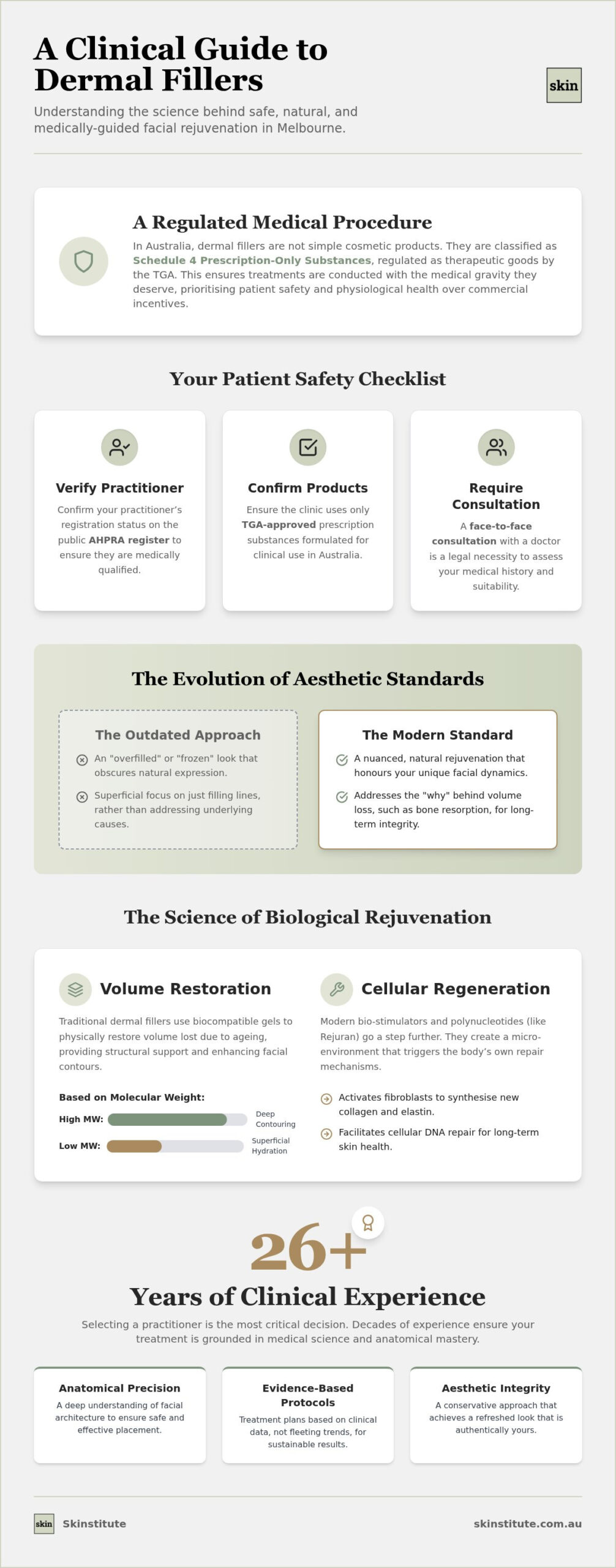
Within the Australian medical framework, dermal fillers are defined as Schedule 4 prescription substances. This classification signifies that they aren’t merely cosmetic tools but therapeutic goods that require medical oversight. The administration of these gels involves a sophisticated understanding of The Science of Injectable Fillers, where biocompatible materials are utilised to restore volume or enhance facial contours. For those researching dermal fillers melbourne, the choice of clinic should be informed by a facility’s adherence to these clinical standards rather than marketing incentives. Medical aesthetic centres prioritising patient safety often distance themselves from high-volume commercial models, focusing instead on individualised anatomical assessments. This ensures that the procedure is treated with the medical gravity it deserves, moving beyond surface-level aesthetics to a deeper understanding of tissue interaction and long-term physiological health.
The Regulatory Framework in Victoria
The Victorian aesthetic sector is governed by rigorous standards set by AHPRA and the TGA. It’s a legal requirement in Australia for a medical practitioner to conduct a face-to-face clinical consultation before any prescription injectable is administered. To ensure safety, patients should follow these steps:
- Verify practitioner credentials via the AHPRA public register to confirm registration status.
- Confirm the clinic uses TGA-approved prescription substances during the procedure.
- Ensure a face-to-face consultation occurs to discuss medical history and clinical suitability.
The Evolution of Aesthetic Standards in Melbourne
Melbourne’s aesthetic preferences have shifted away from the “frozen” look toward a more nuanced, natural biological rejuvenation. Modern treatment plans now focus on the longevity of skin health and the restoration of natural facial dynamics. This approach prioritises the “why” behind volume loss, such as bone resorption, rather than just filling a line. This evolution reflects a growing demand for technical proficiency.
The Science of Dermal Bio-Stimulation and Tissue Repair
The biological efficacy of dermal fillers melbourne is fundamentally rooted in their interaction with the extracellular matrix (ECM). This structural network, composed of collagen, elastin, and glycosaminoglycans, dictates the skin’s elasticity and volume. Modern bio-stimulators move beyond simple space-filling; they initiate a cascade of physiological responses that encourage the body to repair its own architecture. According to FDA Information on Dermal Fillers, the safety and longevity of these substances depend on their chemical stability and biocompatibility. Molecular weight is a critical variable in this process. Higher molecular weight gels provide the mechanical strength required for deep tissue contouring, while lower molecular weight variants integrate more fluidly into the superficial dermis to improve hydration and fine lines.
Collagen Synthesis and Cellular Regeneration
Bio-stimulators function by creating a controlled micro-environment that triggers the production of structural proteins. This process relies on the activation of fibroblasts, the primary cells responsible for collagen synthesis. Rejuran interacts with dermal fibroblasts by activating adenosine A2A receptors, which facilitates cellular DNA repair and enhances the skin’s natural regenerative capacity. In modern regenerative aesthetics, exosomes are increasingly utilised for their role in paracrine signalling. These nano-vesicles transport growth factors and genetic material between cells, accelerating the repair of damaged tissue and improving overall skin density. This cellular approach ensures that results are not merely cosmetic but represent a genuine improvement in biological skin health.
Prescription Injectables vs. Topical Solutions
There is a significant physiological limit to what non-prescription topical treatments can achieve. Most over-the-counter products cannot penetrate the stratum corneum, the skin’s outermost barrier, in concentrations sufficient to alter dermal structure. In contrast, medical-grade prescription injectables are delivered directly into the dermis or sub-dermis, bypassing epidermal barriers to achieve immediate and long-term structural changes. For patients seeking a comprehensive rejuvenation strategy, clinicians often integrate these treatments with Fractional CO2 laser resurfacing. This combination addresses both the deep-seated volume loss and the superficial texture irregularities that topical creams fail to resolve. Understanding these biological mechanisms allows patients to make informed choices about their medical-grade aesthetic journey.
Clinical Assessment: Mapping Treatments to Facial Anatomy
A sophisticated clinical assessment is the foundation of any successful aesthetic outcome. It moves beyond the superficial correction of isolated lines to address the underlying structural changes that occur with age. When considering dermal fillers melbourne, it’s essential to recognise that volume restoration is only one component of a broader clinical roadmap. Ageing is a multi-dimensional process involving bone resorption, the migration of deep fat pads, and the gradual loss of dermal elasticity. A seasoned practitioner doesn’t simply “fill” a fold; they identify the anatomical cause of that fold. For instance, a prominent nasolabial fold is often the result of mid-face volume loss rather than a defect in the fold itself. Adhering to FDA guidelines on dermal fillers ensures that treatments are applied only to approved anatomical regions, maintaining the highest safety standards during this restorative process.
Addressing the Upper, Mid, and Lower Face
The face is clinically divided into three distinct zones, each requiring a tailored approach to maintain harmony. In the upper face, periorbital rejuvenation focuses on the subtle restoration of the brow and temple to open the eye area without creating an unnatural “surprised” look. The mid-face is perhaps the most critical region, where restoring the “Triangle of Youth” involves replacing lost volume in the cheeks to provide a natural lift to the lower face. Lower face contouring addresses jawline definition and submental concerns, where fat pad migration often leads to the appearance of jowls. By mapping these zones, a practitioner can ensure that dermal fillers melbourne are placed with the precision required to support the face’s natural architecture.
Advanced Regenerative Combinations
Modern aesthetic plans are increasingly multi-modal, combining different technologies to achieve a superior result. Bio-stimulators have become a cornerstone of this approach, as they provide a structural scaffold that encourages the body’s own regenerative processes. We often integrate these treatments with other medical-grade procedures for a holistic effect:
- PDO Thread Lifting: These provide immediate structural support and mechanical lifting, working in synergy with fillers to redefine facial contours.
- Skin Needling: This procedure enhances surface texture and dermal density, ensuring the skin’s “canvas” is as refined as the underlying volume.
- Prescription Injectables: These are used strategically to relax dynamic lines, preventing further deep-set wrinkling while the fillers restore lost volume.
This integrated strategy ensures that every age bracket and skin type receives a customised roadmap. Whether the goal is early intervention or significant restoration, the focus remains on biological longevity and anatomical accuracy. This methodical assessment ensures that results are balanced, sustainable, and clinically sound.
The Clinical Journey: Safety, Administration, and Recovery
The journey toward facial rejuvenation is a structured medical process that prioritises patient safety and anatomical precision. For those seeking dermal fillers melbourne, the experience begins with a formal clinical consultation rather than a simple aesthetic discussion. During this phase, a practitioner evaluates your medical history, current medications, and specific anatomical requirements to determine the suitability of prescription-only substances. This diagnostic period is essential for establishing a baseline and ensuring that the proposed treatment plan aligns with your physiological needs. By treating the procedure as a medical intervention, we ensure that every step is grounded in clinical evidence and professional accountability.
The administration process itself is designed for precision and patient comfort. Practitioners utilise advanced techniques, such as the use of micro-cannulas or ultra-fine needles, to deliver the product into the targeted dermal layers with minimal tissue trauma. Many modern, medical-grade fillers are formulated with integrated lidocaine to manage discomfort during the procedure. Following the injection, a methodical assessment of facial symmetry and volume distribution is conducted to ensure the results are balanced and natural. This stage of the journey is defined by a calm, controlled environment where technical mastery remains the primary focus.
Clinical Safety Protocols in Melbourne
Sterilisation and infection control are the cornerstones of a professional clinical environment. Every procedure is performed using aseptic techniques to mitigate the risk of bacterial contamination. A critical component of clinical safety is the practitioner’s ability to manage rare but serious adverse events, such as vascular complications. While high-volume “discount” clinics may bypass these essential medical steps to reduce costs, a medical-grade centre maintains the necessary reversal agents and emergency protocols on-site. Choosing a clinic with over 26 years of experience ensures that your care is managed by professionals who understand the complexities of facial vasculature.
Recovery and Longevity of Results
Post-treatment recovery typically involves a predictable timeline of minor inflammatory responses, such as swelling or bruising, which generally resolve within three to seven days. Hyaluronic acid is progressively degraded by the endogenous enzyme hyaluronidase, which cleaves the polymer chains into smaller fragments that are subsequently metabolised through the lymphatic system. Lifestyle factors, including metabolic rate, UV exposure, and smoking, can influence how quickly the body breaks down these substances. Follow-up assessments are scheduled to monitor the integration of the filler and ensure the long-term integrity of the results. To begin your professional treatment plan, you can book a clinical consultation at Skinstitute.
Why Experience Matters: The Skinstitute Melbourne Approach
Stability in the medical aesthetic sector is paramount for patient safety and the consistency of results. With over 26 years of clinical experience in Melbourne, Skinstitute has witnessed the evolution of injectable technology from its early applications to the advanced regenerative protocols used today. Our approach to dermal fillers melbourne is governed by a conservative, evidence-based philosophy that prioritises long-term biological health over immediate, high-volume corrections. By maintaining a patient-centric model, we ensure that every intervention is tailored to the individual’s unique physiological parameters. Patients benefit from accessing a comprehensive suite of medical-grade technologies, including Rejuran, exosomes, and Fractional CO2 lasers, all within a single professional centre. The Skinstitute Melbourne commitment to professional education ensures that our practitioners remain at the forefront of clinical safety and anatomical research.
A Legacy of Aesthetic Excellence
Decades of dedicated practice cultivate a superior level of anatomical intuition, allowing a practitioner to anticipate how different tissues will respond to specific substances. This clinical foresight is vital for maintaining the structural integrity of the face over time. Stability in the patient-practitioner relationship allows for a longitudinal understanding of how a patient’s face ages, which is essential for designing sustainable treatment plans. We deliberately avoid short-term aesthetic fads that may compromise tissue health, opting instead for medical outcomes that respect the natural ageing process. This sober and focused personality reflects our dedication to technical mastery and professional integrity.
Your Next Steps in Clinical Rejuvenation
The transition from clinical curiosity to treatment begins with a formal clinical skin and facial analysis. During your initial visit to our Melbourne centre, we conduct a thorough assessment of your dermal density, volume distribution, and skin texture. This diagnostic phase is essential for identifying the specific anatomical causes of volume loss or skin laxity. We then engage in a collaborative process to design your bespoke aesthetic roadmap, explaining the “why” and “how” behind every recommended procedure. This ensures that you feel informed and respected as a partner in your rejuvenation journey. To begin this process, you can contact our clinic to schedule a professional consultation, where we will provide the technical insight required to make an evidence-based decision about your care.
Advancing Your Clinical Rejuvenation Strategy
Skinstitute provides a stable, clinical environment where over 26 years of medical aesthetic experience is applied to every individualised treatment plan. Our focus remains on the long-term integrity of your skin, utilising advanced bio-stimulators and regenerative technologies to achieve refined, evidence-based outcomes. This professional stability allows you to move forward with confidence, knowing your care is managed by seasoned practitioners dedicated to technical excellence and patient safety. To begin your bespoke facial analysis and design a roadmap tailored to your unique anatomy, book your clinical consultation at Skinstitute Melbourne today. We look forward to partnering with you to achieve your long-term aesthetic goals through science-led care. This focus on clinical transparency is also a priority at international facilities like Dr. Sankeerth Reddy’s Clinic, which provides expert guidance on a range of health and wellness topics.
Frequently Asked Questions
How long do dermal fillers typically last?
Longevity varies between six to eighteen months depending on the chemical composition of the gel and the anatomical area treated. High-mobility areas like the lips tend to metabolise the product faster than static regions like the cheeks or temples. Individual metabolic rates and lifestyle factors also influence the degradation process. Clinical follow-ups allow practitioners to monitor the integration of the substance and determine the optimal timing for maintenance to preserve the structural integrity of the results.
Are dermal filler injections painful?
Most patients experience only mild discomfort during the procedure due to the use of advanced administration techniques and integrated local anaesthetics. Many medical-grade fillers contain lidocaine, which numbs the treatment area as the gel is delivered. Practitioners may also apply a topical anaesthetic cream or utilise cooling devices to further enhance patient comfort. The use of micro-cannulas instead of traditional needles can also reduce tissue trauma and the associated sensation of pain during the injection process.
What is the difference between dermal fillers and anti-wrinkle injections?
Dermal fillers are utilised to restore volume and redefine contours by physically occupying space within the dermal layers. Conversely, anti-wrinkle injections are neuromodulators that temporarily relax the underlying muscles responsible for dynamic expression lines. While fillers address static wrinkles and structural depletion, anti-wrinkle treatments target movement-based lines such as crow’s feet or forehead furrows. Often, these prescription-only substances are used in combination to achieve a comprehensive and balanced facial rejuvenation result.
Can I have dermal fillers if I am pregnant or breastfeeding?
Clinical guidelines recommend avoiding all elective cosmetic injectable treatments during pregnancy and throughout the breastfeeding period. While there’s a lack of definitive evidence regarding the risks to the foetus or infant, the medical community maintains a conservative stance to ensure absolute safety. It’s essential to wait until you’ve finished breastfeeding before resuming any aesthetic procedures involving prescription-only substances. Professional clinics prioritise maternal and infant health over elective aesthetic outcomes in all circumstances.
How much do dermal fillers cost in Melbourne?
The financial investment for dermal fillers melbourne is determined by the specific type of prescription substance used and the volume required to achieve the desired anatomical correction. During a formal clinical consultation, a practitioner conducts a thorough facial analysis to design a bespoke treatment roadmap. This personalised plan outlines the technical requirements of the procedure and the associated costs based on the complexity of the case. Costs vary significantly between different medical-grade products and the expertise of the treating professional.
What are the most common side effects of injectable treatments?
Common side effects are typically localised and temporary, including mild swelling, bruising, and erythema at the injection site. These inflammatory responses are a natural reaction to the procedure and generally resolve within several days. Less common but more serious risks include infection or vascular compromise, which require immediate medical intervention. A clinical environment with over 26 years of experience ensures that these risks are managed through rigorous safety protocols and the availability of emergency reversal agents.
How do I know if a cosmetic clinic is reputable?
A reputable clinic is defined by its adherence to AHPRA regulations and the presence of qualified medical practitioners who oversee all prescription-only treatments. When selecting a provider for dermal fillers melbourne, you should verify that the clinic provides a face-to-face consultation and maintains a professional, sterile environment. Researching the longevity of the practice is also vital. Reputable centres prioritise educational clarity and patient safety over aggressive marketing or discount pricing models that may compromise clinical standards.
Is there any downtime required after the procedure?
Recovery typically allows patients to return to their daily activities immediately, although minor swelling or bruising may be visible for 24 to 48 hours. We recommend avoiding strenuous exercise, heat exposure, and alcohol for at least 24 hours post-treatment to minimise the risk of increased inflammation. The final integration of the gel into the tissue typically takes two weeks, at which point the full aesthetic result becomes apparent. Following specific post-care instructions provided by your clinician is essential for optimal recovery.