Acne Scar Treatment Melbourne: The Clinical Checklist for Skin Regeneration
June 2, 2026
HIFU Treatment for Jowls Melbourne: A Clinical Guide to Non-Surgical Contouring
June 3, 2026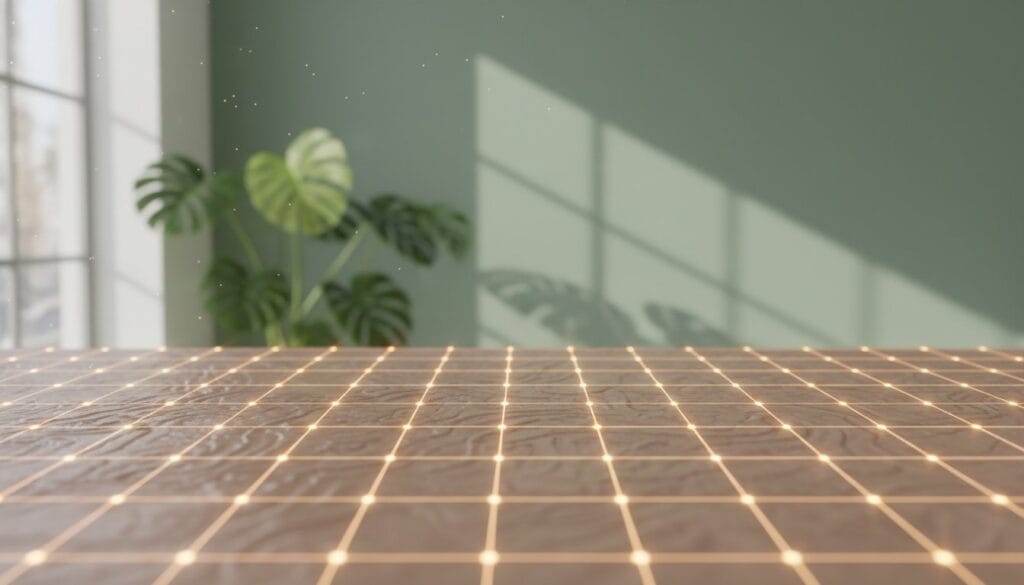
While many Victorians associate skin damage with intense summer heat, the cumulative effect of the region’s high UV index often results in dermal structural changes that surface-level facials cannot reach. You likely recognise that traditional skincare and non-medical treatments often fall short when addressing deep-seated sun damage or persistent textural irregularities. This clinical guide provides an authoritative overview of how fractional CO2 laser resurfacing Melbourne patients utilise advanced ablative technology to trigger biological regeneration and long-term collagen synthesis.
You’ll gain a technical understanding of how this medical-grade procedure creates controlled thermal micro-trauma to replace compromised tissue with a more uniform dermal architecture. We will examine the physiological process of dermal remodelling, the expected clinical outcomes for fine lines and wrinkles, and how the updated AHPRA guidelines effective from September 2025 ensure your safety and informed consent. This analysis moves beyond marketing claims to explain the science of skin regeneration; it allows you to make an evidence-based decision for your long-term skin health and structural integrity.
Key Takeaways
- Identify the technical distinctions between traditional ablative lasers and modern fractional technology to understand how precise light beams facilitate deeper dermal renewal.
- Gain insight into the biological process of photothermolysis, where the 10,600nm wavelength targets water in the skin to stimulate long-term collagen synthesis.
- Evaluate how fractional co2 laser resurfacing melbourne treatments compare to non-ablative modalities and skin needling for addressing specific textural irregularities.
- Learn why a comprehensive clinical assessment and pre-treatment skin priming are mandatory steps to ensure patient safety and improve recovery outcomes.
- Understand the importance of customising laser parameters such as fluence and density to achieve a personalised treatment plan that reflects your unique skin health goals.
Understanding Fractional CO2 Laser Resurfacing: The Gold Standard in Laser Skin Aesthetics
Fractional CO2 laser resurfacing represents a sophisticated evolution in dermatological science, moving beyond the historical limitations of traditional fully ablative methods. This technology utilises Carbon-dioxide laser technology to deliver a pattern of microscopic, pixellated light beams to the skin. These beams create tiny, vertical columns of thermal injury while leaving the surrounding tissue entirely intact. For patients considering fractional co2 laser resurfacing melbourne, this method offers a clinical benchmark for addressing complex concerns such as deep rhytids, significant dyschromia, and atrophic scarring. It’s a precise medical intervention that prioritises dermal structural integrity alongside visible aesthetic improvement.
The “Fractional” Revolution: Why Less is More
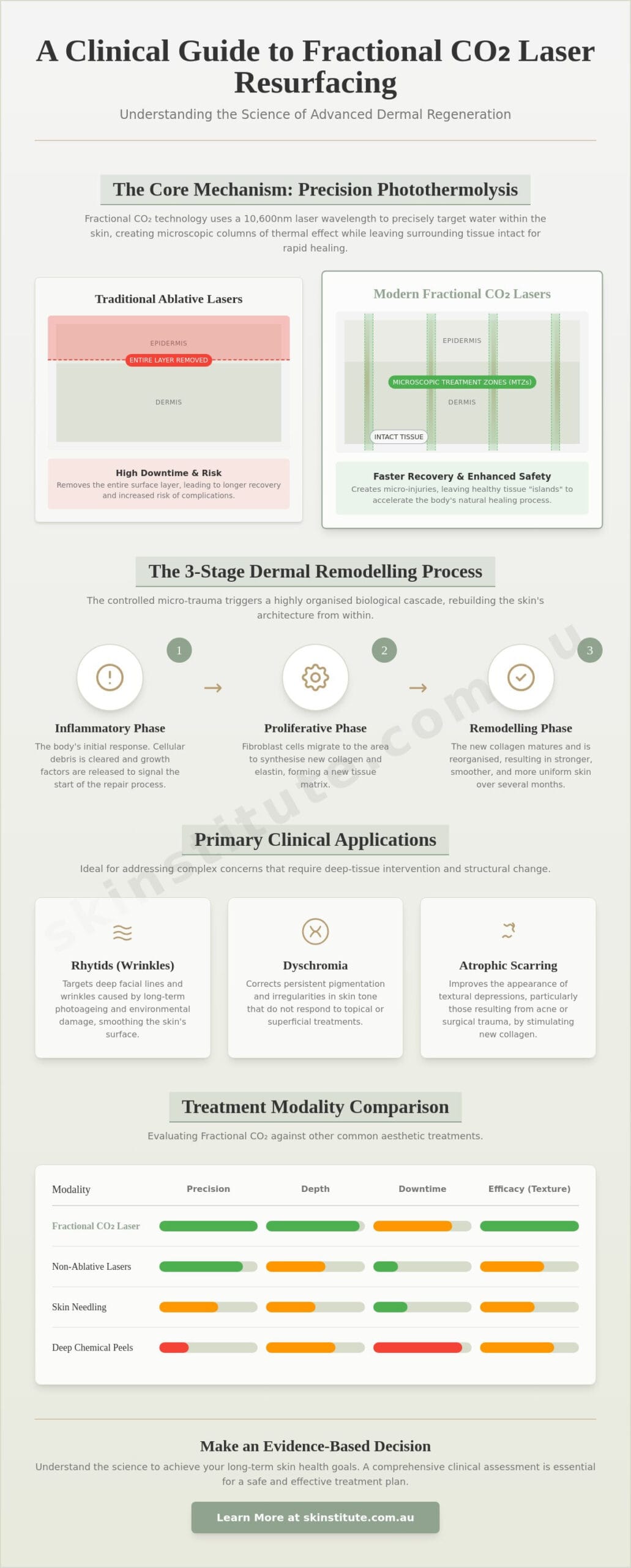
The core of this technology’s clinical success lies in the creation of Microscopic Treatment Zones (MTZs). These are vertical columns of controlled thermal damage that extend deep into the dermal layers. By treating only a specific percentage of the skin’s surface, the body’s natural repair mechanisms are triggered from the adjacent, untreated “islands” of tissue. This approach doesn’t just speed up the healing process; it significantly reduces the risks of prolonged erythema or secondary infection. It allows for aggressive results in skin tightening and texture refinement while ensuring the recovery period remains manageable and predictable for the patient.
Laser Skin Aesthetics vs. Traditional Peels
While deep chemical peels have historically been used for resurfacing, laser therapy provides a level of precision that liquid exfoliants can’t replicate. Practitioners can adjust the depth of penetration and energy density with mathematical accuracy, ensuring the treatment reaches the exact dermal layer required for regeneration. This predictability is vital for patient safety, as it reduces the risk of the irregular pigment changes or scarring sometimes seen with variable chemical absorption. The ability to target specific anatomical depths allows for a highly customised treatment plan that addresses the unique requirements of the patient’s skin architecture.
This level of technical customisation is mirrored in leading international practices such as Couture Dermatology & Laser Beverly Hills, which set global benchmarks for advanced aesthetic procedures.
The clinical applications for this technology are diverse, typically focusing on three primary areas of concern that require deep-tissue intervention:
- Rhytids: Addressing deep facial lines and wrinkles that result from long-term photoageing and environmental damage.
- Dyschromia: Correcting irregularities in skin tone and persistent pigmentation that don’t respond to superficial, non-medical treatments.
- Atrophic Scarring: Improving the appearance of textural depressions, particularly those caused by previous acne or surgical trauma.
The Biological Mechanism: How Laser Resurfacing Triggers Dermal Remodelling
Fractional CO2 technology operates at a precise 10,600nm wavelength. This specific frequency has a high affinity for water, the primary chromophore within our skin cells. When the laser pulses interact with the tissue, the water absorbs the energy, leading to rapid heating and vapourisation of the target area. This process, known as selective photothermolysis, converts light energy into controlled thermal injury. It precisely targets microscopic columns of tissue while sparing the surrounding skin to facilitate a rapid healing response. This is why fractional co2 laser resurfacing melbourne treatments are considered a benchmark for structural skin revision.
The body views these microscopic treatment zones as a biological trigger, initiating a highly organised three-stage clinical response. First, the inflammatory phase clears cellular debris and releases chemical mediators. Next, the proliferative phase begins, where fibroblasts migrate to the treatment zones to synthesise new tissue. Finally, the remodelling phase involves the maturation and reorganisation of the skin’s architecture. The thermal stress also activates heat shock proteins. These act as molecular chaperones, signalling the skin to initiate new type I collagen synthesis, which is essential for restoring dermal density.
Immediate Tissue Contraction
During a laser resurfacing procedure, clinicians often observe an immediate physical shrinkage of the skin. This occurs because the heat causes existing collagen fibres to contract and tighten instantly. Simultaneously, the laser energy vaporises surface-level imperfections, removing damaged cells and smoothing the epidermis. This dual action provides an initial lifting effect that serves as the foundation for deeper healing. It’s a visible clinical marker that the energy has reached the required depth to affect the collagen matrix.
Long-Term Neocollagenesis
While the immediate tightening is a welcome effect, the most significant improvements occur during the long-term neocollagenesis phase. This biological timeline typically spans three to six months post-treatment as the skin continues to rebuild itself. During this period, the extracellular matrix undergoes a comprehensive structural reorganisation. New collagen and elastin fibres replace the old, damaged tissue, leading to a firmer and more resilient skin texture. Because this is a gradual biological process, results don’t peak instantly. They continue to mature and improve long after the initial redness has subsided, reflecting the true regeneration of the skin’s structural foundation. For a detailed clinical overview of what to expect during this process, our guide on fractional CO2 melbourne skin resurfacing results provides an in-depth analysis of each regenerative stage.
Fractional CO2 vs. Alternative Modalities: Navigating Melbourne’s Aesthetic Landscape
Selecting the appropriate clinical modality requires a precise understanding of how different energy sources interact with the skin’s biological layers. While non-ablative lasers offer shorter recovery periods by heating the dermis without removing surface tissue, they often necessitate a higher frequency of sessions to achieve comparable results. Fractional CO2 laser resurfacing Melbourne remains the preferred intervention for patients presenting with significant dermal damage, as it provides simultaneous surface ablation and deep thermal stimulation. The selection of any modality must be guided by the Fitzpatrick skin scale, which categorises skin types based on their reaction to UV radiation and their inherent risk of post-inflammatory hyperpigmentation. This ensures that the energy density and pulse duration are calibrated to the patient’s specific physiological requirements.
Laser vs. Skin Needling
The primary distinction between these two modalities lies in the delivery of energy. Mechanical injury through skin needling Melbourne creates physical micro-channels to stimulate a wound-healing response, making it a versatile option for moderate texture issues. However, the thermal energy of a carbon dioxide laser is significantly more potent. It triggers a robust contraction of collagen fibres and a more comprehensive resurfacing of the epidermis. For deep structural scarring and advanced photo-ageing, a single laser session can often achieve what would require multiple needling treatments. This efficiency provides a clear clinical advantage for patients seeking substantial revision within a condensed timeline.
Complementary Bio-Stimulation
Modern clinical protocols increasingly incorporate bio-stimulatory agents to enhance the efficacy of thermal treatments. Integrating Rejuran Melbourne can prime the skin by improving cellular hydration and DNA repair before the laser intervention. This polynucleotide synergy ensures the tissue is in an optimal state for regeneration. Post-procedure, the introduction of exosomes can further accelerate the recovery process by delivering high concentrations of signalling molecules directly to the microscopic treatment zones. For the typical “Melbourne skin” profile, which frequently exhibits signs of chronic UV exposure, a multi-modal plan combining ablative laser with bio-stimulants offers a more resilient structural outcome than any single method alone. This sequential approach allows for a more thorough reorganisation of the extracellular matrix, addressing both surface irregularities and deep-seated dermal laxity.
Clinical Protocol: Preparing for and Recovering from Laser Resurfacing
Achieving optimal outcomes from fractional co2 laser resurfacing melbourne depends as much on the clinical rigour of the preparation as it does on the technology itself. A professional clinical assessment is the non-negotiable first step in this journey. During this consultation, your skin’s structural integrity and Fitzpatrick type are evaluated to determine the appropriate energy parameters. For many patients, particularly those with a history of high UV exposure or deeper skin tones, pre-treatment skin priming is essential. This typically involves the use of tyrosinase inhibitors to suppress melanin activity, which significantly reduces the risk of post-inflammatory hyperpigmentation (PIH) following the thermal intervention.
On the day of the procedure, topical anaesthesia is applied to the treatment area to ensure patient comfort during the delivery of laser pulses. You’ll experience a sensation of heat as the 10,600nm wavelength interacts with the dermal water content. Immediately following the session, the skin will exhibit significant erythema and a distinct grid-like pattern. This appearance is the physical manifestation of the microscopic treatment zones (MTZs) where the laser has vaporised columns of tissue to trigger regeneration. To begin your clinical journey with an expert evaluation, book a professional skin assessment to determine your suitability for this medical-grade procedure.
The Critical First 72 Hours
The initial three days following treatment are the most intensive phase of the recovery process. You’ll likely feel a sensation similar to a severe sunburn, which is managed through the application of clinical-grade occlusives. These specialised balms create a protective barrier that facilitates re-epithelialisation while preventing transepidermal water loss. Strict hygiene is paramount during this window; patients must follow a specific cleansing protocol to prevent secondary infections while the skin is in its most vulnerable state. This period of social downtime is a necessary investment, allowing the inflammatory phase to transition into the proliferative phase without environmental interference.
Melbourne UV Protection and Aftercare
The Victorian climate presents unique challenges for post-laser recovery due to its volatile UV levels. Protecting the newly resurfaced tissue is a non-negotiable requirement for several months following the procedure. A broad-spectrum SPF 50+ must be applied daily, even during overcast conditions, to shield the maturing collagen matrix from UV-induced degradation. Direct sun exposure should be avoided entirely during the first few weeks to prevent the development of PIH. Long-term maintenance of your results involves a disciplined approach to skin health, including the use of medical-grade antioxidants and continued sun protection to preserve the structural improvements achieved through the resurfacing process.
Selecting a Medical-Grade Clinic: The Skinstitute Approach to Laser Aesthetics
The efficacy of fractional co2 laser resurfacing melbourne is fundamentally dependent on the technical proficiency of the practitioner. While advanced hardware is a prerequisite for success, the clinical outcome is dictated by the precise manipulation of laser parameters. At Skinstitute, our approach is underpinned by 26+ years of industry experience, providing a stable foundation for managing high-energy ablative procedures. This depth of experience allows for a nuanced understanding of tissue response, ensuring that energy delivery is optimised for both safety and regenerative success. We prioritise medical-grade standards, focusing on evidence-based protocols that move beyond the high-volume models often found in non-clinical environments.
Precision in laser aesthetics requires the careful calibration of three primary variables: fluence, density, and dwell time. Fluence refers to the energy delivered per unit area, while density determines the spacing between the microscopic treatment zones. Dwell time controls the duration the laser pulse interacts with the tissue. By adjusting these factors, we can control the depth of ablation and the extent of thermal stimulation, matching the treatment to the patient’s specific dermal requirements. This level of technical mastery ensures that the biological triggers discussed in previous sections are activated without exceeding the skin’s capacity for healthy repair.
Customisation Beyond the “Standard” Settings
Standard factory settings often fail to account for the anatomical variations of the face. Our practitioners customise energy levels for delicate regions, such as the peri-orbital area, where the skin is significantly thinner and requires a more measured approach. This level of clinical precision allows us to achieve meaningful results while respecting the biological limits of the tissue. Whether you require a more aggressive single session or a series of treatments with reduced downtime, the parameters are tailored to your skin goals and recovery capacity. It’s the difference between a generic application and a targeted medical intervention.
Your Consultation at our Melbourne Centre
Your journey begins with a comprehensive skin analysis at our Melbourne centre. This initial assessment is designed to confirm your suitability for ablative therapy and to identify any contraindications that may affect your recovery. We maintain a transparent dialogue regarding the expected clinical timeline, potential risks, and the biological reality of the results. This patient-centred care ensures you’re fully informed and comfortable before proceeding with a medical-grade intervention. Book your clinical skin assessment at Skinstitute to evaluate your options for dermal regeneration and structural skin revision.
Achieving Dermal Structural Integrity Through Clinical Precision
Fractional CO2 technology provides a significant biological advantage for those seeking to address complex skin concerns and textural irregularities. By triggering the body’s natural neocollagenesis process, this treatment replaces damaged tissue with a more resilient and uniform dermal architecture. Understanding the necessity of pre-treatment skin priming and the importance of specific clinical protocols ensures that your recovery is predictable and your results are medically sound. This methodical approach prioritises the long-term health of your skin over temporary, surface-level improvements.
Selecting a practitioner with established authority is essential when considering high-energy interventions. With 26+ years of medical aesthetic experience, our Melbourne-based clinical expertise ensures that every parameter is customised to your unique skin profile. Utilising medical-grade technology, we focus on delivering evidence-based outcomes that respect the skin’s physiological limits. To explore how fractional co2 laser resurfacing melbourne can support your skin regeneration goals, book your clinical consultation at Skinstitute today. We’re ready to partner with you on a journey toward structural skin health and technical excellence.
Frequently Asked Questions
How much downtime is actually required for fractional CO2 laser in Melbourne?
Patients typically require between five and ten days of social downtime following the procedure. During the first week, the skin undergoes re-epithelialisation, where the initial grid-like pattern and erythema are most visible. You should plan to avoid public engagements and maintain a strict clinical aftercare routine during this window. While residual pinkness may persist for several weeks, it can generally be managed with mineral camouflage once the skin barrier has fully reformed.
Is fractional CO2 laser resurfacing painful?
The procedure involves a level of discomfort often described as a series of sharp, thermal sensations. To ensure patient comfort, we apply a high-potency topical anaesthetic to the treatment area for approximately 45 to 60 minutes prior to the session. During the delivery of the laser energy, we often utilise forced-air cooling systems to regulate the skin surface temperature. Post-treatment, most patients report a sensation similar to a moderate sunburn that typically subsides within several hours.
Can fractional CO2 laser be used on darker skin tones (Fitzpatrick IV-VI)?
Fractional co2 laser resurfacing melbourne protocols can be adapted for darker skin tones, provided a conservative clinical approach is utilised. Patients with higher Fitzpatrick phototypes must undergo a mandatory priming period using tyrosinase inhibitors for at least four weeks before the procedure. This preparation suppresses melanin activity to mitigate the risk of post-inflammatory hyperpigmentation. We also adjust the laser’s density and pulse duration to ensure the thermal injury remains within safe biological limits.
How many sessions of fractional CO2 are typically needed for acne scars?
Most patients require one to three sessions to achieve a significant clinical reduction in atrophic acne scarring. The precise number of treatments depends on the depth of the scar tissue and the individual’s capacity for dermal remodelling. Because the neocollagenesis process matures over several months, sessions are typically spaced three to six months apart. This sequential approach allows for maximum structural reorganisation of the extracellular matrix between each medical-grade intervention.
What is the difference between fractional CO2 and Erbium laser?
The primary distinction lies in the wavelength and the resulting thermal interaction with the tissue. CO2 lasers operate at 10,600nm, which allows for deeper penetration and more robust collagen contraction through controlled heat. Erbium lasers, at 2,940nm, are more highly absorbed by water, resulting in “colder” ablation with minimal thermal spread. While Erbium may offer shorter recovery times, CO2 remains the clinical benchmark for treating deep rhytids and advanced structural skin damage. To better understand how these outcomes compare in a clinical setting, our resource on understanding fractional CO2 melbourne skin resurfacing results outlines the evidence-based expectations for each treatment phase.
How long do the results of a CO2 laser resurfacing treatment last?
The structural improvements to the dermal architecture are permanent, although the skin continues to undergo the natural ageing process. Most patients observe the visible benefits of refined texture and increased skin density for several years following their final session. The longevity of these results is heavily influenced by post-treatment maintenance, specifically the daily application of broad-spectrum SPF 50+ and the use of medical-grade antioxidants to protect the new collagen matrix from environmental degradation.
When is the best time of year to get laser resurfacing in Melbourne?
The autumn and winter months are considered the optimal time for fractional co2 laser resurfacing melbourne due to the lower UV index in the region. Reduced solar radiation during the proliferative and remodelling phases significantly decreases the risk of UV-induced pigmentary complications. While the procedure is available year-round, the cooler months allow patients to adhere more easily to strict sun-avoidance protocols during the critical weeks when the new epidermis is most vulnerable to damage.
Can I combine CO2 laser with cosmetic injectables?
Combining ablative laser therapy with prescription injectables is a common clinical strategy for comprehensive facial rejuvenation, but the sequencing is vital. We typically advise waiting at least two to four weeks after your laser session before administering injectables to allow the inflammatory phase to resolve. If you have recently received injectables, a similar waiting period is required to ensure the thermal energy from the laser doesn’t interfere with the integration of the injected product into the tissue.