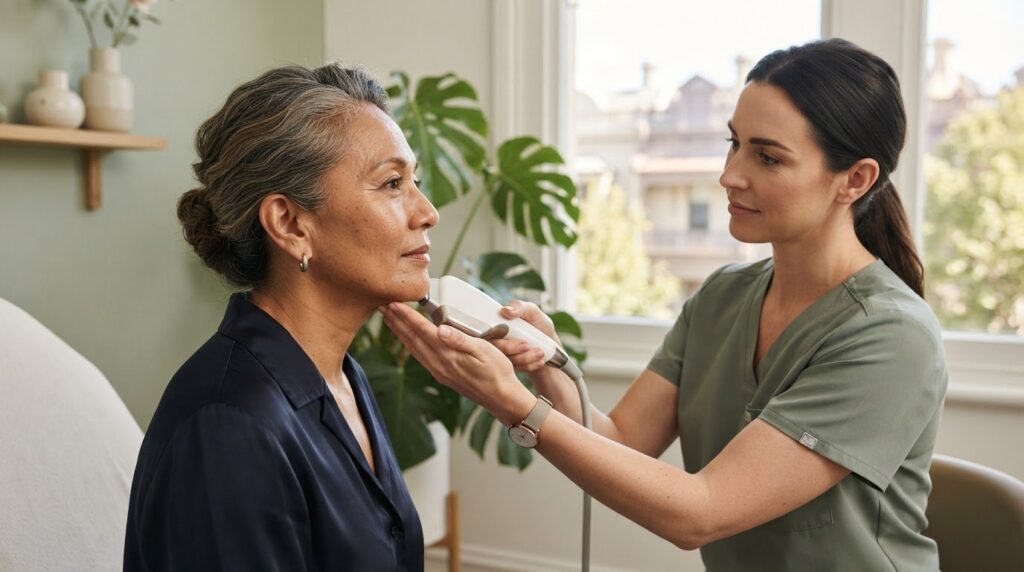
HIFU Treatment for Jowls Melbourne: A Clinical Guide to Non-Surgical Contouring
June 3, 2026
Fractional CO2 Laser Cost Melbourne: A Clinical Buying Guide for 2026
June 4, 2026
The most significant advancements in non-surgical facial rejuvenation aren’t occurring on the skin’s surface, but precisely 4.5 millimetres beneath it within the structural foundation known as the SMAS layer. While many individuals seeking a hifu treatment melbourne expect a standard aesthetic procedure, the reality is a sophisticated medical intervention that utilises thermal energy to initiate a biological healing response. This targeted approach mirrors the depth addressed in traditional surgery, yet it maintains the integrity of the epidermis to ensure minimal social downtime.
It’s common to feel overwhelmed by the array of lifting technologies available, especially when you’re balancing the desire for restored facial contours against a genuine concern for surgical recovery. This article provides a clinical comparison of High-Intensity Focused Ultrasound against other non-surgical modalities, detailing how TGA-listed devices achieve deep-tissue tightening. You’ll gain a technical understanding of how focused ultrasound energy stimulates long-term collagen synthesis to address jowls and skin laxity. We’ll conclude by evaluating which treatment profile aligns with your specific physiological needs and expectations for professional, medical-grade care.
Key Takeaways
- Understand the fundamental physiological distinction between the structural lifting mechanism of ultrasound technology and the volumising properties of aesthetic injectables.
- Learn how High-Intensity Focused Ultrasound targets the SMAS layer to create thermal coagulation points that reorganise dermal architecture from within.
- Discover why a professional hifu treatment melbourne requires a rigorous clinical assessment to ensure precise energy delivery and optimal patient safety.
- Explore the clinical synergy between structural ultrasound treatments and advanced bio-stimulation techniques for comprehensive skin rejuvenation.
- Identify the critical role of practitioner experience in navigating facial anatomy to prevent nerve injury while achieving symmetrical, medical-grade results.
Understanding HIFU Treatment: Melbourne’s Clinical Standard for Non-Surgical Lifting
High-Intensity Focused Ultrasound (HIFU) represents a significant advancement in non-invasive aesthetic medicine. It’s a medical-grade procedure that utilises acoustic energy to target the deep structural layers of the face. Unlike traditional laser therapies that address the skin’s surface, a hifu treatment melbourne focuses exclusively on the deep connective tissue. This is the same layer, known as the SMAS, that surgeons manipulate during an invasive facelift. By bypassing the epidermis, the technology avoids visible surface damage. This clinical precision allows patients to resume their daily activities immediately. It’s often referred to as a “lunchtime lift” due to this lack of downtime. However, the physiological changes it initiates are deep and enduring.
The Evolution of Focused Ultrasound in Aesthetics
Focused ultrasound wasn’t originally developed for aesthetic use. It began as a sophisticated tool for medical diagnostics and the non-invasive treatment of internal tumours. The transition to aesthetic medicine occurred when clinical research demonstrated that specific acoustic frequencies could stimulate collagen synthesis without the need for incisions. This Focused Ultrasound Technology has since branched into various tiers of equipment. There’s a vital distinction between “beauty-grade” devices found in retail salons and “medical-grade” systems utilised in professional clinics. Medical-grade devices provide significantly higher precision and deeper penetration. Skinstitute’s 26 years of history in the medical aesthetic field provides the foundational knowledge required to apply these technologies safely and effectively.
Key Indications for HIFU Therapy
HIFU therapy is primarily indicated for patients exhibiting mild to moderate skin laxity. We frequently utilise this modality to address submental sagging, commonly known as a double chin. When considering a hifu treatment melbourne, it’s equally effective for restoring definition to the jawline by mitigating jowl laxity. Other common clinical applications include:
- Elevation of the brow line to address periorbital heaviness.
- Rejuvenation of the periorbital region to tighten delicate skin around the eyes.
- Structural tightening of the neck and décolletage area.
Predictable clinical results depend heavily on rigorous patient selection. Not every skin type or degree of laxity is suitable for this procedure. A thorough assessment of skin thickness and underlying tissue structure is necessary. Professional administration by an experienced practitioner is essential to ensure that energy is delivered with anatomical accuracy. This level of expertise prevents injury to facial nerves and ensures that the lifting effect is both symmetrical and natural.
The Biological Mechanism: How Focused Ultrasound Reorganises Dermal Architecture
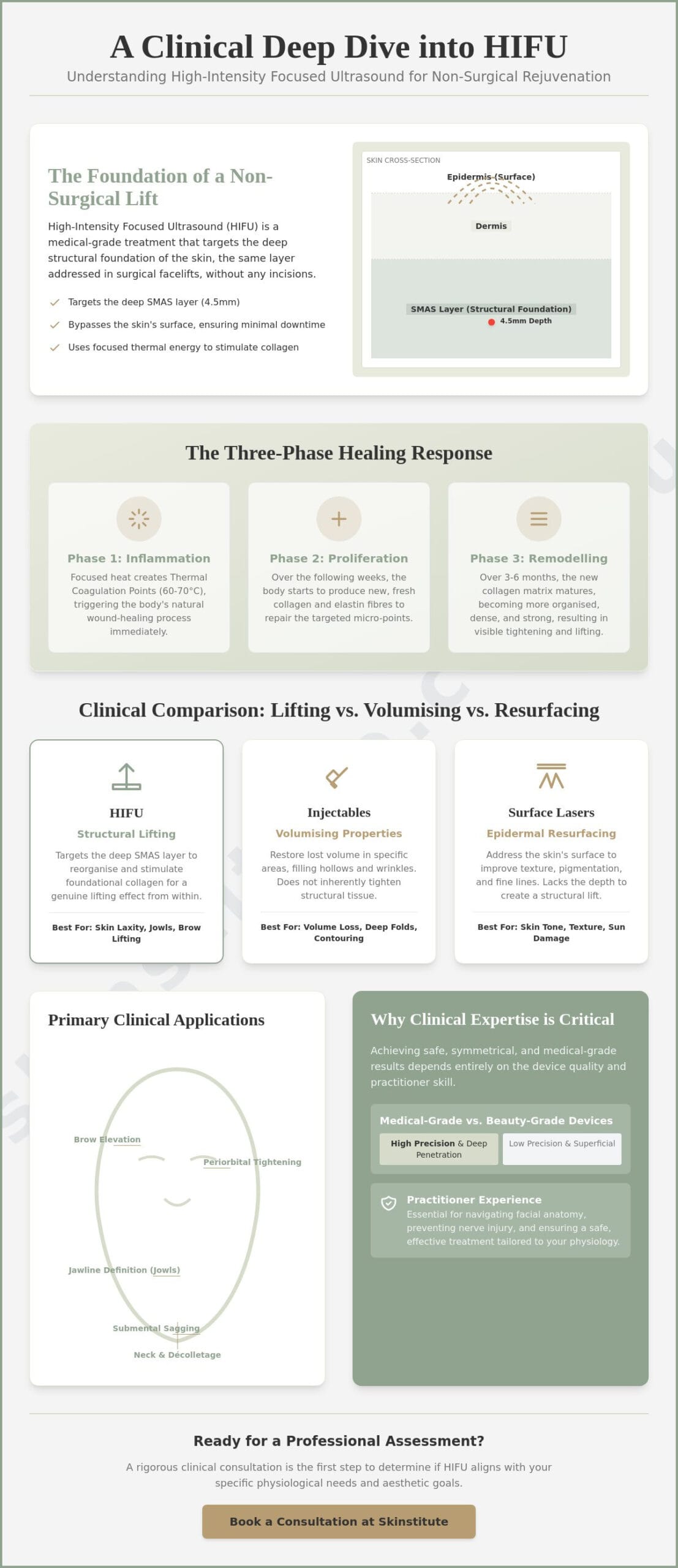
The efficacy of a hifu treatment melbourne is fundamentally rooted in its ability to induce precise thermal injury within the deep dermal and sub-dermal tissues. Unlike bulk heating methods, High-Intensity Focused Ultrasound delivers energy as convergent beams that intersect at a specific focal point. At this intersection, the temperature rapidly increases to approximately 60 to 70 degrees Celsius, creating what clinicians term Thermal Coagulation Points (TCPs). These microscopic zones of thermal damage are strategically distributed across the treatment area, leaving the surrounding tissue unaffected to facilitate rapid recovery.
Clinical insights into how HIFU facials work confirm that this targeted energy initiates a sophisticated three-phase wound-healing response. The initial inflammatory phase begins immediately, where the body identifies the thermal injury and recruits cellular mediators to the site. This is followed by the proliferative phase, where new tissue begins to form, and finally, the remodelling phase. During remodelling, the haphazardly arranged collagen fibres are replaced by a more organised and dense matrix of Type I collagen and elastin, which provides the structural “lift” observed in patients.
Targeting the SMAS Layer: The Foundation of the Lift
The Superficial Muscular Aponeurotic System (SMAS) is a fibromuscular layer that sits deep within the facial architecture, serving as the foundational support for the skin. Historically, this layer could only be accessed through invasive surgery. Modern transducers used in a hifu treatment melbourne can now bypass the epidermis entirely to reach depths of 1.5mm, 3.0mm, and 4.5mm. By targeting the 4.5mm depth, the ultrasound energy directly affects the SMAS, causing immediate protein denaturation and subsequent contraction. This precision ensures that the structural foundation is tightened without compromising the surface integrity of the skin.
Collagenesis and the Remodelling Timeline
While some patients notice an immediate “tightness” due to the initial heat-induced contraction of existing collagen, the most profound results develop gradually. This delay is due to the biological timeline of collagenesis. Collagenesis is the physiological process through which the body synthesises new collagen proteins to increase skin density and tensile strength.
The proliferative and remodelling phases typically span a window of three to six months. During this period, the dermal architecture undergoes a steady transformation as the new collagen matrix matures and strengthens. Understanding these biological stages is fundamental when planning a professional treatment programme, as it allows for realistic expectations regarding the gradual restoration of facial contours. This methodical biological process ensures that the rejuvenation appears natural rather than abrupt.
Clinical Comparison: HIFU vs. PDO Thread Lifts and Aesthetic Injectables
Achieving a balanced facial rejuvenation requires a clear understanding of how different modalities interact with facial anatomy. While a hifu treatment melbourne focuses on the structural contraction of the SMAS layer, other treatments address distinct aspects of the ageing process. For instance, aesthetic injectables are designed to counteract volume loss in the mid-face or temples. Relying solely on one method can lead to an unnatural appearance; over-volumising a face that lacks structural support often results in a “heavy” look. By first tightening the foundation with ultrasound, we create a more stable canvas for targeted volumisation.
There is also significant clinical synergy when combining ultrasound with bio-stimulators like Rejuran. While High-Intensity Focused Ultrasound addresses the deep dermal architecture, Rejuran utilises polynucleotides to improve the biological health and regenerative capacity of the skin cells themselves. This multi-layered approach ensures that the visible lift is supported by improved skin texture and elasticity, resulting in a more comprehensive rejuvenation than either treatment could provide in isolation.
Choosing Between Ultrasound and Thread Lifting
The decision between mechanical lifting and biological tightening depends on the patient’s specific degree of tissue ptosis. PDO Thread Lifting involves the physical repositioning of skin through the insertion of absorbable sutures. This provides an immediate, visible lift that is particularly effective for heavy jowls or a sagging mid-face. In contrast, ultrasound therapy stimulates a gradual biological tightening. The primary advantage of a hifu treatment melbourne is the absence of downtime and the lack of foreign materials within the tissue.
It’s important to differentiate these deep-tissue treatments from surface-level interventions. For patients concerned with solar damage or fine lines, Fractional CO2 Laser resurfacing is often used as a complementary procedure. While ultrasound addresses depth, the laser targets the epidermis to refine skin texture and tone. This combination addresses the face from the foundation to the surface.
HIFU and Cosmetic Injectables: A Balanced Approach
Integrating ultrasound therapy with prescription injectables requires careful clinical sequencing. We typically advise patients to undergo their ultrasound sessions prior to receiving dermal fillers. This ensures that the heat energy does not interfere with the stability of the injectable product. If fillers have already been administered, a recovery window of approximately four to six weeks is necessary before applying high-intensity ultrasound to the same area. This methodical approach protects the patient’s investment and ensures that each treatment performs its specific physiological function without compromise.
The Treatment Protocol: From Professional Consultation to Dermal Recovery
A successful hifu treatment melbourne begins long before the ultrasound transducer makes contact with the skin. A rigorous clinical assessment serves as the indispensable foundation for both safety and efficacy. During this initial phase, we conduct a comprehensive review of the patient’s medical history to identify potential contraindications, such as active systemic diseases, metallic implants, or recent injectable treatments in the target area. Precise skin typing and an evaluation of subcutaneous fat depth allow us to calibrate the energy levels and focal depths required to reach the SMAS layer effectively without compromising adjacent structures.
The sensory experience during the procedure is unique to High-Intensity Focused Ultrasound. As the device delivers energy to the predetermined dermal depths, patients typically report a deep thermal sensation. This is often accompanied by a transient tingling or “prickling” feeling, which signifies the successful creation of thermal coagulation points within the tissue. While the sensation is noticeable, it’s generally well-tolerated because the energy bypasses the pain receptors located in the epidermis. Immediately following the session, a mild erythema, or redness, may be visible. This is a normal physiological response to the thermal stimulus and typically resolves within a few hours, allowing for an immediate return to professional and social obligations.
Preparation and Clinical Assessment
Preparation is vital to ensure the skin is in an optimal state for regeneration. We provide patients with a customised treatment map that accounts for their unique facial symmetry and nerve pathways. To minimise surface sensitivity, we advise ceasing the use of active topicals, such as retinoids or high-strength alpha-hydroxy acids, at least five days prior to the appointment. This reduces the risk of superficial irritation and ensures the ultrasound energy can be delivered with maximum precision. If you’re ready to begin this structured process, you can book a professional consultation at Skinstitute to determine your suitability.
Post-Treatment Care and Result Maintenance
Post-procedural care is designed to support the body’s natural inflammatory healing phase. Given Melbourne’s often high UV index, strict adherence to broad-spectrum sun protection is mandatory. Protecting the skin from ultraviolet radiation prevents the degradation of newly forming collagen fibres. We also recommend the application of topical antioxidants, such as Vitamin C or E, to mitigate oxidative stress and support the dermal remodelling process. To sustain the structural integrity achieved through the treatment, maintenance sessions are typically recommended every 12 to 18 months. This frequency aligns with the natural biological turnover of collagen, ensuring that the lifting effect remains stable over the long term.
Why Clinical Expertise Defines Your HIFU Outcomes at Skinstitute
The clinical success of a hifu treatment melbourne is not merely a function of the technology utilised, but a direct result of the practitioner’s anatomical expertise. While the ultrasound device delivers the energy, the clinician determines the precise vectors and depths required to achieve a symmetrical and balanced lift. Skinstitute has operated within Melbourne’s medical aesthetic sector for 26 years, providing a foundation of experience that is critical when performing deep-tissue interventions. This longevity ensures that our protocols are refined by decades of clinical observation and a commitment to evidence-based results.
Practitioner proficiency is particularly vital when navigating the complex network of facial nerves. Incorrect application of high-intensity energy near the marginal mandibular nerve or the supraorbital nerve can lead to transient motor or sensory deficits. Our clinicians possess the technical mastery required to ensure that energy delivery remains confined to the target connective tissues, such as the SMAS layer. This focus on anatomical safety prevents complications and ensures that the structural changes are balanced across both hemispheres of the face, resulting in a rejuvenation that respects your natural features.
The Skinstitute Standard of Care
Our standard of care prioritises transparent, objective patient education. We believe that a technical understanding of the “why” and “how” behind a procedure is essential for successful clinical outcomes. Because our clinic provides a comprehensive suite of medical-grade treatments, such as PDO Thread Lifting and Rejuran, we aren’t limited to a single modality. This allows us to offer an unbiased recommendation that aligns with your specific physiological requirements. Our long-standing presence in Melbourne translates to reliable, long-term patient support that continues well beyond the initial procedure.
Booking Your Professional Skin Assessment
We encourage a consultative approach rather than a transactional purchase. A professional skin assessment is the first step in any structured hifu treatment melbourne. During this initial analysis, we utilise diagnostic techniques to evaluate dermal thickness and the specific degree of tissue laxity. This process is designed to establish a logical treatment plan and to ensure that your expectations align with the biological realities of ultrasound therapy. You should expect a thorough review of your dermal health and a clear explanation of the expected remodelling timeline. To begin this structured journey, you can organise your clinical HIFU consultation at our Melbourne centre.
Advancing Your Clinical Rejuvenation Strategy
High-Intensity Focused Ultrasound remains a cornerstone of non-surgical structural lifting because it addresses the foundational layers of the face without surface trauma. By initiating a precise biological remodelling process, it offers a sustainable alternative to more invasive interventions. Selecting a hifu treatment melbourne requires a focus on clinical integrity rather than marketing promises. Your results depend on the accurate placement of thermal energy and a thorough understanding of facial anatomy to ensure both safety and symmetry.
Skinstitute provides a professional environment where medical-grade technology is paired with over 26 years of clinical experience. Our practitioner-led safety protocols ensure that every procedure is tailored to your unique dermal architecture. We invite you to move beyond surface-level descriptions and explore the technical science of facial rejuvenation. Schedule your clinical skin assessment at Skinstitute Melbourne to begin your journey toward restored facial contours and long-term collagen health. We look forward to partnering with you on your path to professional, evidence-based results.
Frequently Asked Questions
Is HIFU treatment painful for most patients?
Most individuals experience a deep thermal sensation rather than acute pain during the procedure. This sensation occurs as the acoustic energy creates thermal coagulation points within the structural layers of the tissue. Because the ultrasound energy bypasses the pain receptors in the epidermis to target the deeper SMAS layer, the surface of the skin remains comfortable throughout the session. Some patients report a transient tingling or “prickling” feeling, which is a normal physiological response to the energy delivery.
How many HIFU sessions are typically required for a visible lift?
A single session is often sufficient to initiate the biological healing response required for a visible lift in patients with mild to moderate laxity. Clinical results develop progressively as new collagen is synthesised over a three to six month period. For individuals with more advanced skin laxity, a second hifu treatment melbourne may be recommended approximately six months after the initial session to consolidate the structural improvements. Annual maintenance is generally advised to sustain the density of the dermal matrix.
What is the difference between medical-grade HIFU and salon-grade versions?
Medical-grade devices are listed by the Therapeutic Goods Administration (TGA) and offer significantly higher precision and energy output than salon-grade equipment. These advanced systems, such as the Ultraformer MPT, can accurately target the SMAS layer at depths of 4.5mm, which is often beyond the capability of lower-tier beauty devices. This depth is essential for achieving a true structural lift. Furthermore, medical-grade technology ensures that the thermal energy is delivered in a controlled, stable manner to prevent superficial burns or inconsistent results.
Can I return to work immediately after a HIFU session in Melbourne?
There is no social downtime required following this procedure, and patients can typically return to their professional duties immediately. You may notice a slight erythema, or redness, in the treated area, but this usually resolves within a few hours. Unlike invasive surgery or some ablative lasers, the integrity of the skin’s surface is not compromised. This makes it a practical option for those seeking a hifu treatment melbourne without the recovery periods associated with traditional lifting methods.
Are there any side effects or risks associated with focused ultrasound?
HIFU is considered a safe and non-invasive intervention when performed by a qualified practitioner using TGA-approved technology. Common side effects are mild and temporary, including slight swelling, tenderness, or a tingling sensation that may persist for a few days. While rare, more significant risks like nerve inflammation are mitigated through precise anatomical mapping and expert administration. Our clinical protocols are designed to protect the facial nerves and ensure that energy is delivered only to the intended connective tissues.
How long do the results of a HIFU treatment typically last?
The results of a single treatment session typically last between 6 and 12 months, though clinical observations suggest that some patients maintain improvements for up to 24 months. This longevity depends on the individual’s biological rate of collagen production and their adherence to post-treatment care. Because the procedure reorganises the skin’s internal architecture, the structural benefits remain until the natural ageing process eventually degrades the new collagen. Maintenance sessions are recommended to counteract this ongoing biological decline.
Is HIFU suitable for all skin types and colours?
Focused ultrasound technology is suitable for all skin types and tones because it’s “colour-blind” in its mechanism of action. Unlike many laser systems that target melanin in the epidermis, ultrasound energy bypasses the pigment-producing cells entirely to reach the deeper dermal layers. This significantly reduces the risk of post-inflammatory hyperpigmentation, making it a safe alternative for patients with darker skin tones. It provides a reliable method for structural tightening regardless of the patient’s ethnic background or skin pigmentation.
What is the ideal age to begin HIFU treatments for preventative care?
Clinical preventative care typically begins in the early 30s to mid-40s when the body’s natural synthesis of collagen and elastin starts to decelerate. Initiating treatments during this window allows the practitioner to maintain existing skin density and delay the onset of significant tissue ptosis. While older patients can still achieve impressive results, starting earlier ensures that the structural foundation remains robust. This proactive approach helps to preserve facial contours and reduces the need for more intensive corrective procedures in the future.