Aftercare for Fractional Laser Treatment: A Clinical Guide
September 29, 2026
Medical-Grade Skin Treatments in Melbourne: A Clinical Buying Guide
October 2, 2026
The newest device isn’t automatically the right choice for your skin. If you’re comparing cosmetic skin treatments melbourne clinics offer, start by clarifying what concerns you, what each approach is intended to address and what recovery may involve.
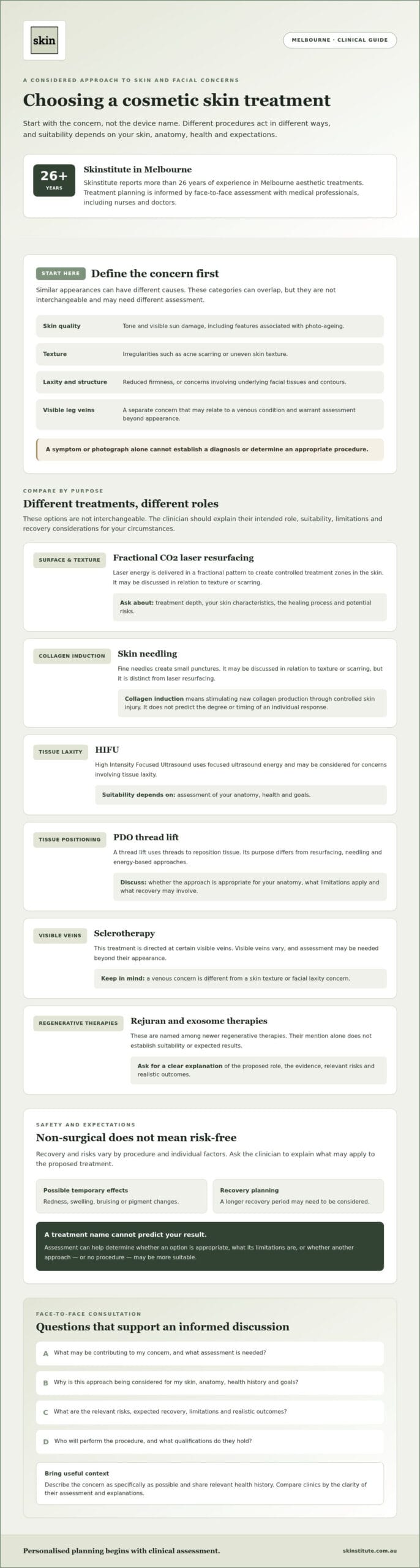
Fractional CO2 laser, skin needling, HIFU, Rejuran and exosome therapies work in different ways. Suitability depends on factors such as your skin, anatomy, health and expectations, so a treatment trend or device name alone can’t tell you whether an option is appropriate. A face-to-face clinical assessment can help connect your concern with an approach and give you a chance to discuss risks, recovery and realistic outcomes.
This guide explains common treatment categories, how clinicians assess suitability and what to ask when evaluating a clinic in Melbourne. It also covers why evidence, practitioner experience and transparent discussion matter, particularly for newer regenerative therapies. Skinstitute has more than 26 years of experience in Melbourne aesthetic treatments, with treatment planning informed by face-to-face assessment with medical professionals, including nurses and doctors.
Key Takeaways
- Define the concern first, whether it involves skin texture, laxity, facial structure or visible veins.
- Compare the purpose, suitability considerations and recovery needs of the cosmetic skin treatments melbourne clinics may offer.
- Non-surgical procedures still need individual assessment. Ask about relevant risks, expected recovery and realistic outcomes.
- Prepare for a consultation by describing your concern and health history, then ask who will perform the procedure and what qualifications they hold.
- Compare clinics by the clarity of their assessment and explanations. Skinstitute reports over 26 years of experience in Melbourne aesthetic treatments.
Melbourne Cosmetic Skin Treatments: Scope and Limitations
Cosmetic skin treatments are clinician-selected procedures intended to address a defined skin or facial concern. The term covers a range of clinical approaches, not one treatment or a guaranteed result. Cosmetic dermatology sits within dermatology, the broader field concerned with the skin and its conditions. In Melbourne, an assessment can help identify what may be contributing to a concern before a procedure is considered.
Start by describing the concern as specifically as you can. Skin quality can involve features such as tone and visible sun damage; texture includes irregularities such as acne scarring. Skin laxity describes reduced firmness, while facial structure relates to underlying tissues and contours. Visible leg veins are a separate concern and may relate to a venous condition. These categories can overlap, but they are not interchangeable and may need different assessment and management.
Which concerns may lead someone to consider treatment?
People may seek advice about photo-ageing, uneven texture, acne scarring, skin laxity or visible veins on the legs. Similar appearances can have different causes: uneven skin, for instance, may reflect scarring, changes associated with sun exposure or another skin feature. Visible veins also vary and may warrant assessment beyond their appearance. A symptom or photograph alone cannot establish a diagnosis or determine an appropriate procedure.
Non-surgical does not mean risk-free, suitable for everyone or free from recovery. Depending on the procedure and individual factors, temporary redness, swelling, bruising, pigment changes or a longer recovery period may need to be considered. A clinician should explain relevant risks and aftercare when discussing a proposed approach.
Why treatment names alone do not determine suitability
A procedure’s name, technology or popularity can’t show whether it suits an individual concern or predict a result. Assessment may consider skin characteristics, facial anatomy, medical history, relevant health considerations, goals and the recovery a person can accommodate. The clinician can then explain whether an option is appropriate, what limitations apply and whether another approach, or no procedure, may be more suitable.
Personalised treatment planning means matching a proposed procedure to a person’s skin, anatomy, health history and goals after clinical assessment. For people researching cosmetic skin treatments melbourne providers offer, this is a more useful starting point than choosing a procedure based on a trend or one visible feature.
How common cosmetic skin treatments work: from resurfacing to regeneration
Different procedures act on different tissues and concerns, so compare them by purpose rather than grouping them under a broad label such as “skin rejuvenation”. Options considered in Melbourne may include resurfacing, collagen induction, energy-based approaches, threads, vein treatment and regenerative therapies. Their mechanisms, suitability and recovery needs differ. No single method is right for everyone, and combining treatments requires individual assessment.
Treatments focused on skin surface, texture and regeneration
Fractional CO2 laser resurfacing delivers laser energy in a fractional pattern to create controlled treatment zones in the skin. Skin needling uses fine needles to create small punctures. Both may be discussed in relation to texture or scarring, but they are distinct procedures and should not be assumed to have equivalent effects. In each case, collagen induction describes the stimulation of new collagen production through controlled skin injury. It doesn’t predict the degree or timing of an individual response. Outside clinic-based procedures, individuals exploring options for surface renewal and texture irregularities often look into treatments such as the Skin Culture Home Skin Peel.
The proposed treatment depth and a person’s skin characteristics inform suitability and recovery planning. Before treatment, ask the clinician to explain the expected healing process and potential risks. For more detail, read this fractional CO2 laser resurfacing guide.
Treatments addressing laxity, facial structure or specific concerns
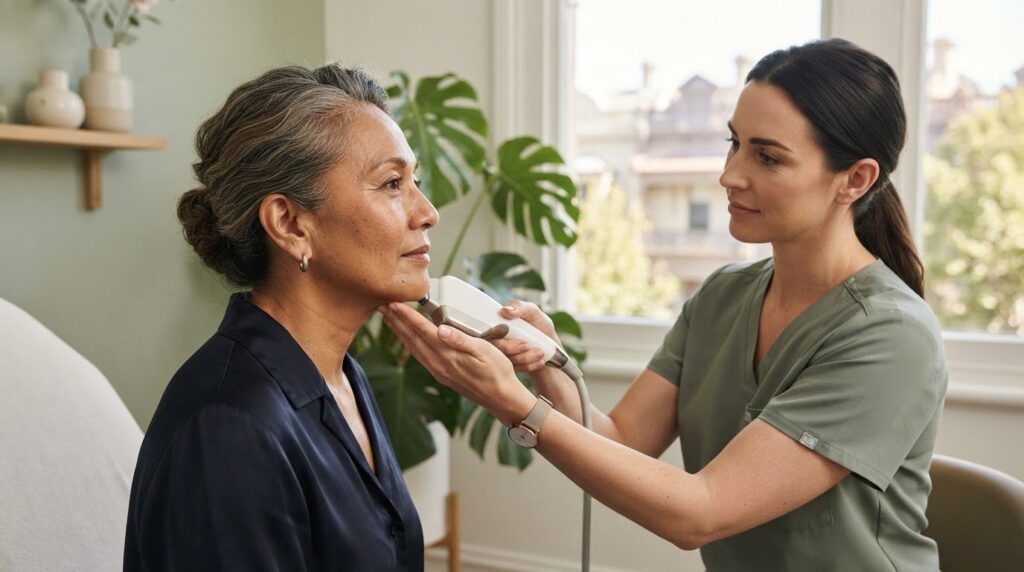
High Intensity Focused Ultrasound (HIFU) uses focused ultrasound energy and may be considered for concerns involving tissue laxity. A PDO thread lift uses threads to reposition tissue, while sclerotherapy is directed at certain visible veins. These treatments have different purposes. They are not interchangeable options for the same concern, and suitability depends on assessment of anatomy, health and goals.
Rejuran is a polynucleotide-based treatment, while exosome therapy is another approach discussed in the regenerative category. The term “regenerative” doesn’t establish how well a treatment is supported for a particular use or whether it suits an individual. Product formulation and application method matter, so ask the clinician to explain the proposed approach, evidence, risks and recovery. For background on polynucleotide treatment, see this clinical guide to Rejuran in Melbourne.
For cosmetic procedures, the Medical Board of Australia guidelines provide a reference point for understanding practitioner responsibilities. When comparing cosmetic skin treatments melbourne clinics offer, use these differences to ask focused questions rather than choosing by device name or popularity.
How to compare cosmetic skin treatments in Melbourne safely
Begin with the concern being assessed, not a ranking of devices or procedures. An approach intended for uneven texture may not address skin laxity, facial contour or visible leg veins. Non-surgical procedures can still carry risks, require aftercare and involve recovery. Suitability depends on the individual and the proposed procedure.
Match the treatment approach to the concern
Use the table as a starting point for questions, not as a treatment recommendation. It outlines broad categories, but not everyone with a particular concern is suitable for the listed approach.
| Concern | Clinical approach | Suitability assessment | Recovery discussion |
|---|---|---|---|
| Uneven skin texture or scarring | Resurfacing or skin needling may be considered, depending on the concern. | Ask how skin characteristics and treatment depth inform the recommendation. | Clarify expected healing, aftercare and any activity considerations. |
| Skin laxity | An energy-based approach such as HIFU may be assessed. | Discuss the area, tissue characteristics, health history and goals. | Ask what short-term effects and recovery needs may apply. |
| Facial contour concerns | A PDO thread lift may be considered for selected concerns involving tissue position. | Ask how facial anatomy and the intended change affect suitability. | Request a clear explanation of procedure-specific aftercare and recovery. |
| Visible leg veins | Sclerotherapy may be assessed for appropriate visible veins. | Ask whether the veins and your health history are suitable for this approach. | Discuss likely aftercare and what recovery may involve for you. |
Assess suitability, risks and recovery before deciding
Share relevant medical history, current medicines, skin characteristics and health factors with the clinician. Ask them to explain procedure-specific risks, aftercare, possible recovery requirements and limitations. They should also discuss reasonable alternatives and why a treatment might not be suitable. If the proposed option doesn’t clearly relate to your concern, ask how the clinician reached that recommendation.
Assessing suitability before selecting a treatment matters because the same procedure can involve different considerations for different people. Keep this in mind when comparing cosmetic skin treatments melbourne clinics offer, rather than assuming a non-surgical procedure is automatically low-risk or appropriate for everyone.
Skinstitute reports over 26 years of experience in Melbourne aesthetic treatments and tailors plans following face-to-face assessment. A face-to-face assessment at Skinstitute’s Melbourne clinic can help clarify which options, if any, warrant further discussion.
What to ask at a Melbourne cosmetic treatment consultation
A clinical consultation should help you understand the concern being assessed, whether a procedure may be suitable and what other options exist. If you’re considering cosmetic skin treatments melbourne providers offer, use the appointment to understand the reasoning behind a recommendation, rather than simply confirming a procedure you have already chosen.
Prepare relevant information before the appointment
Before attending, note the skin or facial concern you want to discuss, when you first noticed it and what matters most to you. Bring an accurate account of relevant health history, current medicines and daily skin products—whether clinical actives or sustainable formulations from Mono Skincare—including any recent routine changes. This information helps the clinician consider suitability and identify factors that may affect treatment planning.
You don’t need to arrive committed to a particular device or procedure. Describe your priorities in your own words, such as wanting to address uneven texture or understand visible leg veins. A clear account of your goals, health and routine gives the clinician a better basis for discussing options and their limits.
Questions that support informed decision-making
Work through the discussion in a practical order: explain your concern, review your history, ask how suitability will be assessed, then compare the options. Consider asking:
- What may be contributing to the concern, and what assessment supports that view?
- Which approaches might be appropriate for me, and why do you recommend or exclude each one?
- Who will perform the procedure, and what professional qualifications and experience do they have for it?
- What risks apply to the proposed procedure, and how might my health history or medicines affect them?
- What recovery, aftercare or temporary changes should I plan for?
- What are the realistic limitations, and what outcome can’t this approach address?
- What follow-up or review do you recommend, and how should I raise a concern after treatment?
Clear answers should explain both the rationale for treatment and reasons to defer or choose another option. You can ask for time to consider the information rather than deciding during the appointment. Skinstitute’s Melbourne medical-grade aesthetic treatment guide provides clinic-specific context about its approach and treatment categories.
To discuss your concerns and questions, arrange a face-to-face assessment with Skinstitute.
Choosing a Melbourne clinic and taking a considered next step
Choosing a clinic for cosmetic skin treatments melbourne patients are considering involves more than comparing procedures. Find out who will assess you, who will perform any proposed treatment and what qualifications and relevant experience they have. Before deciding whether to proceed, you should receive clear information about suitability, risks, recovery, alternatives and limitations.
What transparent, patient-centred care should include
A considered recommendation should follow an individual assessment, not a fixed package or device-led sales discussion. The clinician should explain how the proposed approach relates to your concern, what it may not address and whether another option, or no treatment, may be more appropriate. You should have the opportunity to ask questions and consider the information without pressure to decide immediately.
In Australia, AHPRA guidelines and relevant professional standards provide context for the practice of registered health practitioners. Ask how the practitioner’s qualifications and experience relate to the specific procedure being discussed. Direct answers can help you judge whether the consultation has addressed your questions and whether you understand the next steps.
How Skinstitute approaches personalised treatment planning
Skinstitute is a Melbourne clinic with over 26 years of aesthetic industry experience. Its treatment planning follows a face-to-face consultation with medical professionals, including nurses and doctors. The assessment gives you an opportunity to discuss your concern, relevant health considerations, skin characteristics, anatomy and personal goals before considering available options.
The purpose of an assessment is to connect a concern with a suitable clinical approach, not to promise a particular procedure or result. A practitioner can explain why an option may be considered, what risks and recovery requirements are relevant, and what limitations apply to your situation. If you’re unsure, it’s reasonable to take time to weigh the information before making a decision.
For a considered next step, arrange a clinical consultation with Skinstitute to discuss your goals, questions and whether any treatment options may be appropriate for you.
Make your next step an informed one
The right approach to cosmetic skin treatments melbourne begins with the concern being assessed, not a procedure’s popularity. Resurfacing, skin needling, treatments for laxity and vein procedures have different purposes, suitability considerations and recovery needs. A clinical assessment helps determine whether an option fits your skin, anatomy, health history and goals.
Before deciding, ask who will perform the procedure, what risks and aftercare apply, what limitations to expect and whether alternatives are available. A clear recommendation should be individualised and leave you room to consider your options without pressure.
Skinstitute reports over 26 years of aesthetic industry experience in Melbourne. Face-to-face consultations inform personalised treatment planning, helping connect your concerns with options to discuss with medical professionals. With clear information and careful assessment, you can make a considered decision that reflects your needs and priorities.
Arrange a clinical consultation with Skinstitute to discuss your concerns and whether any treatment options may be appropriate for you.
Frequently Asked Questions
How do I choose a cosmetic skin treatment in Melbourne?
Choose based on the concern a clinician identifies, not a treatment’s popularity or name. Skin texture, laxity, facial contour and visible leg veins may call for different approaches. During an assessment, discuss your skin characteristics, anatomy, health history, goals and capacity for recovery. Ask why an option is recommended, what it may not address and whether alternatives are suitable. This helps you compare cosmetic skin treatments in Melbourne on clinical grounds.
Are non-surgical cosmetic skin treatments suitable for everyone?
No. Suitability depends on the procedure and individual factors, including skin characteristics, anatomy, medical history, current medicines and treatment goals. A clinician may recommend an alternative, defer treatment or advise that a procedure isn’t appropriate. Share relevant health information fully and ask how it affects the assessment. A consultation should consider whether the likely benefits, risks and recovery requirements fit your circumstances, rather than assume a non-surgical option suits everyone.
What happens during a cosmetic treatment consultation?
A consultation usually begins with a discussion of your concern and what you hope to address. The clinician reviews relevant health history and assesses factors related to the proposed treatment, then explains options and suitability. You should also have an opportunity to discuss risks, recovery, alternatives and limitations. At Skinstitute, face-to-face consultations with medical professionals inform personalised treatment planning. You can ask questions without committing to a procedure.
Can different cosmetic skin treatments be combined?
Sometimes, but combining procedures isn’t appropriate for everyone and shouldn’t be assumed to improve an outcome. Each treatment has a distinct purpose, and the clinician needs to consider how the procedures relate to your concern, health, skin and recovery needs. Ask why a combination is being proposed, what each component is intended to address, what risks may apply and whether a staged or single approach is more appropriate for you.
How long is recovery after a cosmetic skin treatment?
Recovery varies by procedure and individual, so there isn’t one timeframe that applies to every treatment. The approach used, treatment area, skin characteristics and personal health factors can affect aftercare or downtime. Before proceeding, ask what changes to expect, how to care for the treated area, whether usual activities may need to be adjusted and what follow-up is recommended. Another person’s recovery isn’t a reliable prediction of your own.
What should I ask a cosmetic treatment practitioner before proceeding?
Ask who will assess and perform the procedure, and what qualifications and relevant experience they have. Clarify why the option is recommended, what alternatives exist and why some may not suit you. Request a clear explanation of procedure-specific risks, expected recovery, aftercare and realistic limitations. Also ask what follow-up is advised and whom to contact with concerns. A practitioner should give you information you can understand and time to consider your decision.
Are cosmetic skin treatments risk-free because they are non-surgical?
No. Non-surgical procedures can still involve risks, side effects and recovery requirements, which vary according to the procedure and the person. A clinician should explain relevant risks and aftercare before you decide, including how your health history or medicines may affect suitability. Ask what signs require follow-up and what support is available if you have concerns. Decide only after you understand the proposed approach, its limitations and the alternatives.