Cosmetic treatment for looking refreshed: what may help
November 9, 2026
Natural-Looking Subtle Cosmetic Enhancements in Melbourne
November 11, 2026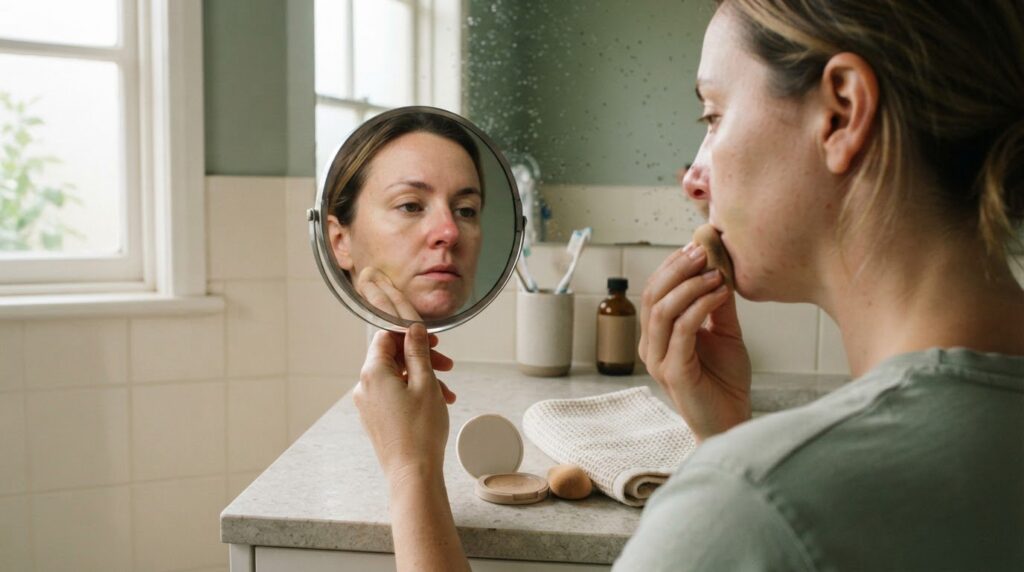
Makeup can soften the appearance of cosmetic work, but it cannot reliably conceal swelling, bruising or changes during recovery. If you’re getting cosmetic work done without anyone knowing, jawline contouring may alter how facial angles appear, while pure white concealer can look unnatural and may not suit every skin tone.
It’s understandable to want a discreet result, especially when you have work or social plans. This guide explains how contour placement affects the jawline’s appearance, why concealer shade matters and where makeup has limits. It also covers why recovery cannot be reduced to a makeup technique, and why realistic expectations matter when planning for a subtle appearance.
Key Takeaways
- Jawline contour can alter how facial angles appear, but placement that doesn’t follow your natural features may look conspicuous.
- Pure white concealer can appear unnatural; choose coverage and shades that suit your skin tone and the area being concealed.
- Swelling, bruising and downtime vary between procedures, so plan around the recovery needs of the specific treatment rather than relying on makeup alone.
- Consider how hiding recovery may affect support from family or a partner, and discuss suitable non-surgical options during a clinical assessment.
What cosmetic procedures have the shortest recovery time and least visible signs?
No single procedure guarantees the shortest or least visible recovery for everyone. The comparison depends on the treatment area, technique and signs that matter most to you. A small mark near the hairline, for example, may be easier to cover than swelling across the cheeks. Consider the visible effects, not just the procedure’s name.
Before deciding, list the signs that could affect work or social plans: redness, bruising, swelling, dressings or temporary changes to facial movement. Ask which signs may occur with the specific procedure and how they could change during recovery. A treatment with few visible marks may still involve changes makeup cannot conceal. Plan around the most noticeable sign instead of assuming every procedure has the same recovery.
Cosmetic surgery also involves a decision period, not only physical recovery. For cosmetic surgery, a mandatory 15-day waiting period must be allowed and cannot be shortened, according to Australian Health Ministers’ Conference. This requirement matters when planning dates around work or events. Allow time for the required decision period before arranging any surgery; don’t treat makeup as a substitute for planning recovery.
For a natural look in daylight, contour should follow facial anatomy. Rob Povey notes that contour placed higher than the natural cheek hollows may look unnatural in broad daylight. Check the placement in natural light before relying on it to soften a visible change. Heavy or misplaced contour can draw attention to the area instead.
Makeup artists have used light and shadow to accentuate facial features for generations. This changes how features appear; it does not remove swelling, bruising or other physical signs. When comparing options, weigh the intended effect against visible recovery signs and the time you can allow. A discreet plan starts with realistic expectations, not a promise that nobody will notice.
For faux freckles, the artist recommends using at least two or three colours. This can inform a makeup plan, but it is not a substitute for allowing physical recovery. Makeup may change how features appear, not remove swelling, bruising or other physical signs.
How long does swelling, bruising and downtime last after common cosmetic procedures?
There is no single recovery timeline for every cosmetic procedure. Swelling, bruising and visible skin changes depend on the method, the area treated and the body’s response. A small injection site on the cheek, for example, differs from resurfacing across a larger facial area. The procedure name alone cannot tell you when signs will become unnoticeable.
Distinguish physical recovery from social downtime. Physical recovery concerns how the treated area feels and changes; social downtime is when visible signs affect work or plans. After injections, consider whether small marks or local bruising could be noticeable. With skin resurfacing, consider visible surface changes and aftercare requirements. These procedures involve different signs, so one timeline cannot describe both.
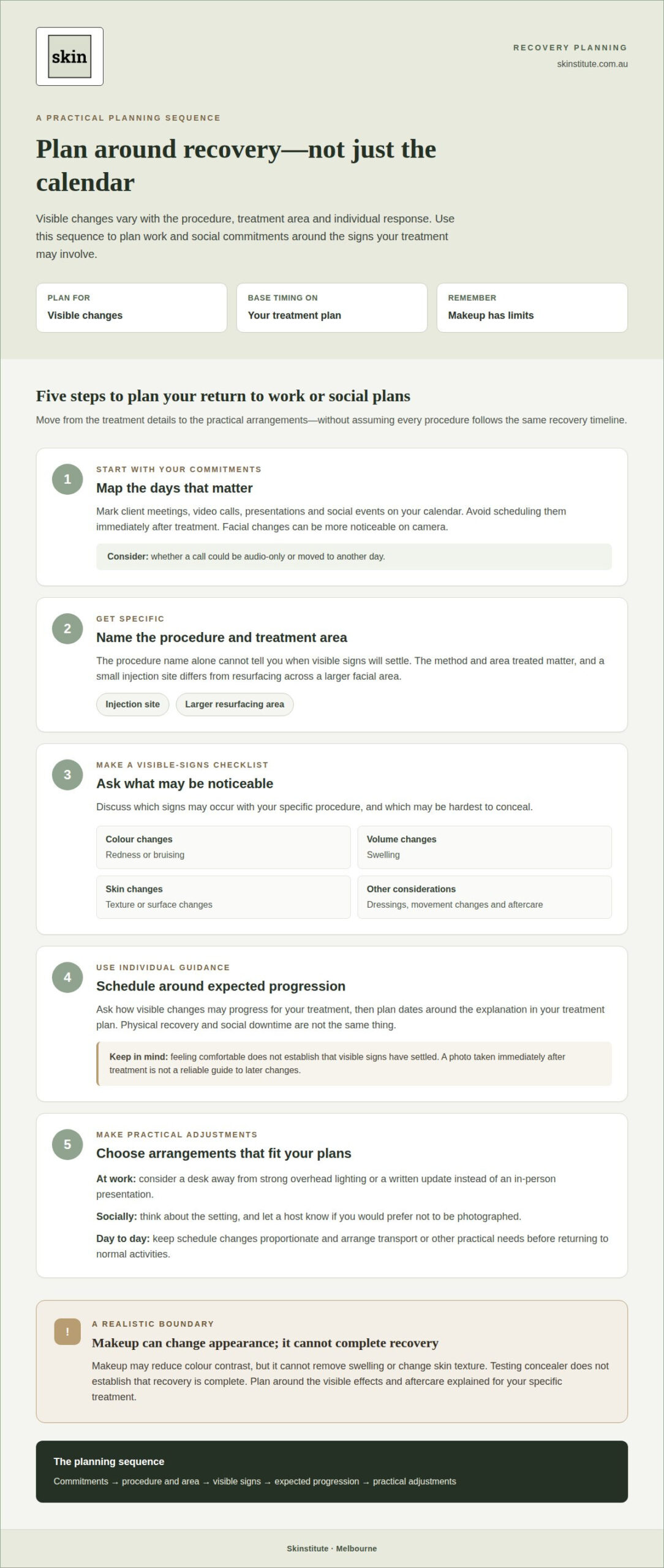
Plan by identifying the feature that may be hardest to conceal. If bruising is the concern, consider whether its position could show when you speak or turn your head. If redness or texture changes are more likely to draw attention, assess them separately from swelling. Makeup may reduce colour contrast, but it cannot remove swelling or change skin texture. Testing concealer does not establish that recovery is complete.
Before setting a work or social date, follow this sequence: identify the procedure and treatment area, establish which visible changes may occur, then schedule around the expected progression explained in your treatment plan. Don’t assume feeling comfortable means visible signs have settled. A photograph taken immediately after treatment is not a reliable guide to later changes either.
For a subtle result, compare procedures by their likely visible effects and aftercare, not by an assumed number of recovery days. The depth and area treated matter: a broader or more intensive treatment may involve different recovery needs from a localised approach. For those aiming to refine their lower facial profile or smile without any downtime, discreet dental solutions—such as clear aligners highlighted by Reston Family Dental Center—show how gradual, non-invasive adjustments can avoid bruising and swelling entirely. Build plans around the specific procedure and the signs it may produce.
How can someone conceal cosmetic procedure recovery safely at work or socially?
If getting cosmetic work done without anyone knowing is your goal, plan your first days back around actual commitments. Mark client meetings, video calls and social events on a calendar, then avoid scheduling them immediately after treatment. Facial changes can be more noticeable on camera, so consider whether a call can be audio-only or moved to another day.
At work, choose practical adjustments that don’t attract attention. You could arrange a desk away from strong overhead lighting or replace an in-person presentation with a written update. If a colleague asks about an unexpected change, a brief response such as “I’m taking a little personal time” can set a boundary without inviting further discussion.
For social plans, consider the setting as well as the guest list. A quiet café may feel more manageable than a brightly lit family gathering with photographs. You can also tell the host you’d prefer not to be photographed, without explaining why. These choices protect your privacy without requiring an elaborate story that may be difficult to maintain.
If you’re getting cosmetic work done without anyone knowing, small details may prompt questions. Changes to your routine, such as wearing sunglasses indoors or cancelling several plans at once, can seem more conspicuous than a straightforward explanation. Keep schedule adjustments proportionate, and arrange transport or other practical needs before returning to normal activities.
Makeup preparation also affects how coverage looks. Apply cream or liquid products before powder; applying powder first may cause later products to ball up. Keep your routine familiar rather than introducing several new products at once. A consistent approach to clothing, appointments and makeup can help you feel prepared without making concealment another source of pressure.
What are the risks of trying to hide cosmetic surgery from family or a partner
Keeping a procedure private is a personal decision, but secrecy can affect communication with people close to you. A partner may notice changes to your routine or see you avoiding usual activities. If your explanation feels difficult to maintain, you may spend energy managing questions rather than focusing on your own needs.
Consider what practical support you might value before making plans. You may prefer someone to accompany you to an appointment, prepare a meal or help with household tasks. Someone who doesn’t know what is happening may not understand why you need help. You can protect your privacy while still telling a trusted person what support would be useful.
Concealment can also affect shared plans. If you cancel a family lunch or decline a weekend away without explanation, others may interpret the change as distance or frustration. A simple boundary, such as saying you have a personal matter to manage, can preserve privacy without requiring a detailed account. Decide in advance what you’re comfortable sharing.
For a partner, the decision may involve trust as well as appearance. You might discuss the outcome you hope for without sharing every procedural detail, or choose not to discuss it. Thinking through the conversation beforehand can help you express your preference calmly without promising what others will or won’t notice.
Before proceeding, weigh privacy against the support and openness you want in your relationships. A confidential discussion with a qualified practitioner can help you understand treatment considerations and plan around your personal circumstances. If you’re considering an aesthetic treatment, discuss treatment planning and recovery with a qualified practitioner.
To limit questions at work, the page suggests redirecting coworkers’ attention to a changed hairstyle or hair colour after cosmetic surgery. Introducing new accessories or professional ear curation, such as through specialists like Stellar Malaysia, provides another visible talking point to divert focus. These options may help manage attention without asking family or a partner to keep a secret.
The NSW Ministry of Health states that, from March 2017, facilities in NSW undertaking certain cosmetic procedures, except dental procedures, have been required to be licensed. Checking a facility’s status can be part of planning, alongside deciding what support and privacy you want.
Skinstitute
Skinstitute’s Melbourne team can help you consider whether a non-surgical treatment fits your goals, anatomy and recovery plans. A face-to-face assessment can clarify the factors to consider when planning around work or social commitments. Options include prescription injectables, a PDO thread lift, Fractional CO2 and High Intensity Focused Ultrasound (HIFU), selected according to the concern being addressed.
A personalised plan considers suitability, likely effects and aftercare before you decide. This helps set realistic expectations and weigh discretion alongside your aesthetic goals.
Contact Skinstitute to discuss your concerns and treatment options.
Make a considered plan for your next step
Discretion can inform your decision, but it needn’t be the only measure of whether a treatment is right for you. Consider what you want to change, how comfortable you feel with the decision and what recovery arrangements suit your life. A plan that reflects your priorities may feel more manageable than trying to control every response from others.
If getting cosmetic work done without anyone knowing is your priority, discuss that concern openly during treatment planning. This can support a realistic conversation about suitability, expected recovery and options that align with your goals. You can also decide what personal information you’re comfortable sharing with family, a partner or colleagues.
Take the next step when you’re ready. Discuss your options with Skinstitute and make an informed decision that feels right for you.
Frequently Asked Questions
What non-surgical cosmetic treatments have minimal downtime in Australia?
Some non-surgical options, including prescription injectables and High Intensity Focused Ultrasound (HIFU), may suit people seeking treatments with minimal downtime, but they can still cause visible or physical effects. Downtime depends on the treatment area, technique and individual response. Someone who works on camera may prioritise visible marks, while swelling may be more noticeable in a customer-facing role. Discuss these factors during an assessment at Skinstitute, where treatment plans are tailored to your goals in a face-to-face consultation in Melbourne.