Laser Skin Resurfacing: Choosing a Season for Treatment
November 15, 2026
Exosome Therapy for the Under-Eye Area
November 17, 2026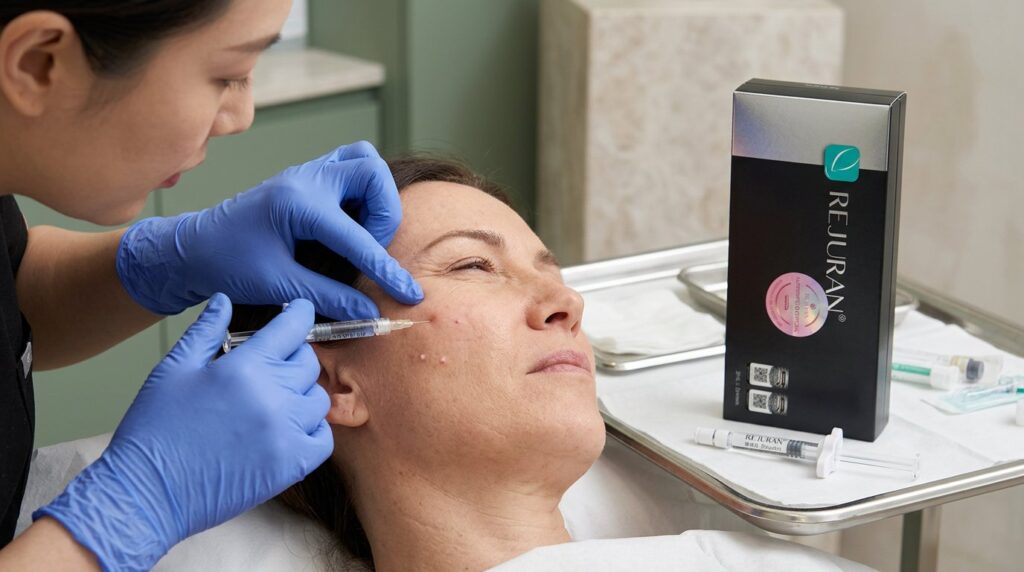
Is Rejuran treatment painful? The injections can cause stinging, prickling or pressure as the product is delivered into the skin. Discomfort varies by person and treatment area. Temporary bumps, redness or tenderness may occur afterwards.
It’s reasonable to want to know what a procedure feels like before deciding whether it suits you. Rejuran is a polynucleotide-based treatment used for skin rejuvenation. Knowing how it is administered can help explain why some people find it more uncomfortable than others.
This guide explains how Rejuran is administered, what can contribute to injection discomfort and how pain tolerance may affect the experience. It also covers temporary bumps and sensations that may follow treatment, helping you approach a professional consultation with realistic expectations.
Key Takeaways
- Understand why injections into the skin can cause stinging, prickling or pressure during treatment.
- Learn how the number of injection points, treatment area and personal sensitivity can shape the experience.
- Recognise the temporary bumps and other skin changes that may occur afterwards.
- Explore how Rejuran’s polynucleotides relate to skin rejuvenation and what to discuss during a professional assessment.
1. Why Is Rejuran Painful?
Rejuran is injected into the dermis, the middle layer of the skin. Each needle entry can cause a sharp sting. Polynucleotide placement may also create pressure. A full-face session can involve hundreds of tiny injections. A standard session may require needle insertion over 100 times. Repeated entries can make discomfort accumulate, although each point is brief.
Discomfort can vary with the treatment area, injection depth, technique and your pain tolerance. More sensitive facial regions, including the lips, may feel more uncomfortable. Manual injections can deliver product more deeply and in a concentrated way, which may increase pressure at each injection point. The product’s viscosity can also add resistance as it passes through a needle. Mechanical injectors provide more uniform depth and dosage, though their vacuum may cause some product loss.
Technique affects the sensation and whether numbing may help. Topical numbing cream can reduce surface sensation before injections, but may not fully ease discomfort from repeated injections into the skin. Manual and mechanical delivery differ in depth and concentration, affecting both pressure and needle sensation. Stinging may continue briefly after the needle is withdrawn, while tightness or prickling can linger for a few minutes. Tell the treating clinician beforehand if pain or anxiety may affect your comfort.
Common injection-site effects include small bumps, redness, swelling and bruising. After superficial injections, visible bumps may last 24–48 hours. Raised bumps can take 24–72 hours to fade. Injection depth can affect the local response, and deeper injections may cause swelling. Redness or subtle throbbing can also occur after treatment. These effects reflect the response around injection points; worsening or persistent symptoms need clinical assessment.
2. Pain expectations and individual pain tolerance
Rejuran can feel like repeated pinpricks, sharp stings or brief pressure. Each injection may hurt for a few seconds, with tightness or prickling lingering briefly. Pain tolerance, anxiety and the sensitivity of the treatment area all affect the experience. The lip region, for example, may be more sensitive than other facial areas.
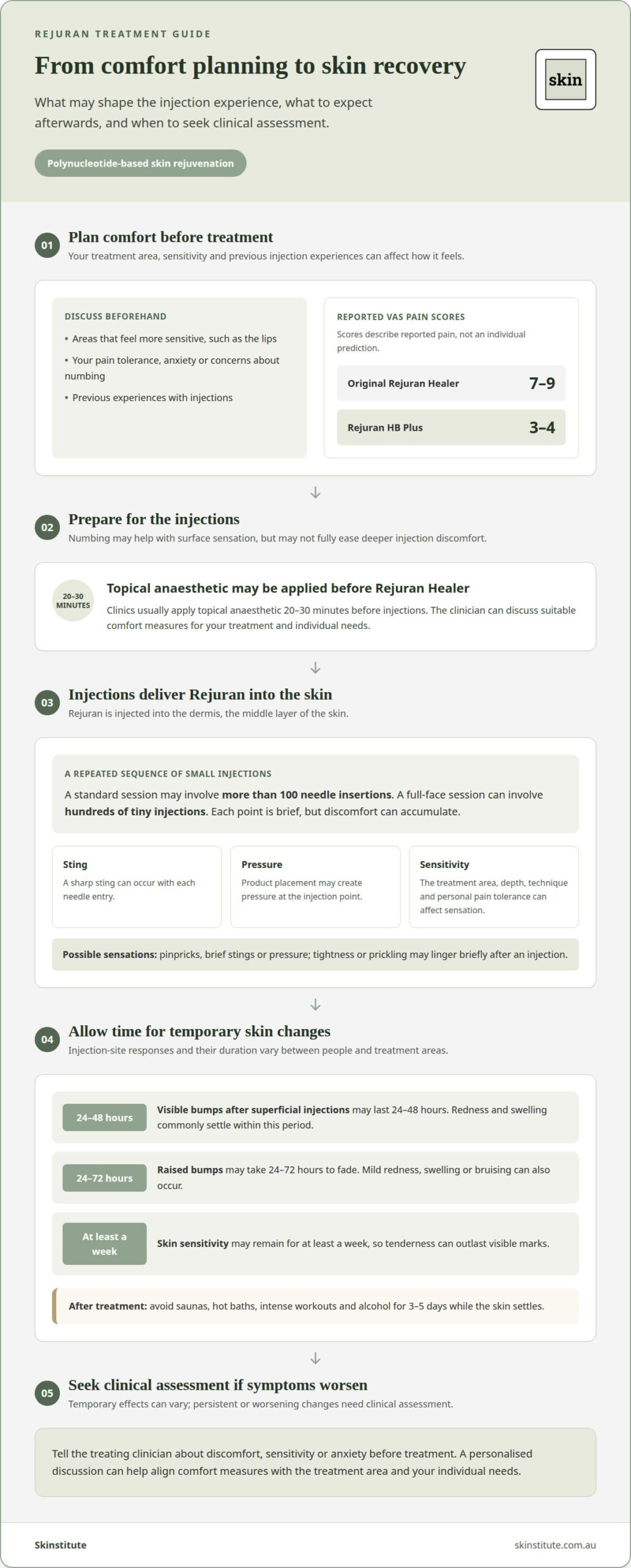
Reported visual analogue scale (VAS) scores are 7–9 for original Rejuran Healer. Rejuran HB Plus has reported scores of 3–4. These scores describe reported pain, not an individual prediction. Rejuran is generally considered more uncomfortable than other treatments, including some skin boosters. A topical numbing cream can reduce surface sensation, but may not control deeper injection discomfort for everyone.
Clinics usually apply topical anaesthetic 20–30 minutes before Rejuran Healer injections. The full appointment also includes preparation and treatment, so its duration depends on the area treated and injection technique. If discomfort is a concern, tell the clinician beforehand. Depending on suitability, pain relief may combine topical numbing with local anaesthetic injections or Rejuran mixed with anaesthetic. Deep breathing or meditation may also help manage anxiety during the procedure.
Before treatment in Australia, discuss previous injection experiences, sensitivity and any concerns about numbing. During treatment, expect a sequence of injections, with sensations that can vary across facial areas. Afterward, the skin may feel sensitive, and redness or swelling can occur; these responses differ between individuals. A personalised discussion helps align comfort measures with the treatment area and your pain tolerance. A Rejuran treatment assessment can address these considerations before treatment planning.
Topical numbing cream may not sufficiently control pain for some people undergoing Rejuran treatment. Rejuran involves multiple micro-injections, and the procedure can be painful without adequate pain relief. The number of injections required can also affect the overall pain experience. Rejuran HB Plus reduces the visual analog scale pain score by over 50% compared with the original formula, though this does not predict how an individual will feel.
If you have a low pain tolerance, tell your practitioner beforehand so comfort measures can be discussed. Clinics may offer stronger numbing or oral analgesics for people concerned about discomfort during Rejuran Healer treatment. Discussing your concerns in advance helps the practitioner consider suitable measures for your planned treatment.
3. Post-treatment bumps and discomfort
Small raised bumps can appear where Rejuran is injected, creating a temporarily uneven skin texture. After superficial injections, visible bumps may last 24–48 hours, while raised bumps more generally can take 24–72 hours to fade. Their appearance reflects local injection-site changes, not the final regenerative effects of treatment. Redness, mild swelling or bruising can also occur around the treated points.
The duration and sensation vary with injection depth and the area treated. Redness and swelling commonly settle within 24–48 hours, while subtle throbbing and bumps may last 1 to 3 days. Mild swelling can persist for a few hours; swelling after deeper injections usually resolves within 12 hours. Skin may remain sensitive for at least a week, so tenderness can outlast visible marks.
Some areas may feel more sensitive during and after injections. The lip region, for example, may be more uncomfortable than less sensitive facial areas. Multiple sessions can mean repeated periods of temporary tenderness and visible injection points. Tell the practitioner which areas feel most sensitive so the treatment method and comfort measures can be planned with your concerns in mind.
Practitioners can adapt injection placement and technique to the treatment area, while topical numbing may help reduce discomfort during the procedure. If pain relief needs further tailoring, options such as local anaesthetic may be considered according to suitability. After treatment, avoid saunas, hot baths, intense workouts and alcohol for 3 to 5 days. This gives the skin time to settle while bumps, redness and swelling resolve. Persistent or worsening changes warrant clinical assessment.
The treatment area can affect discomfort, and the lip region may be more sensitive. Skin may remain highly sensitive for at least a week, while mild swelling may last a few hours.
4. Rejuran Healer and polynucleotide treatment
Rejuran Healer is a polynucleotide treatment delivered through injections into the skin. Its purpose is regenerative skin rejuvenation, rather than an immediate change in facial volume. A typical protocol involves three sessions spaced 2-6 weeks apart. A full-face session can involve dozens of micro-injections, so the number and distribution of injection points shape the treatment experience. The polynucleotide solution is placed into the skin, making injection technique and comfort planning relevant.
Formulations can differ. Rejuran HB contains lidocaine, a local anaesthetic, while the original Rejuran Healer does not contain this ingredient. A blunt cannula can place Rejuran beneath the skin with fewer injections than traditional microinjection. This changes the delivery method, but a cannula may not suit every treatment area. The clinician considers the treatment plan and delivery approach together.
Recovery and skin changes follow a gradual timeline. Some patients notice improved hydration and glow within 3 weeks. Longer-lasting improvements in treated skin typically develop over 3–6 months. These are distinct stages: early changes do not represent the full regenerative effect. Rejuran has been used in Asia for more than 10 years, but the treatment plan still needs to reflect the individual’s skin and concerns.
The practical takeaway is to discuss both the expected skin response and the injection method before treatment. Ask how the planned approach relates to the area being treated, your comfort needs and the recovery period. Polynucleotide treatment is not an instant result, and repeat sessions form part of the typical protocol. To discuss whether this approach suits your skin goals, book a Rejuran treatment discussion.
Skinstitute: Rejuran
Based in Melbourne, Skinstitute provides Rejuran treatment for people considering polynucleotide-based skin rejuvenation who want to discuss comfort and recovery. A face-to-face consultation helps shape a treatment plan around your skin concerns, the areas being treated and your sensitivity to injections.
During the discussion, Skinstitute’s medical professionals can explain the injection approach, expected temporary skin responses and suitable comfort measures. You can share your previous treatment experiences and discuss concerns about pain before deciding whether Rejuran aligns with your goals. If another option is more appropriate, the consultation can help clarify next steps without treating Rejuran as a universal solution.
For an individual discussion about Rejuran, contact Skinstitute.
Plan your next step with confidence
Make comfort part of your treatment decision from the outset. If you’re asking, “Is Rejuran treatment painful?”, raise that concern in a personalised discussion. Explain your priorities, previous experiences with injections and any areas where sensitivity is a particular concern.
That conversation can clarify what the procedure involves for your skin goals and which comfort measures may suit you. It is also an opportunity to discuss timing, recovery needs and whether Rejuran aligns with your expectations. An informed decision should reflect both the intended skin rejuvenation approach and your readiness for the treatment process.
If you would like to explore whether Rejuran is appropriate for you, contact Skinstitute to discuss Rejuran. A considered conversation is a positive next step towards choosing a treatment plan that feels right for you.
Frequently Asked Questions
How does Rejuran work?
Rejuran delivers polynucleotides into the skin as part of a regenerative treatment. One formulation detail is relevant to comfort: Rejuran HB Plus contains 0.3% lidocaine, a local anaesthetic. Lidocaine’s role is to reduce sensation; it is separate from the polynucleotide component. The formulation used is one point to discuss when considering the treatment approach.
Why Is Rejuran Painful?
Before Rejuran Healer, discuss caffeine intake with your treating practitioner, particularly if you already feel sensitive to injections. Mention your usual caffeine intake and any concerns during the pre-treatment discussion, so they can be considered alongside the treatment area and comfort approach.
How many sessions are needed?
A typical initial course involves three treatment sessions. The appointments are planned as a course, allowing the treatment plan to be reviewed as it progresses. The area being treated and your skin goals help shape the plan. Before proceeding with the full course, discuss how progress will be assessed.
How many sessions are recommended?
Three sessions form the typical initial protocol, but an individual recommendation depends on the treatment plan and clinical assessment. Rejuran is not a one-size-fits-all schedule. Clarify which skin concerns the proposed course targets, how the practitioner will assess your response between appointments and whether the plan may need adjusting as treatment progresses.
Is Rejuran safe?
Suitability should be assessed before treatment, taking your health history and the planned procedure into account. Discuss any expectation of sedation with the practitioner, who can explain the comfort approach available for your treatment and whether it is suitable for you.
Is the treatment painful?
Yes, discomfort can occur, though the experience differs from person to person. If you’re wondering whether Rejuran treatment is painful, tell the practitioner if you need a pause or find the sensation difficult during your appointment. Clear communication lets the practitioner respond in the moment and discuss whether the treatment approach remains suitable for you.