How deep does fractional CO2 laser go, and what affects depth?
November 14, 2026
Is Rejuran Treatment Painful? What to Expect
November 16, 2026
The best season to get laser skin resurfacing is the time of year when you can limit sun exposure and allow for the treatment’s recovery, rather than a single season that suits everyone. In Melbourne, cooler months may make this easier to plan, but treatment still requires careful sun protection before and after the procedure. Avoid tanning and heavy sun exposure for four weeks before treatment.
It’s sensible to weigh potential skin changes against recovery time and possible side effects. The right approach depends on the laser type, treatment depth and concern being addressed. This guide explains resurfacing, how ablative and non-ablative treatments differ, what they may help improve, and how to plan around Melbourne’s seasons.
Key Takeaways
- Plan treatment for a period when you can limit sun exposure and allow time for your skin to recover.
- Understand how treatment depth affects the difference between ablative and non-ablative resurfacing, including recovery needs.
- Consider whether your main concern is fine lines, sun damage, acne scarring or uneven texture when discussing treatment options.
- Include medication use, health conditions and the possibility of redness or pigmentation changes in your treatment planning.
What is laser skin resurfacing?
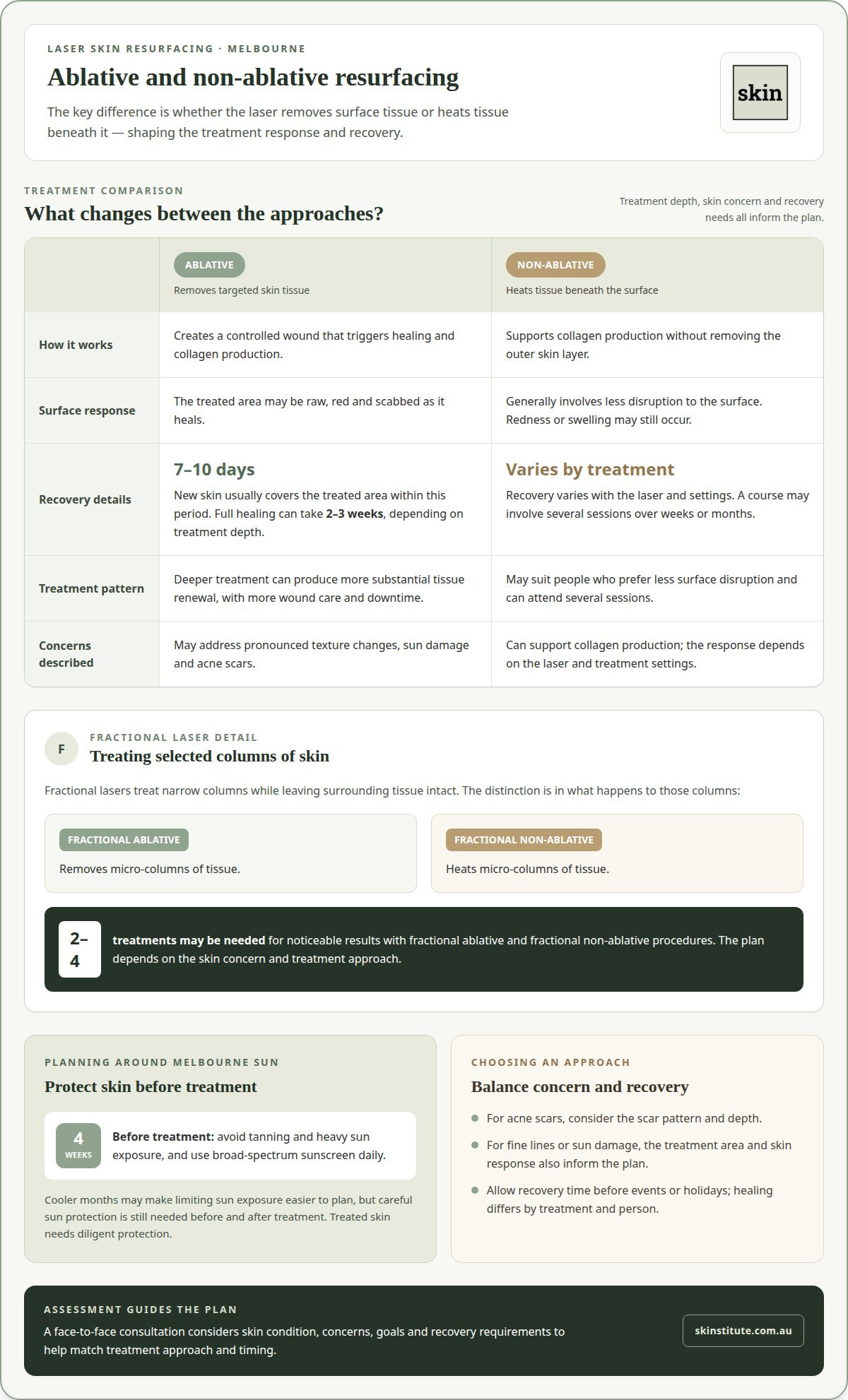
Laser skin resurfacing uses focused light energy to remove or heat selected skin layers. This controlled injury supports renewal and can stimulate collagen production. The laser type determines how deeply it acts and how much recovery may be needed. Ablative treatments remove surface tissue; non-ablative treatments heat underlying tissue without removing the outer layer. A pulsed beam can deliver energy in controlled bursts. These non-surgical treatments may help improve fine lines, uneven texture and sun-related changes.
A face-to-face consultation helps match the treatment to skin condition, concerns and goals. There is no single best age: people in their twenties or thirties may seek acne-scar treatment, while those in their forties or beyond may address fine lines or sun damage. The practitioner considers skin tone, medical history, medications and previous treatments. Aspirin can increase bleeding risk, while photosensitising medicines such as doxycycline or minocycline need discussion. Cleveland Clinic advises stopping these medicines at least 72 hours before treatment; never change prescribed medication without medical advice. People who have taken isotretinoin in the past year may also be cautioned against resurfacing.
Sun exposure affects treatment timing. Avoid tanning and heavy sun exposure, and use broad-spectrum sunscreen daily, for four weeks before treatment. Unprotected exposure in the two months before treatment can cause lasting colour changes in treated areas. Cleveland Clinic advises avoiding deep facial peels for four weeks before laser resurfacing.
In Australia, discuss the practitioner’s training and clinical oversight during consultation; these details help you understand who will perform the treatment and how care is managed. Recovery depends on the type of laser and treatment depth: Cleveland Clinic gives up to two weeks for CO2 resurfacing. Non-ablative recovery varies, and a course may involve multiple sessions. Allow recovery time before events or holidays; there is no universal schedule, because healing differs by treatment and person.
Ablative and non-ablative laser resurfacing
Ablative resurfacing removes targeted skin tissue, creating a controlled wound that triggers healing and collagen production. It can address pronounced texture changes, sun damage and acne scars, but recovery involves visible skin changes. The treated area may be raw, red and scabbed as it heals. New skin usually covers it within 7 to 10 days, while the full healing process can take 2 to 3 weeks, depending on treatment depth.
Non-ablative procedures heat tissue beneath the skin’s surface without removing the outer layer. This approach can support collagen production while generally involving less disruption to the surface. Some treatments use topical numbing cream to manage discomfort. Redness or swelling may still occur, and the response depends on the laser and treatment settings. A series is often needed; non-ablative or fractional Er:YAG resurfacing may involve 2 to 4 treatments over weeks or months.
Fractional lasers treat narrow columns of skin while leaving surrounding tissue intact. Both fractional ablative and fractional non-ablative procedures may require 2 to 4 treatments for noticeable results. The distinction matters: fractional ablative treatment removes micro-columns of tissue, while fractional non-ablative treatment heats them. For acne scars, the practitioner considers scar pattern and depth; for fine lines or sun damage, the treatment area and skin response also inform the plan.
Choosing between procedures means balancing the concern being treated against recovery and treatment intensity. Deeper ablative resurfacing can produce more substantial tissue renewal, but it requires more wound care and downtime. Non-ablative treatment may suit people who prefer less surface disruption and can attend several sessions. Seasonal timing still matters for both, because treated skin needs diligent sun protection. A face-to-face assessment can clarify which approach fits your skin and calendar; an individual resurfacing assessment can help shape that discussion.
Benefits for wrinkles, sun damage and acne scars
Laser resurfacing can soften the appearance of fine lines and wrinkles by stimulating collagen production, the skin’s process of forming new collagen after controlled injury. Collagen production continues for months after treatment, so texture changes develop gradually rather than appearing immediately. For cosmetic planning, assess skin condition over time rather than judging results during early healing. The depth and pattern of wrinkles help shape the treatment approach.
Sun damage can appear as uneven tone, rough texture and fine lines. Resurfacing targets selected skin layers to encourage renewal, while the laser type and treatment depth influence the response. An assessment considers the affected areas and extent of visible damage before planning treatment. Melbourne’s strong sun exposure also makes ongoing sun protection important for skin health after resurfacing.
Acne scars vary in depth, shape and distribution, so a treatment plan should reflect the scar pattern rather than treating every mark alike. Fractional CO2 laser resurfacing may be considered for deeper acne scars because it treats selected columns of skin and leaves surrounding tissue intact. The resulting healing response can support collagen production and gradual changes in texture. Scar improvement is not the same as removing every visible mark.
Age alone does not determine whether resurfacing is appropriate. People in their twenties or thirties may seek treatment for persistent acne scars, while people in their forties or beyond may focus on wrinkles or accumulated sun damage. During assessment, the practitioner considers the concern, skin characteristics and recovery requirements. Ask what changes to expect, when they may become visible, and whether a fractional approach suits your goals. A considered plan aligns cosmetic aims with realistic skin renewal.
Are There Risks or Side Effects?
Laser resurfacing stimulates skin renewal, so temporary reactions can occur as treated layers heal. The laser type and treatment depth affect recovery.
Potential side effects
Redness, swelling, dryness and peeling can follow facial resurfacing while the skin repairs itself. Dryness and peeling typically begin five to seven days after treatment. Redness generally fades within two to three months, but can take as long as six months to up to a year to disappear. Consider how these changes may affect work, social plans and event timing.
Laser treatment may also trigger cold sores in people prone to them. Mention a history of cold sores and previous scarring during the clinical assessment, so these factors can inform planning. Erbium and CO2 lasers differ in how they affect tissue, and the treated layers influence the extent of healing required.
Pigmentation and skin-colour changes
Pigmentation changes mean treated skin may appear uneven in colour after resurfacing. Hyperpigmentation refers to darker areas, while other changes can make skin look lighter. This is particularly relevant when treating visible facial areas, as colour differences may remain noticeable after redness settles. Skin tone, laser choice and treatment depth all inform the assessment.
Unprotected sun exposure can increase the risk of lasting colour change. Too much exposure in the two months before treatment can cause permanent changes in treated areas. After healing, daily broad-spectrum sunscreen with SPF 30 or higher is advised, regardless of season. This protection matters in Melbourne throughout the year, not only during summer. Discuss your sun exposure and any previous pigmentation concerns during assessment.
For a personalised discussion of laser resurfacing risks and skin suitability, book a clinical assessment.
Skinstitute: Skin Needling
Skinstitute offers Skin Needling for people considering skin renewal and seeking an option suited to their concerns. Skin needling creates controlled skin injury to stimulate collagen induction, which may be considered when uneven texture or acne scarring is a concern. It is distinct from Fractional CO2, another resurfacing option that may be discussed when treatment goals call for laser-based skin renewal.
A face-to-face consultation at Skinstitute helps tailor a treatment plan to your skin, concerns and recovery needs. Discuss sun exposure, upcoming events and your capacity to follow aftercare, as these factors can affect timing. Skin needling may not suit every concern, so an assessment can clarify whether it aligns with your goals or whether another approach is more appropriate.
Contact Skinstitute to discuss your skin concerns and treatment options.
Plan your next step around your skin goals
Choosing the best season to get laser skin resurfacing means considering more than the calendar. Think about when you can give your skin time to heal, follow aftercare and limit sun exposure as directed. Planning ahead also gives you time to discuss whether laser treatment is right for the concern you want to address.
Skinstitute offers Fractional CO2 for laser resurfacing, while prescription injectables and PDO thread lift treatments address different aesthetic concerns. A clinical discussion can help distinguish between these options and shape a treatment plan around your priorities, skin condition and schedule.
If you’re ready to discuss your options, contact Skinstitute to discuss treatment. A considered plan is a practical starting point for moving forward with confidence.
Frequently Asked Questions
What Should You Expect Before, During, and After Treatment?
Before treatment, the practitioner reviews your skin concerns, medical history and medicines, then selects settings for the treatment area. During the procedure, the laser delivers energy to the planned skin layers, with comfort measures based on treatment depth. Afterward, follow the clinic’s wound-care instructions. Cleveland Clinic describes a non-stick dressing for treatment sites for 24 hours and cool compresses as needed during early recovery.
What season is best for laser skin resurfacing in Australia?
There is no single season that suits everyone. In Melbourne, the best season to get laser skin resurfacing is when you can reduce sun exposure and make room for recovery. Cooler months may make planning easier, but they do not remove the need for sun protection. Your calendar, treatment depth and ability to follow aftercare also matter.
How does UV exposure affect laser resurfacing results and risks?
UV exposure can affect treated skin’s colour response, particularly around treatment. Unprotected sun exposure in the two months before resurfacing can cause permanent colour changes in treated areas. After some procedures, laser-treated skin may remain unusually sensitive to sunlight for up to a year. Protection matters beyond the first days of healing, including during routine outdoor activities.
How long should you avoid sun before and after laser skin resurfacing?
Avoid tanning and heavy sun exposure for four weeks before treatment, and use broad-spectrum sunscreen daily during that period. After treatment, protect the area while it heals and follow the practitioner’s aftercare instructions. There is no single post-treatment sun-avoidance duration for every laser; some treated skin remains sun-sensitive for up to a year, so ongoing protection is important.
Which laser resurfacing treatments are suitable for summer versus winter?
Season alone does not determine which laser is suitable. Ablative resurfacing removes skin tissue and involves a more involved healing period, while non-ablative treatment heats tissue without removing the surface layer. Some laser procedures involve little downtime and can be performed at any time of year. Treatment depth, sun exposure and the recovery time you can accommodate guide seasonal planning.
What aftercare and sun protection are needed after laser resurfacing?
Follow the treating practitioner’s wound-care plan and avoid adding irritating products while the skin heals. Cleveland Clinic advises cleansing treated areas two to five times daily and applying petroleum jelly or antibiotic ointment twice daily until healing. After healing, use broad-spectrum sunscreen with SPF 30 or higher. Continue sun protection throughout the year, particularly when spending time outdoors in Melbourne.