Is Rejuran Treatment Painful? What to Expect
November 16, 2026
Sclerotherapy Results in Varicose Vein Treatment Examples
November 18, 2026
Could exosomes have a role in skin rejuvenation beyond the under-eye area? Exosome therapy under the eyes is intended to support skin repair and improve the appearance of delicate skin. Exosomes are also used in broader facial skin treatments.
Exosomes are extracellular vesicles that carry proteins, growth factors and genetic material involved in cell communication. For the under-eye area, they may be applied topically or delivered through microinjections to support collagen production and reduce inflammation. Any visible changes develop over time, not immediately.
It is reasonable to want a clear explanation of exosomes and what treatment may address. This article outlines their proposed regenerative action, how under-eye treatment is performed, and factors that influence suitability, recovery and results. It also considers other aesthetic uses of exosome therapy, so you can understand how a personalised plan may vary with the skin concern and treatment area.
Key Takeaways
- Understand how treatment approach and expected downtime can differ from surgery, fillers, IPL and fractional CO2 laser resurfacing.
- Learn what exosome and Rejuran therapies are intended to address, and why outcomes should be viewed realistically.
- See how clinical assessment, preparation and aftercare help shape a treatment plan for the delicate under-eye area.
- Find out which Australian TGA considerations matter when assessing information about under-eye exosome therapy.
What Is Exosome Therapy for Dark Circles and Under-Eye Bags?
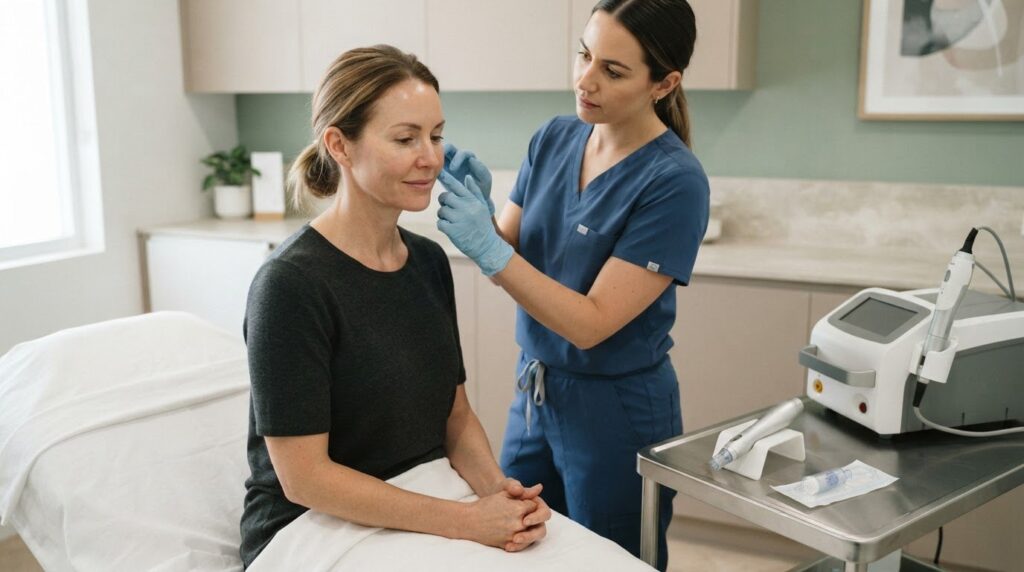
Under-eye exosome treatment involves topical application or microinjections to deliver exosomes to delicate skin. It aims to support healing and collagen production. Visible changes develop over weeks, not immediately.
How Treatment Is Delivered
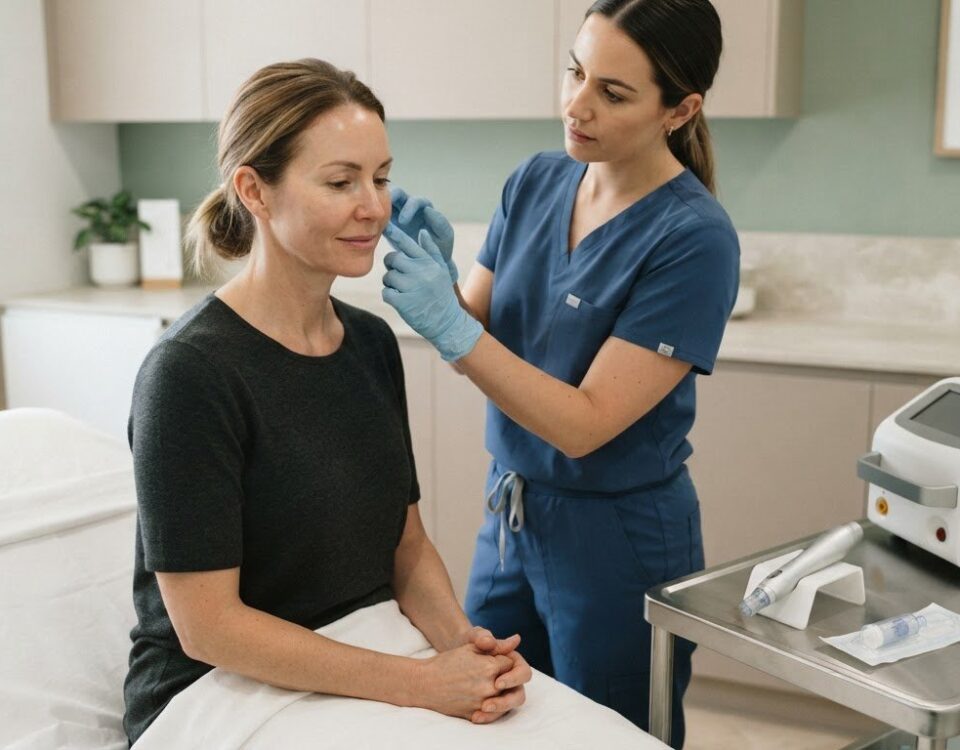
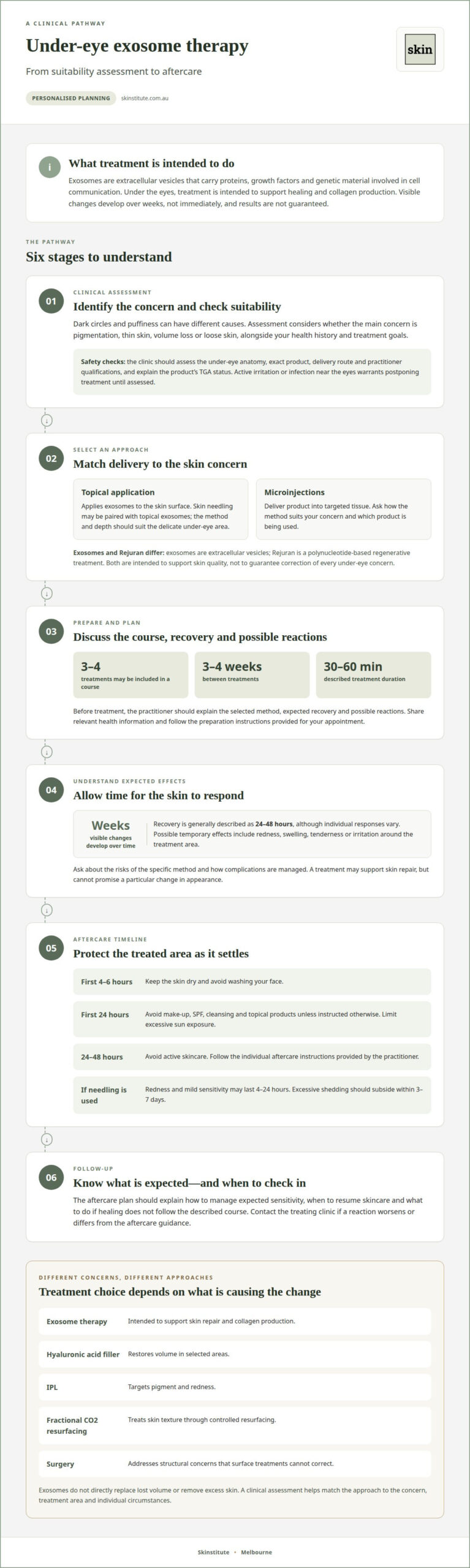
A practitioner assesses the under-eye concern, then selects topical application or microinjections. The method matters: microinjections place product into targeted tissue, while topical application treats the skin surface. Ask how the delivery method suits your concern and what product is being used. A course may involve 3-4 treatments spaced 3-4 weeks apart.
Recovery is generally described as 24-48 hours for exosome skin therapy, although the response varies. Exosomes are not a substitute for surgery, which addresses structural concerns that surface treatments cannot correct. Hyaluronic acid dermal filler restores selected areas of volume; IPL targets pigment and redness, while fractional CO2 resurfacing treats skin texture through controlled resurfacing. Each option addresses different causes of under-eye change.
Suitability, Safety and Clinic Checks
In Australia, a clinic should assess the exact product, delivery route, under-eye anatomy and practitioner qualifications, and explain the product’s TGA status without implying every exosome product has the same status. Suitable candidates depend on their skin concern, health history and treatment goals; active irritation or infection near the eyes warrants postponing treatment until assessed.
Possible effects include temporary redness, swelling, tenderness or irritation around the treatment area. Ask about the specific risks of the proposed method and how complications are managed. Dark circles and puffiness can have different causes, so assessment should distinguish skin changes from volume loss or loose skin before selecting a treatment.
This minimally invasive procedure typically takes 30-60 minutes, and under-eye filler begins to dissipate after six months. Multiple sessions are required over time.
Exosome and Rejuran Regenerative Therapies
Exosomes and Rejuran are regenerative approaches with different compositions. Their proposed roles relate to skin quality, rather than guaranteed correction of every under-eye concern. When considering exosome therapy under the eyes, distinguish the proposed action from established outcomes.
Proposed Regenerative Action
Exosomes are extracellular vesicles that carry proteins, growth factors and genetic material. They are described as supporting cellular communication, healing and collagen production. Rejuran is a polynucleotide-based regenerative treatment intended to support skin repair. The key difference is what each treatment contains and how it is delivered.
Skin Texture, Tone and Hydration
These approaches may be considered for uneven texture, dull tone, dryness and fine lines. Exosomes are intended to support skin regeneration, while Rejuran is used in skin-quality treatments. Neither directly replaces lost volume or removes excess skin. Assessment should identify whether the main concern is surface texture, pigmentation, dehydration or structural change.
Effects on Under-Eye Skin
Under-eye skin is thin, so changes in collagen and elasticity can affect its appearance. Exosome treatment is intended to support collagen production and reduce inflammation, with visible changes developing over weeks. Skin needling may be paired with topical exosomes to deliver them across treated skin. The needling method and depth should suit this delicate area.
Evidence for Under-Eye Concerns
For wrinkles, dark circles and texture, the proposed rationale centres on cell signalling and skin repair. This mechanism does not establish how much improvement a person will experience. Consider the specific concern: pigmentation, thin skin and volume loss have different causes. Current descriptions support cautious expectations, not a promise of youthful-looking results. Evidence for exosome therapy under the eyes should be considered in relation to the specific product and concern.
Clinical Consultation, Preparation and Aftercare
A free consultation provides an opportunity to assess the under-eye concern before treatment planning begins. The practitioner considers skin condition, treatment goals and relevant health history, then discusses whether a topical or injection-based approach is appropriate. This assessment helps distinguish concerns that may respond to skin treatment from those that may call for another approach, such as surgical correction.
Before treatment, the practitioner explains the selected method, expected recovery and possible reactions. Share relevant health information and follow the preparation instructions for your appointment. If skin needling is planned, discuss its effect on aftercare. Treatment aims to support skin repair and cannot promise a particular change in appearance.
After treatment, keep the skin dry and avoid washing your face for 4-6 hours. For 24 hours, avoid makeup, SPF, cleansing and topical products unless instructed otherwise. Avoid active skincare for 24-48 hours, and limit excessive sun exposure. These steps protect the treated area while it settles.
Redness and mild sensitivity after Exosome Skin Needling may last 4-24 hours. Patients can usually resume daily activities almost immediately, but should follow their individual aftercare instructions. If treatment includes skin needling, excessive shedding should subside within 3-7 days. The practitioner can explain which reactions are expected for the selected method.
Know when to seek follow-up. Contact the treating clinic if a reaction worsens or differs from the aftercare guidance. A clear plan should explain how to manage expected sensitivity, when to resume skincare and what to do if healing does not follow the described course. These details are part of informed treatment planning.
Is Under-Eye Exosome Therapy Approved or Regulated in Australia by the TGA?
In Australia, “exosome therapy” describes a treatment category, not one preparation. The treatment label alone cannot answer whether TGA approval applies. The relevant details are the exact product and intended use. Under-eye treatment may involve topical application or injection. These routes should not be treated as interchangeable when reviewing product information. An ingredient claim does not establish a product’s regulatory status.
Before treatment, establish the product’s full name and manufacturer or sponsor. Identify its route of administration and stated purpose. The practitioner should explain the TGA status relevant to that preparation and whether the proposed under-eye use matches its documented purpose. A phrase such as “TGA compliant” alone does not identify an approval or explain its scope. Written consent should identify the preparation, not just “exosomes”.
Product information can clarify ingredients, source and handling. The practitioner should explain why topical use or microinjection is proposed. Ask which evidence relates specifically to under-eye skin, rather than other facial areas. This distinction matters for dark circles, fine lines and skin texture. Marketing language about regeneration does not establish effectiveness for each concern. Compare claims with information for the exact product.
Ask how the available safety information applies to the eye area. Discuss possible side effects and how the practitioner manages them. The consultation should cover alternatives suited to your concern, which may include Rejuran or skin needling where clinically appropriate. TGA terminology does not prove effectiveness for every aesthetic use. Review product-specific documentation and intended use before consenting.
Skinstitute: Exosomes
Skinstitute provides exosome treatment in Melbourne for people considering a regenerative approach to skin quality. A face-to-face consultation helps assess the under-eye concern, skin condition and treatment goals before developing a plan. The practitioner can discuss the proposed method, explain its limits and consider whether another approach better suits the concern.
Exosome treatment may be relevant when the focus is skin texture or signs of ageing, rather than substantial volume loss or excess skin. The practitioner can explain the intended delivery method and how it relates to the delicate under-eye area. Planning should also cover expected recovery, possible reactions and the fact that visible changes develop over time.
Different concerns may call for different procedures. Fractional CO2 is a resurfacing treatment, while prescription injectables and PDO Thread Lifting address other aesthetic goals. These options are not interchangeable with exosomes. A clinical assessment helps determine whether one approach, or a tailored plan, is appropriate for the area and concern being treated.
Skinstitute draws on over 26 years of experience in medical-grade aesthetic procedures. Treatment planning is based on individual assessment, rather than assuming one method suits every person. If under-eye changes relate to pigmentation, skin laxity or facial structure, those differences can influence which option is discussed and what outcome is realistic.
To discuss your under-eye concerns with Skinstitute, contact the clinic.
Frequently Asked Questions
What Are Exosomes?
Exosomes are small extracellular vesicles that carry biological signals between cells. They can contain proteins, growth factors and genetic material. In aesthetic treatments, they are discussed for their proposed role in cell communication and skin repair. Their composition and intended use depend on the preparation, so the term “exosome” alone doesn’t describe a uniform product or establish what it can achieve.
What is exosome therapy for under-eye skin, and how is it performed?
Exosome therapy for under-eye skin applies a preparation topically or delivers it through microinjections. The practitioner selects the method according to the treatment plan and the product being used. The delicate area calls for careful attention to placement and technique. Before proceeding, clarify which delivery method is planned and how it relates to your specific concern, such as fine lines or uneven skin texture.
How is suitability for under-eye exosome therapy assessed?
The appropriate treatment plan depends on the cause of the under-eye concern and the intended method. Assessment first considers whether the focus is skin texture, pigmentation or volume change. The practitioner can then explain the preparation, approach and course, including what each appointment involves. This helps you understand the treatment being considered without assuming one approach suits every concern.
How many sessions are needed, and how long do results last?
A course commonly involves 3-4 treatments spaced 3-4 weeks apart. Changes develop over weeks, rather than appearing immediately after an appointment. How long results last depends on the concern addressed, the treatment approach and individual skin response. A practitioner can set review points during the course, so progress is assessed against the original treatment goals.
How does under-eye exosome therapy compare with PRP, skin boosters, laser, and tear-trough filler?
These treatments address different concerns. PRP uses a blood-derived preparation, while skin boosters focus on skin hydration. Fractional CO2 laser resurfaces skin, and tear-trough filler adds volume in selected areas. Exosome treatment is intended to support skin repair rather than replace lost volume. A comparison should consider the main cause of the concern, such as pigmentation, texture or volume loss.
What is the recovery time and aftercare for under-eye exosome therapy?
Recovery depends partly on whether treatment includes microinjections or skin needling. Aftercare can include keeping the area dry initially, avoiding makeup and topical products for the advised period, and limiting excessive sun exposure. Follow the practitioner’s instructions for cleansing and resuming skincare. If redness, swelling or sensitivity worsens rather than settling, contact the treating clinic for guidance.