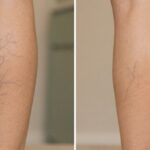
Sclerotherapy Results in Varicose Vein Treatment Examples
November 18, 2026
Skin needling combinations: timing, order and aftercare
November 20, 2026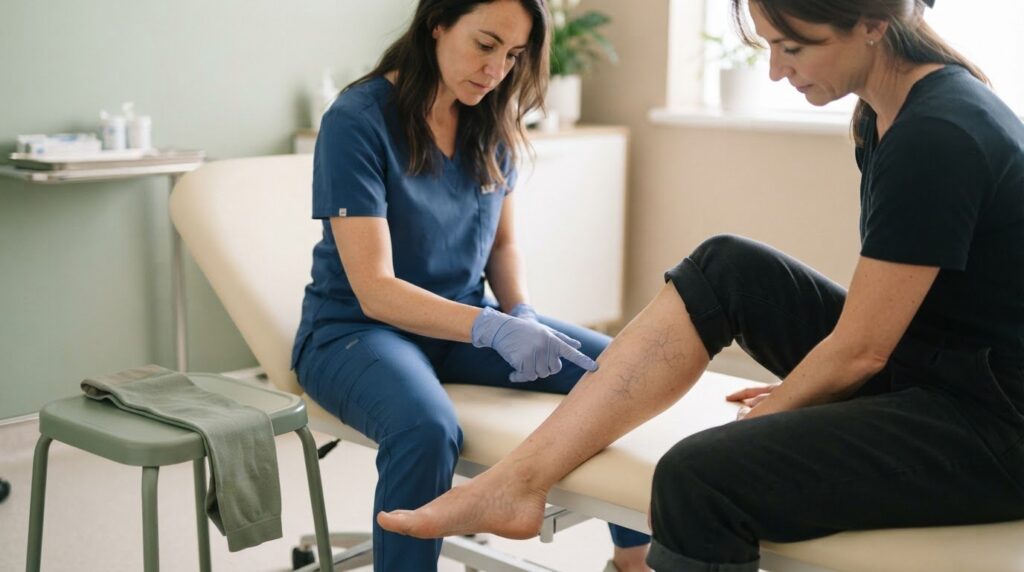
Can spider veins come back after sclerotherapy? Yes, but veins that appear later may be new rather than the treated veins returning. Sclerotherapy closes the veins that are injected; it does not prevent other veins from becoming visible over time.
It is understandable to expect the area to stay clear once the treated veins fade. This article explains how underlying vein problems may contribute to new spider veins, how age and hormonal changes can play a role, and which everyday habits may help reduce the chance of more appearing. It also covers what to consider when new veins show up, so you can distinguish an emerging pattern from changes that may follow treatment.
Key Takeaways
- Treated veins may close while new ones develop later, so distinguish fresh veins from the original vessels returning.
- Underlying venous insufficiency can contribute to recurring visible veins; identifying the source helps guide treatment planning.
- Regular leg movement, maintaining a healthy weight and following compression advice may help reduce the risk of further spider veins.
- Small new vessels can appear after injections and may fade over time; learn what changes to monitor and when to seek a review.
Can Spider Veins Come Back After Treatment?
Yes, spider veins can come back after sclerotherapy, although new vessels may be responsible. New spider or varicose veins can appear months or even years after treatment.
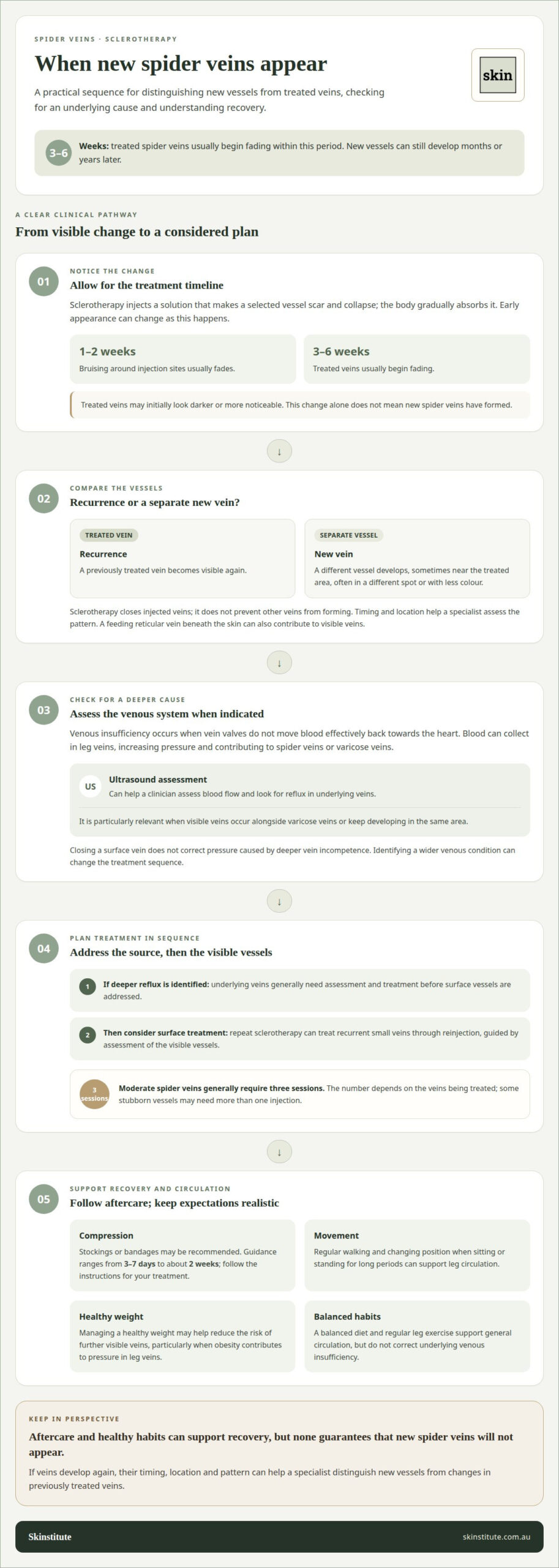
Sclerotherapy treats selected veins by injecting a solution that makes the vessel scar and collapse; the body then gradually absorbs it. Treated spider veins usually begin fading within 3 to 6 weeks, but visible changes take time.
Recurrence Versus New Veins
Recurrence means a treated vein becomes visible again; new veins are separate vessels that develop after treatment. The distinction matters because sclerotherapy closes injected veins but does not prevent others from forming. New vessels may appear near the treated area, often in a different spot or with less colour. A feeding reticular vein beneath the skin can also contribute to further visible veins.
When Spider Veins May Reappear
Spider veins can appear again months or years after sclerotherapy. Age and hormonal changes, including menstrual cycles or childbirth, may contribute to superficial veins. Prolonged sitting or standing and obesity can also be associated with new visible veins. If veins develop again, their timing and location can help a specialist distinguish new vessels from changes in previously treated veins.
Moderate spider veins generally require three sclerotherapy sessions. The number depends on the veins being treated, and some stubborn vessels may need more than one injection. A treatment plan should reflect the number and pattern of visible veins, rather than assume the same session count for everyone.
Repeat sclerotherapy can treat recurrent small veins through reinjection. A specialist assesses the visible vessels and considers whether an underlying issue, such as venous insufficiency, may be contributing before another session. This helps target the relevant veins instead of assuming every new mark is the original vessel returning.
Venous insufficiency and underlying vein incompetence
Venous insufficiency occurs when vein valves do not move blood effectively back towards the heart. Blood can collect in leg veins, increasing venous pressure and contributing to visible spider veins or larger varicose veins. This is different from a single surface vessel: closing one visible spider vein does not correct pressure caused by deeper vein incompetence. This distinction matters when new vessels continue to appear.
Underlying venous reflux means blood flows backwards through a vein instead of moving efficiently upwards. If reflux affects larger veins, increased pressure can contribute to further spider veins and varicose veins. These visible vessels may not disappear completely after treatment if the deeper cause remains. In this situation, treating surface veins alone may not address the source of ongoing pressure.
An ultrasound assessment of the legs can help identify venous insufficiency before spider vein treatment. Ultrasound imaging lets a clinician assess blood flow and look for reflux in underlying veins. This is particularly relevant when visible veins occur alongside varicose veins or keep developing in the same area. The findings help distinguish a surface concern from a wider venous condition.
If venous insufficiency contributes to spider veins, the underlying veins generally need assessment and treatment before surface vessels are addressed. Closing an affected deeper vein can reduce pressure in the venous system, which may limit its ongoing effect on smaller vessels. It will not prevent every new spider vein from forming, but it addresses a cause that surface injections alone cannot correct.
For example, someone may notice new spider veins around an area with varicose veins after earlier treatment. That pattern may prompt assessment for deeper reflux, rather than an assumption that the original injected veins have reopened. Identifying vascular disease or valve incompetence changes the treatment sequence: address the underlying source first, then consider the remaining visible veins. This connects ultrasound findings with the pattern of visible veins.
Compression stockings and healthy weight
After sclerotherapy, compression stockings or bandages may be recommended as part of recovery. Compression applies external support to treated veins while the body responds to treatment. The recommended duration varies: aftercare guidance ranges from three to seven days to about two weeks after the procedure. Follow the instructions provided for your treatment rather than changing the duration yourself.
Compression is one part of aftercare, not a way to eliminate every cause of new spider veins. Stockings support the treated area, while regular movement helps maintain circulation through the legs. If you sit or stand for long periods, changing position and walking when practical can reduce prolonged inactivity. Compression stockings should fit appropriately; their type and duration depend on your treatment plan.
Your appearance can change during recovery. Bruising around injection sites usually fades over one to two weeks, and treated veins may initially look darker or more noticeable. This early change does not, by itself, mean new spider veins have formed. Allow the expected recovery period before judging the result, and follow the aftercare advice for your procedure.
Managing a healthy weight may help reduce the risk of further visible veins, particularly when obesity contributes to ongoing pressure in the leg veins. A balanced diet and regular leg exercise support general circulation and are practical habits to maintain beyond the treatment period. These measures cannot correct underlying venous insufficiency, so they do not replace assessment when deeper vein problems are suspected.
For example, someone whose work involves standing for long periods can combine routine movement with the prescribed period of compression. Regular walking and avoiding lengthy periods in one position may support circulation, while a healthy weight can reduce an additional pressure factor. Compression stockings, exercise and balanced eating address different influences; none guarantees that new spider veins will not appear.
New spider veins after sclerotherapy
Fine vessels can appear near injection sites after treatment, and their timing matters. Some are temporary changes, not veins that have reopened.
Recognising New Spider Veins
New fine vessels after an injection can be a temporary response called telangiectatic matting. These tiny veins can appear days or weeks after sclerotherapy, often around the treated area. They differ from a treated vein becoming visible again. Matting usually fades over a few months to a year, so changes soon after treatment do not always indicate treatment failure.
For example, a cluster of fine red or blue lines beside an injection site differs from the original spider vein simply remaining visible. The timing, pattern and colour of the vessels help a doctor assess what has happened. New vessels can also develop through neovascularisation, the formation of small blood vessels after injections. These vessels often resolve over time.
Responding to Returning Spider Veins
If spider veins reappear, arrange a review with the doctor who performed the treatment before deciding on another session. A review can distinguish temporary matting, a persistent treated vein and newly developed vessels. This matters because each pattern has a different explanation, and reinjecting immediately may not be appropriate while temporary changes are still resolving.
Small vessels after treatment should generally fade within a few months; matting can take longer. A doctor can assess the treated area and look for a feeding vessel that continues to supply blood. Recurrent small veins can sometimes be treated with reinjection, while an underlying vein problem may need assessment before further surface treatment.
Note when the vessels appeared and whether they are changing. For instance, fine lines that develop in the weeks after injection and gradually lighten fit a different pattern from persistent or newly spreading veins. Share these details at your review. They help guide the next step, whether that is monitoring the area or considering further treatment.
Skinstitute: Sclerotherapy
Skinstitute provides sclerotherapy for people seeking treatment for visible spider veins in Melbourne. If vessels appear after an earlier session, a face-to-face assessment can help distinguish new veins from changes in treated vessels and consider whether underlying venous insufficiency may affect the plan.
Treatment suitability and planning depend on the visible vein pattern and your individual circumstances. Skinstitute tailors treatment plans following a FREE consultation, where the procedure and expectations can be discussed before treatment proceeds. Sclerotherapy addresses selected veins, while new veins can still develop over time.
Contact Skinstitute to discuss whether sclerotherapy may be appropriate for your spider veins.
Choose a considered next step
Understanding whether spider veins can come back after sclerotherapy is useful, but your next decision should reflect what you want to address now. A focused review can relate visible changes to your treatment history and priorities, helping clarify whether observation, further assessment or a treatment discussion is appropriate. This gives you a considered basis for deciding what to do, rather than relying on appearance alone.
Before discussing your concerns, think about the outcome that matters most to you and any changes you have noticed since treatment. These details can make the conversation specific to your situation. It is also reasonable to discuss what treatment can and cannot address, and how underlying vein concerns may influence the plan. Clear expectations support an informed decision.
Contact Skinstitute to discuss your veins. A considered conversation can help you decide on a suitable next step.
Frequently Asked Questions
What Is Sclerotherapy?
Sclerotherapy is an injectable procedure that treats selected visible veins. A clinician places a sclerosing solution into the target vessel, prompting it to scar and collapse; the body then absorbs it. The choice of vein and injection technique depends on the vessel’s size and position. For example, an isolated superficial spider vein is assessed differently from visible veins associated with larger varicose veins.
How much improvement will there be?
Reported improvement or clearance of spider veins after sclerotherapy is about 60-80%. The change relates to the veins treated, not prevention of every future vein. Results develop gradually, so a treated vessel’s appearance soon after injection may not reflect its eventual outcome. For example, an area that looks darker during early recovery needs time to settle before its final appearance is assessed.
How successful is this treatment?
Sclerotherapy can close injected veins, but the outcome depends on whether the targeted vessels respond and whether other veins contribute to the visible pattern. A useful assessment considers the treated area after sufficient healing, rather than judging it immediately after injection. If a vein remains visible, the next clinical decision may involve allowing more time, assessing the vessel again or considering further treatment.
What are the potential benefits and risks of this treatment?
The intended benefit is reduced visibility of treated spider veins without an operation. Possible effects include bruising, temporary skin staining and telangiectatic matting, which is the appearance of fine vessels near treated areas. Reported rates include pigmentation in 1 in 10 cases and matting in 1 in 20 cases. These figures describe reported complications, not a prediction for an individual. Discuss relevant risks before treatment.
Can spider veins recur after sclerotherapy, and how often?
Yes, spider veins can come back after sclerotherapy, but new veins may appear rather than injected vessels reopening. New spider veins may develop months or years later. There is no single recurrence schedule for everyone, because factors such as age, hormonal changes and underlying vein problems differ. The timing and location of visible changes help determine what may be happening.
Does recurrence mean treated spider veins returned or new veins appeared?
Not necessarily. A visible vessel after treatment may be a treated vein that remains noticeable, one that has become visible again, or a newly formed vein nearby. For instance, fine vessels around an injection site can represent matting, while a separate vessel elsewhere may be new. Comparing the treated area over time helps clarify the pattern and guide any review.