How Often Should You Get Skin Needling? A Clinical Guide
October 9, 2026
How Long Does Exosome Therapy Last? A Clinical Guide
October 11, 2026
The strongest fractional CO2 laser setting isn’t automatically the right one for your skin. If you’re researching fractional co2 laser melbourne, it’s reasonable to want clear information about whether resurfacing may suit your concern, what recovery could involve and how to care for your skin afterwards. A clinical assessment of suitability, not treatment intensity, is the starting point for a considered plan.
Fractional CO2 resurfacing delivers laser energy in controlled points, leaving surrounding skin untreated while creating a targeted injury that can stimulate collagen induction. It may be considered for concerns such as uneven texture, acne scarring and sun-related skin changes, but responses and recovery vary. Discomfort, redness, swelling, pigment changes and infection are among the risks to discuss before deciding.
This article explains how the treatment works, which concerns may be appropriate to assess and what to cover in a clinical suitability discussion. It also outlines why recovery planning and personalised advice matter. Skinstitute offers fractional CO2 laser treatment in Melbourne, with face-to-face assessment to help you weigh potential benefits and risks before deciding whether to proceed.
Key Takeaways
- Fractional CO2 resurfacing may be considered for acne scarring, uneven texture and photo-ageing, but suitability depends on an individual clinical assessment.
- Understanding how treatment settings are tailored can help you weigh the intended skin changes against recovery requirements and potential risks.
- Before fractional co2 laser melbourne treatment, prepare to discuss your medical history, medications and previous skin treatments with your clinician.
- Follow your clinician’s preparation and aftercare instructions. Your skin’s response and recovery needs can vary.
- Skinstitute offers face-to-face assessments and brings over 26 years of clinical experience in Melbourne to discussions about personalised treatment planning.
Fractional CO2 laser in Melbourne: which skin concerns may it address?
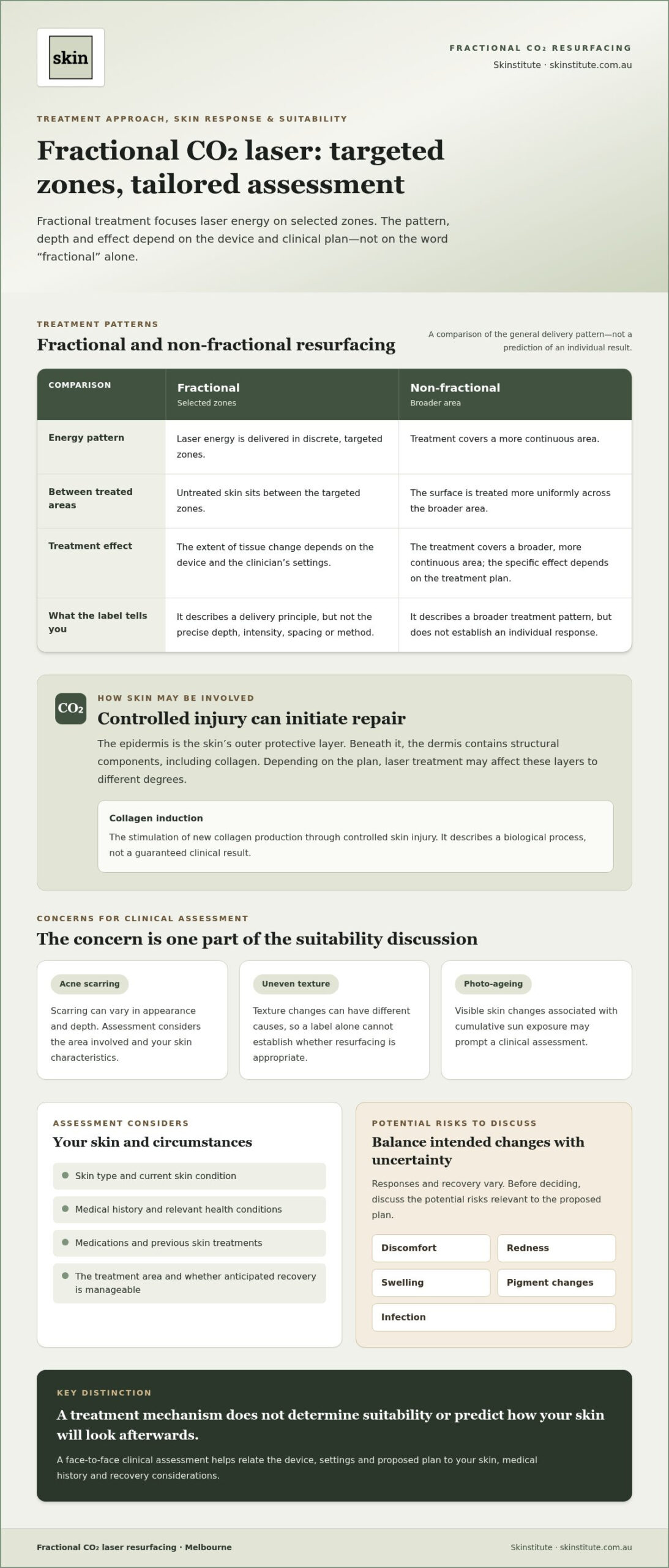
Fractional CO2 resurfacing directs energy to selected zones of the skin rather than treating the whole surface uniformly. Treated areas sit alongside untreated skin. This differs from non-fractional resurfacing, which treats a more continuous area. The treatment pattern and depth depend on the device and clinical plan, so the word “fractional” alone doesn’t tell you how a particular treatment will affect your skin.
When considering fractional co2 laser melbourne treatment, the concern you want addressed is only one part of the assessment. Skin type, medical history, previous treatments and your skin’s current condition can all influence whether resurfacing is appropriate. A search result or general description of a concern cannot establish individual suitability.
What does fractional CO2 resurfacing mean?
Fractional treatment applies laser energy in discrete, targeted zones, with untreated skin between them. This differs from non-fractional resurfacing, which treats a broader, more continuous area. The controlled skin injury may prompt collagen induction, the stimulation of new collagen production through controlled skin injury. Responses vary: the device, settings, treatment plan and individual skin response all matter.
Which concerns may prompt a clinical assessment?
A clinician may assess acne scarring, uneven texture or visible changes associated with photo-ageing, meaning skin changes linked to cumulative sun exposure. Assessment helps clarify what may be contributing to the concern and whether fractional CO2 resurfacing is reasonable to discuss. It doesn’t guarantee a recommendation or a particular outcome.
Acne scarring can vary in appearance and depth, while uneven texture can have different causes. A face-to-face assessment lets the clinician consider the area involved, your skin’s characteristics and your medical history rather than relying on a label alone. Disclose relevant health conditions, medications and previous skin treatments, as these details may affect planning and suitability.
Skin type is also relevant to clinical decision-making. Your clinician can discuss how your skin may respond, what uncertainties apply and whether the anticipated recovery is manageable. If resurfacing isn’t appropriate, other options may be discussed in relation to your concern and circumstances. Assessment supports an individualised plan rather than assuming one laser approach suits everyone.
How fractional CO2 laser resurfacing interacts with the skin
Fractional CO2 resurfacing directs laser energy into selected microscopic zones of skin. The energy produces a controlled thermal effect in those areas, while the tissue between them is not treated in the same way. This differs from uniform, full-surface ablation. The pattern and extent of tissue change depend on the device and the clinician’s settings.
The epidermis is the skin’s outer protective layer. Beneath it, the dermis contains structural components, including collagen, which helps support the skin. Laser treatment may affect these layers to different degrees depending on the plan. General principles of fractional CO2 treatment don’t establish the precise depth, intensity, spacing or delivery method used by a particular device. Those details are device-specific and should be guided by clinical assessment and verified settings.
What happens in the targeted skin zones?
Fractional delivery creates a pattern of treated zones rather than removing or heating the entire skin surface uniformly. The clinician considers the treatment area and your skin characteristics when planning the approach. Device settings influence how energy is delivered and the extent of the controlled injury, so one fractional CO2 treatment cannot be assumed to produce the same tissue response as another.
For readers exploring fractional co2 laser melbourne, it’s useful to distinguish the treatment principle from claims about a particular platform. The broad principle is fractional delivery of laser energy; the device, its settings and the individual treatment plan determine how it is applied. Fractional Photothermolysis: A Review discusses the scientific basis of fractional treatment, but it doesn’t specify the settings or predict an individual patient’s response.
How can the skin respond after treatment?
Controlled injury can initiate a biological repair process. Collagen induction describes the stimulation of new collagen production through controlled skin injury. It describes a process, not a guaranteed clinical result. It doesn’t establish how much collagen will form, when visible changes may occur or how noticeable they will be. Skin response varies, and the intended effect needs to be considered alongside potential unwanted effects.
A mechanism alone can’t tell you whether treatment is suitable or what your skin will look like afterwards. Before treatment, your clinician should explain the expected response for the proposed plan, together with relevant uncertainties and risks. A face-to-face assessment at Skinstitute can help relate the treatment approach to your skin and circumstances.
Fractional CO2 laser: weigh potential benefits against downtime and risks
Fractional CO2 resurfacing may be considered to address concerns such as uneven texture, acne scarring or changes associated with photo-ageing. Any potential benefit needs to be weighed against recovery requirements and possible adverse effects. Fractional delivery doesn’t automatically mean minimal downtime: the treatment plan, device settings and individual response all influence what recovery may involve.
What recovery considerations should patients discuss?
Recovery expectations should be based on the proposed treatment, not a general claim about fractional lasers. Ask what visible changes may occur, what aftercare will involve, how follow-up is arranged and which signs should prompt you to seek clinical advice. Guidance should reflect your treatment plan and individual circumstances.
Plan work, social commitments and usual activities around the instructions you receive. Don’t assume you can return to normal activities immediately or rely on recovery claims made for a different device. If you have fixed commitments, raise them during assessment so you can discuss whether the timing and recovery demands are manageable.
What risks and limitations belong in the decision?
Your clinician should explain the risks relevant to the proposed treatment before you decide. Discuss possible unwanted skin responses, healing concerns and other treatment-specific adverse effects, as well as how your medical history and skin characteristics may affect suitability. The risk profile depends on the individual plan; general descriptions of fractional CO2 aren’t a substitute for that conversation.
Neither suitability nor a particular result can be guaranteed. Even when treatment is considered appropriate, the degree of change can vary, and the potential benefit may not outweigh the recovery burden for everyone. Consider both your treatment goal and your capacity to follow aftercare advice.
- Potential treatment aim: Resurfacing may be assessed for concerns such as textural irregularity or acne scarring. Your clinician should explain what is realistic for your skin.
- Recovery planning: Downtime and aftercare depend on the settings, treatment area and individual response. Don’t assume a standard timeline without an assessment.
- Risk discussion: Ask which adverse effects are relevant to your circumstances and how concerns are managed under the clinic’s care.
- Limitations: Treatment may not be suitable, and an intended improvement isn’t assured. Other approaches may be considered where appropriate.
A balanced consultation about fractional co2 laser melbourne treatment should leave you clear about the proposed approach, recovery responsibilities and uncertainties, not only the intended skin change. Skinstitute’s face-to-face assessment gives you an opportunity to discuss these factors in relation to your concern and circumstances.
You can discuss fractional CO2 treatment planning with Skinstitute’s clinical team, including how recovery requirements relate to your treatment goals.
Preparing for fractional CO2 laser treatment in Melbourne
Preparation should follow a clinical assessment, not a generic checklist. The treatment area, your skin and medical history, previous procedures and intended approach all inform the plan. Skinstitute consultations are performed by medical professionals, including a nurse and doctor, who can assess whether resurfacing is suitable and discuss preparation and recovery for your circumstances.
What should a clinical consultation assess?
Describe the concern you want assessed, your relevant skin history and any previous treatments. Disclose medical conditions and medications, including changes since your last assessment. Be clear about your expectations and any practical limits on time away from work or usual activities. These details help the clinician consider suitability and whether the likely recovery requirements fit your circumstances.
The discussion should cover the proposed treatment approach, potential risks, alternatives and aftercare. Under AHPRA guidelines, practitioners are expected to practise within relevant professional standards. A patient-focused consultation should also leave you able to understand the plan and make an informed decision. Ask for an explanation of anything that isn’t clear before proceeding.
What should patients clarify before treatment?
Before deciding, make sure you understand who will perform the procedure, what follow-up arrangements apply and how to raise questions during recovery. Confirm preparation and aftercare instructions with your treating clinician. Directions can be specific to the plan and your circumstances, so general online advice shouldn’t replace them.
A practical consultation-to-aftercare pathway is:
- Describe your concern. Explain what you would like assessed and share relevant skin and treatment history.
- Review suitability and options. Discuss the proposed approach, alternatives, risks and recovery requirements with the clinician.
- Clarify the plan. Confirm who will perform the procedure, what preparation applies to you and how follow-up will be managed.
- Follow individual instructions. Use your treating clinician’s guidance rather than adopting a preparation routine intended for someone else.
- Use written aftercare. Keep your clinician’s instructions accessible and follow them throughout recovery.
Preparation may need to change if your health, medications or skin condition changes between assessment and treatment. Tell your clinician about relevant changes rather than assuming the original plan still applies. If a commitment could affect recovery, discuss it before confirming the treatment timing.
Follow your treating clinician’s written aftercare instructions. They relate to your specific treatment plan and take precedence over general information. If questions or concerns arise, use the follow-up guidance provided by your clinical team.
If you’re considering fractional co2 laser melbourne treatment, arrange a face-to-face assessment with Skinstitute to discuss your skin history, suitability and preparation with the clinical team.
Choosing a Melbourne clinic for fractional CO2 laser resurfacing
Choosing a clinic for fractional CO2 laser treatment involves more than comparing device names or general claims about skin renewal. Look for a clinical process that explains why an approach is being considered, what information informs the decision and how uncertainties will be discussed. Experience can support clinical judgement, but it cannot establish your suitability or guarantee an outcome.
What questions help assess a provider?
Use the consultation to understand how your concern will guide treatment planning. Ask how the clinic assesses skin characteristics and relevant history, and how that assessment informs the proposed approach. You may also want to clarify:
- What can you explain about the technology and treatment settings for my proposed plan?
- Which risks, recovery requirements and alternatives should I weigh before deciding?
- Who will perform the procedure, and how can I raise clinical questions?
- What follow-up arrangements apply after treatment?
Clear answers should help you understand the reasoning behind a recommendation and its limits. The discussion should relate to your circumstances, rather than rely on general claims that apply to every patient. Take time to clarify anything you don’t understand before deciding.
How can Skinstitute support an informed next step?
Skinstitute has over 26 years of clinical experience in Melbourne and has trialled different resurfacing lasers. This experience can inform a discussion about treatment planning, but it doesn’t predict an individual response. The key considerations remain whether the approach fits your concern, what risks apply and whether recovery requirements are manageable for you.
A useful consultation should leave you with a clear account of the proposed technology, the reason for its use and the uncertainties involved. The fractional CO2 treatment planning discussion can help you consider these points in relation to your priorities.
To discuss whether resurfacing may be appropriate for your circumstances, arrange a clinical consultation with Skinstitute.
Take the next step with a clear plan
Before deciding on fractional CO2 resurfacing, consider what you most want to address and what would make a potential change worthwhile to you. A clear goal can focus the discussion while leaving room to weigh whether the likely trade-offs align with your priorities.
If you’re considering fractional co2 laser melbourne treatment, use your consultation to explore whether your expectations are realistic and whether proceeding feels right for you. Gathering information doesn’t commit you to treatment. Taking time to weigh your preferences can help you make a considered decision.
Skin responses and individual priorities differ, so the right next step should reflect your circumstances. Arrange a clinical consultation with Skinstitute to discuss your options and decide how you’d like to proceed.
Frequently Asked Questions
Is fractional CO2 laser suitable for every skin type?
No single treatment plan should be assumed to suit everyone. To support an individual assessment, note any past reactions to skin procedures and bring details of previous treatments, including approximate dates and the areas treated. Ask which aspects of your skin and history are relevant to the recommendation, and what information could change the plan.
How long is recovery after fractional CO2 laser treatment?
Your clinician should outline the expected recovery requirements for your proposed plan rather than give a generic timeline. Before setting a treatment date, consider whether you can keep your schedule flexible in case you need more time for aftercare. Ask for written instructions and clarify which clinic contact pathway to use if you have a question during recovery. Follow your treating clinician’s specific guidance.
What does fractional CO2 laser treatment do?
Fractional CO2 treatment is a resurfacing procedure that applies laser energy to selected skin zones. Ask your clinician to describe the intended treatment area and the reason for the proposed approach in plain language. Clarify what the plan aims to address and what it isn’t expected to change. This gives you a clearer basis for deciding whether to proceed.
Does fractional CO2 laser treatment hurt?
People experience treatment sensations differently, so ask your clinician what to expect for the specific procedure being discussed. If discomfort is a concern, explain what you’re worried about and ask which measures are appropriate within the clinic’s protocol. Clarify this before treatment, including what to do if you feel uncomfortable during the procedure. Another person’s experience can’t predict yours.
Can fractional CO2 laser treat acne scarring?
Acne scarring can be discussed as a treatment goal, but it helps to describe what you want to change rather than focus only on the label. Note which areas concern you and whether your priority is texture, the appearance of individual marks or another feature. Ask how the proposed plan relates to that goal and how you’ll review whether the approach remains appropriate.
What are the risks of fractional CO2 laser resurfacing?
Before agreeing to treatment, ask your clinician to explain possible adverse effects relevant to your plan and how the clinic responds to concerns afterwards. Clarify how follow-up questions are handled and which contact pathway to use if something worries you. These practical details help you understand the support around treatment. General information can’t determine your personal risk or replace advice from your treating clinician.
How do I choose a fractional CO2 laser clinic in Melbourne?
Look for a clinic that explains its decision-making and provides practical information about the proposed treatment. Ask who will carry out the procedure, how the treatment plan is documented and how follow-up questions are managed. For fractional co2 laser melbourne care, the discussion should explain the reason for the recommendation, not just the technology’s general features. Skinstitute offers face-to-face assessment to support individual planning.