Sclerotherapy Melbourne: The Clinical Guide to Leg Vein Removal
September 5, 2026
Laser Skin Resurfacing Recovery Timeline: A Clinical Day-by-Day Guide
September 7, 2026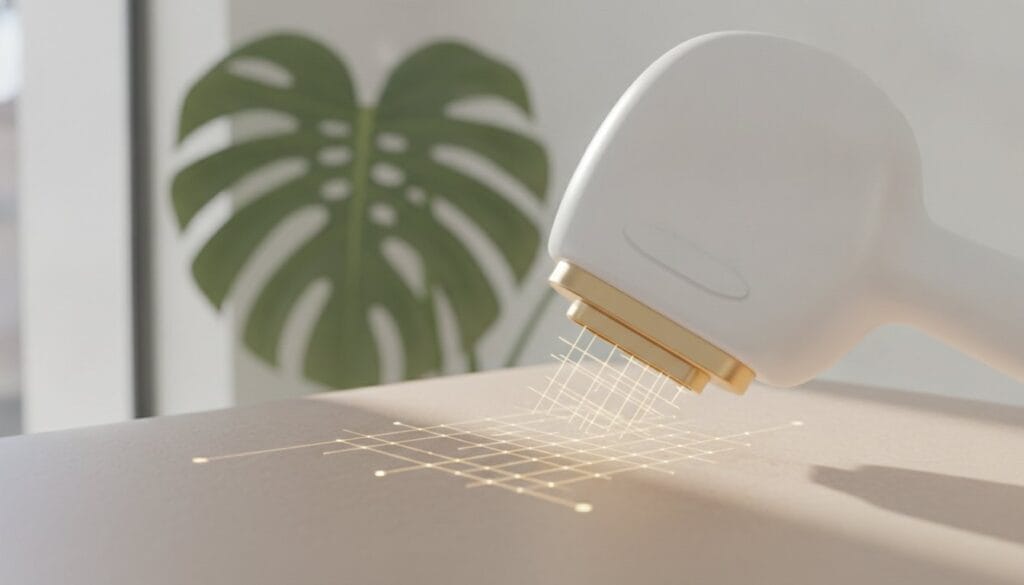
Chronic photoageing in the Australian climate often reaches depths that standard topical serums and superficial beauty treatments simply cannot penetrate. You’ve likely noticed that persistent solar lentigines and a loss of dermal elasticity remain despite a rigorous skincare routine. It’s a common frustration for those living under the intense Victorian sun, where the cumulative effect of UV radiation accelerates the breakdown of collagen and elastin fibres. For many, seeking a fractional laser for sun damage melbourne is the logical transition from cosmetic maintenance to medical-grade skin reconstruction.
In this guide, we provide a clinical overview of how fractional CO2 technology facilitates deep dermal remodelling to address advanced photoageing. You’ll understand the precise biological interactions that occur during the procedure and why professional clinical oversight is essential for safety. We also outline the recovery protocols required to manage the inflammatory response effectively, ensuring you achieve a significant reduction in pigmentation and improved collagen density through evidence-based practice. By moving beyond surface-level descriptions, we aim to provide the technical insight necessary for you to make an informed decision about your dermatological health.
Key Takeaways
- Understand the clinical mechanism of the 10,600nm wavelength, which targets water in the skin cells to initiate controlled dermal remodelling and collagen synthesis.
- Learn why selecting a fractional laser for sun damage melbourne provides a more intensive solution for chronic photoageing than non-medical resurfacing alternatives.
- Discover the benefits of integrating bio-stimulators such as Rejuran or exosomes with laser treatments to accelerate the regenerative phase and improve skin texture.
- Identify the essential pre-treatment priming protocols and clinical skin analyses required to ensure safety and prevent complications like post-inflammatory hyperpigmentation.
- Recognise the necessity of professional clinical oversight to manage the technical parameters of high-energy laser devices for precise and predictable aesthetic results.
Addressing Sun Damage in Melbourne: The Clinical Role of Fractional Laser
In the high-UV environment of Victoria, the skin often exhibits advanced signs of photoageing that require a medical-grade fractional laser for sun damage melbourne rather than superficial aesthetic intervention. Fractional CO2 laser technology serves as a medical-grade resurfacing method, specifically engineered to address deep-seated dermal damage. Unlike low-intensity aesthetic lasers found in high-street beauty salons, medical-grade systems utilise high-energy 10,600nm wavelengths to vaporise damaged tissue with surgical precision. This approach is essential for treating solar lentigines (sun spots), actinic keratosis, and the fine lines that result from prolonged environmental exposure. By employing advanced photorejuvenation techniques, clinicians can target specific chromophores in the skin to achieve predictable results.
The Impact of the Australian UV Index on Skin Integrity
Melbourne’s UV index frequently reaches extreme levels, which facilitates the rapid degradation of dermal collagen and elastin fibres. This cumulative exposure doesn’t just affect the surface; it alters the biological structure of the skin, leading to chronic laxity and uneven pigmentation. Clinical intervention is often the only pathway to reach the deeper layers where these changes occur. By targeting the underlying pathology of sun damage, practitioners can restore skin integrity that topical treatments or non-medical devices can’t reach. This process addresses the cellular damage that manifests as leathery texture and deep rhytids, providing a level of correction that simple exfoliation fails to provide.
How Fractional Technology Minimises Downtime
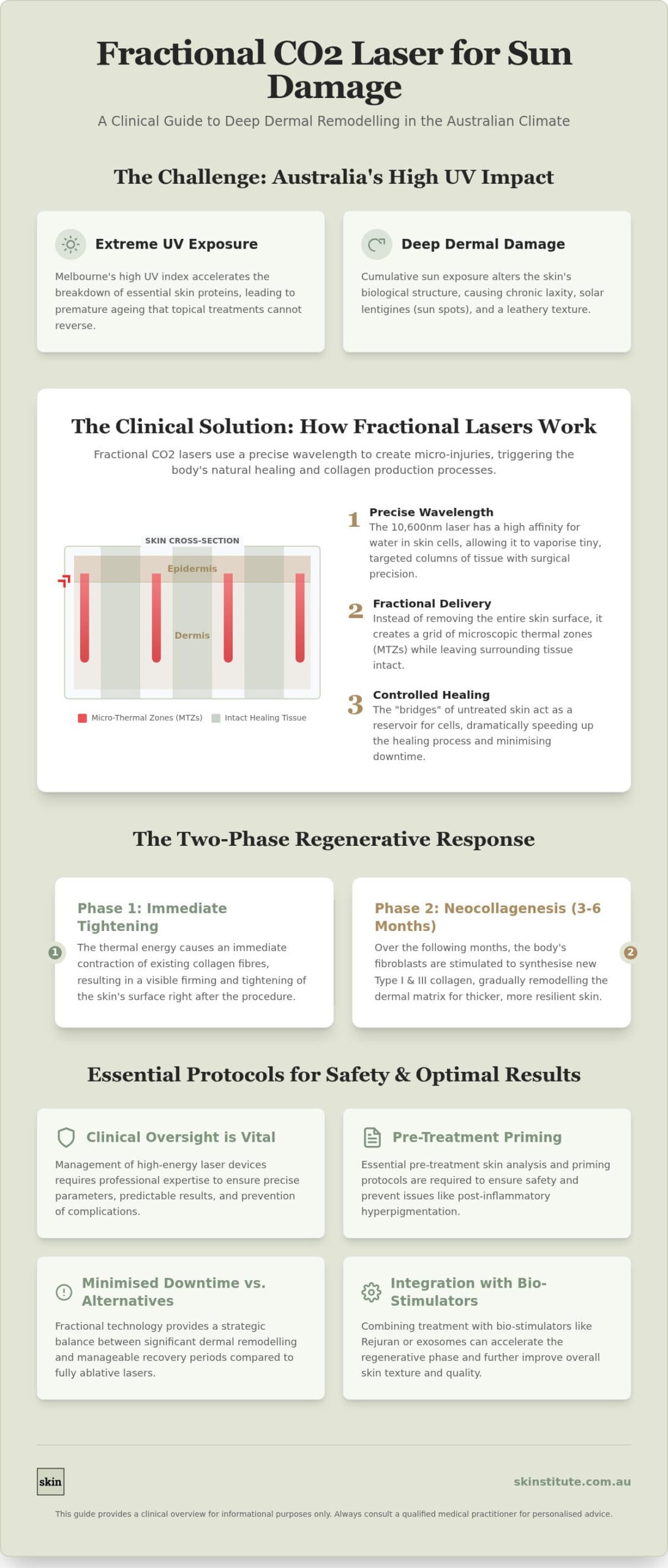
The “fractional” component of this technology represents a significant advancement in patient safety and recovery. Instead of ablating the entire skin surface, the laser creates thousands of microscopic thermal zones (MTZs) while leaving the surrounding tissue intact. This bridge of untreated skin acts as a biological reservoir, supplying the necessary cells to accelerate the healing process. It creates a controlled inflammatory response that triggers the body’s natural regenerative mechanisms, specifically the production of Type I and Type III collagen. Utilizing a fractional laser for sun damage melbourne allows for a strategic balance between significant dermal remodelling and manageable recovery periods. This clinical precision ensures that the thermal injury is localised, reducing the risk of complications such as scarring or permanent pigmentary changes.
The Science of Fractional CO2 Laser Resurfacing
The efficacy of a fractional laser for sun damage melbourne relies on the specific physics of the 10,600nm wavelength. This specific frequency has an exceptional affinity for water, which is the primary constituent of human skin cells. When the laser’s energy meets the tissue, it’s instantaneously absorbed by intracellular water, causing the rapid vaporisation of precisely targeted columns. This action creates microscopic thermal zones that extend deep into the dermis while sparing the surrounding tissue. This controlled injury serves as a biological signal, transitioning the skin from a state of chronic environmental damage to one of active cellular repair. For a comprehensive overview of these processes, you may review our clinical guide on fractional CO2 laser resurfacing Melbourne.
Dermal Remodelling and Collagen Stimulation
The regenerative response occurs in two primary stages. Immediately following the procedure, the thermal energy causes existing collagen triple-helix fibres to contract, which results in a measurable tightening of the skin’s surface. The second, more transformative phase is neocollagenesis. Over a period of three to six months, the body’s fibroblasts are stimulated to synthesise new collagen and elastin. This gradual remodelling of the dermal matrix restores the skin’s structural integrity. It effectively increases dermal thickness and resilience, counteracting the thinning and laxity typically induced by decades of Australian UV exposure.
Targeting Pigmentation and Textural Irregularities
Fractional CO2 technology is particularly adept at resolving the pigmentary consequences of photoageing. The laser energy vaporises the clusters of melanin-rich cells that form solar lentigines and other “sun spots.” As the microscopic wounds heal, these damaged cells are shed and replaced by fresh, healthy tissue with a more uniform distribution of pigment. This process simultaneously smooths the skin’s topography, reducing the depth of fine rhytids and shallow scarring. A more refined skin texture allows light to reflect more evenly across the surface, which significantly improves overall clarity and luminosity. To ensure the most appropriate parameters are selected for your unique skin profile, you can consult with our experienced practitioners for a detailed analysis.
Fractional Laser vs. Alternative Rejuvenation Therapies
Selecting the most appropriate clinical intervention requires a precise understanding of how different technologies interact with the skin’s architecture. While several modalities aim to stimulate collagen, the technical superiority of a fractional laser for sun damage melbourne becomes evident when treating chronic photoageing and deep textural irregularities. The choice between laser resurfacing and alternative therapies often depends on the depth of the pathology and the specific biological outcome required for the patient’s skin profile.
When to Choose Laser Over Skin Needling
Skin needling, or collagen induction therapy, utilises mechanical micro-channels to trigger a wound-healing response. It’s an effective choice for younger patients with minimal environmental damage or for those seeking to maintain skin health. However, fractional CO2 laser provides a critical thermal advantage that mechanical needling cannot replicate. The heat generated by the laser causes immediate protein denaturation and collagen contraction. For advanced photoageing, where the dermal matrix has significantly degraded due to UV exposure, this intensive thermal remodelling is necessary to achieve meaningful structural improvement. While needling is excellent for surface maintenance, the fractional laser targets the deeper dermal layers where sun damage is most persistent.
Combining Modalities for Optimal Results
Modern clinical protocols often leverage the synergy between different biological pathways to enhance patient outcomes. While fractional CO2 addresses the physical structure and pigmentation, bio-stimulators like Rejuran provide the essential polynucleotides required for cellular repair. Integrating these treatments, as detailed in our clinical guide to Rejuran in Melbourne, helps to optimise the regenerative environment. This combination approach ensures the skin has the necessary building blocks to respond effectively to the laser’s thermal stimulus.
Other technologies, such as High Intensity Focused Ultrasound (HIFU), serve a different clinical purpose. HIFU targets the SMAS layer to provide deep tissue lifting and address structural laxity. It doesn’t, however, treat the surface pigment or fine lines caused by solar radiation. In many cases, a comprehensive treatment plan might include HIFU for lifting followed by fractional CO2 for surface resurfacing. Additionally, the use of exosomes in the immediate post-laser phase is becoming a standard clinical practice to accelerate the regenerative phase and reduce downtime. A thorough clinical assessment is always the first step to determine the most effective combination of these medical-grade modalities.
The Treatment Journey: Clinical Protocols for Sun Damage
A successful outcome with a fractional laser for sun damage melbourne begins long before the device is activated. Every patient undergoes a mandatory clinical consultation and skin analysis to map the extent of photoageing and determine the specific technical parameters for the procedure. This diagnostic phase ensures that the treatment is tailored to the individual’s skin type and the specific depth of their solar damage. We assess the skin’s baseline health and identify any contraindications that might affect the healing process. This methodical approach ensures that the energy delivered is both safe and effective for your unique dermal profile.
Preparing Your Skin for Fractional Laser
Priming the skin is a vital safety protocol, particularly for patients with higher Fitzpatrick skin types who are prone to pigmentary shifts. We often prescribe tyrosinase inhibitors for two to four weeks prior to the appointment. These agents stabilise melanocyte activity, which significantly reduces the risk of post-inflammatory hyperpigmentation. Patients must strictly avoid direct sun exposure and discontinue the use of active topicals, such as retinols or AHAs, at least five days before treatment. Maintaining optimal skin hydration is also essential. The laser’s affinity for water ensures a more predictable and effective thermal interaction when the tissue is well-hydrated.
On the day of the procedure, a topical anaesthetic is applied to the treatment area. This ensures patient comfort during the resurfacing process. The treatment itself typically takes 30 to 45 minutes. During this time, you’ll feel a sensation of heat as the laser creates microscopic thermal zones. Once completed, the skin enters a structured inflammatory phase that marks the beginning of the regenerative journey.
Post-Laser Clinical Aftercare and Protection
The recovery timeline for a fractional laser for sun damage melbourne follows a predictable biological sequence. In the first 48 hours, the application of medical-grade occlusives is mandatory. These create a protective barrier that prevents trans-epidermal water loss and facilitates rapid epithelialisation. During this initial window, the skin will feel intensely warm, similar to a significant sunburn.
- Days 1 to 2: Expect significant erythema and mild oedema. The skin will appear red and feel tight as the initial inflammatory response peaks.
- Days 3 to 4: Microscopic treatment zones begin to migrate to the surface. The skin develops a “bronzed” appearance and a sandpaper-like texture.
- Days 5 to 7: The natural peeling phase commences. It’s critical that patients don’t manually exfoliate or pick at the skin, as this can disrupt new tissue and cause scarring.
The environmental conditions in Victoria require a disciplined approach to sun safety. Even on overcast days, the UV index can be high enough to compromise healing tissue. We require patients to use a broad-spectrum SPF 50+ and wear protective clothing for at least 14 days post-treatment. To ensure your skin is adequately prepared for this medical-grade intervention, arrange a clinical skin analysis at our Melbourne centre.
Why Professional Clinical Oversight is Vital for Laser Treatments
The application of a high-energy fractional laser for sun damage melbourne is a medical procedure that carries inherent risks if performed by untrained operators. Technical mastery is essential. Inexperienced handling of CO2 technology can lead to significant complications, including post-inflammatory hyperpigmentation (PIH), persistent erythema, or permanent scarring. These outcomes often result from a failure to correctly calibrate the laser’s fluence and density according to the patient’s specific skin pathology. At Skinstitute, our practitioners bring over 26 years of industry experience to every consultation, ensuring that technical proficiency remains the foundation of patient safety. We prioritise evidence-based protocols over high-street beauty trends to deliver predictable and safe clinical results.
The Importance of Practitioner Experience
Customising laser parameters is a complex task that requires a deep understanding of skin biology. It isn’t enough to simply operate the device; a clinician must interpret how different Fitzpatrick skin types respond to thermal injury. Fluence, or the energy density of the laser pulse, must be calculated with precision to avoid bulk heating that leads to thermal damage beyond the intended microscopic zones. For instance, darker skin profiles require specific pulse durations and cooling protocols to prevent the overstimulation of melanocytes. By prioritising clinical precision over standard presets, we ensure that the energy delivered is sufficient to trigger regeneration without compromising the surrounding tissue. For a more detailed look at our standards, you may refer to the Skinstitute Melbourne clinical guide to medical-grade aesthetic treatments.
Long-term Skin Health Management
A single session of fractional CO2 laser resurfacing provides significant results, but maintaining these improvements requires a longitudinal approach to skin health. Professional clinical oversight allows for regular reviews where the skin’s progress is monitored and the anti-ageing strategy is adjusted as needed. This might involve integrating maintenance treatments such as Rejuran or HIFU to support the dermal matrix and enhance structural integrity. We also ensure that all equipment used is TGA-cleared, providing an additional layer of security regarding the device’s build quality and safety profile. This regulatory compliance is a non-negotiable standard for any medical-grade facility.
Choosing a clinic with a medical-grade focus ensures that your journey is guided by scientific principles rather than marketing hype. We encourage a professional consultation to develop a tailored fractional laser for sun damage melbourne plan that respects the biological limits of your skin while achieving your aesthetic goals. This structured oversight is what differentiates a clinical intervention from a standard beauty service, ensuring your long-term skin health is managed with the highest level of professional integrity.
Restoring Skin Integrity Through Clinical Precision
Addressing chronic photoageing requires a transition from superficial cosmetic maintenance to evidence-based medical intervention. We’ve examined how the specific 10,600nm wavelength of the CO2 laser facilitates deep dermal remodelling by triggering neocollagenesis and vaporising damaged pigmented cells. This process offers a level of structural correction for chronic UV damage that non-medical resurfacing methods simply cannot replicate. By adhering to rigorous clinical protocols and personalised skin priming, you can safely navigate the regenerative phase to achieve a significant reduction in solar lentigines and improved dermal thickness.
Selecting a fractional laser for sun damage melbourne is a decision that prioritises long-term skin health and technical safety. Skinstitute provides a professional clinical environment equipped with advanced medical-grade technology, supported by over 26 years of medical aesthetic experience. We invite you to Book a Clinical Skin Analysis at Skinstitute Melbourne to establish a tailored treatment pathway. Our practitioners are dedicated to providing the technical oversight necessary for predictable and transformative results. We look forward to supporting you in your journey toward a more resilient and rejuvenated complexion.
Frequently Asked Questions
How long is the recovery time after fractional CO2 laser for sun damage?
Recovery after fractional CO2 laser resurfacing typically involves a five to seven day window for the initial epithelialisation phase. During the first 48 hours, patients experience erythema and mild oedema, followed by a bronzing effect as microscopic treatment zones migrate to the surface. The subsequent peeling phase must proceed naturally without manual intervention. While the surface appears healed within a week, the underlying dermal remodelling and collagen synthesis continue for several months.
Is fractional laser painful during the treatment?
Patient comfort is managed through the application of a high-potency topical anaesthetic prior to the procedure. While the sensation is often described as a series of brief, hot pinpricks, the primary experience is one of intense thermal energy similar to a significant sunburn. We also utilise integrated cooling systems to mitigate heat accumulation in the tissue. Post-treatment, any residual discomfort typically subsides within a few hours as the inflammatory response stabilises.
How many sessions of fractional laser are needed for sun-damaged skin?
The number of sessions required depends entirely on the depth of photoageing and the patient’s specific aesthetic goals. For moderate environmental damage, a single intensive session may suffice to achieve significant correction. However, patients with deep-seated rhytids or extensive solar lentigines often benefit from a series of two to three treatments. These are typically spaced eight to twelve weeks apart to allow for the completion of the biological healing cycle.
Can fractional laser be used on darker skin types safely?
Fractional CO2 laser can be safely administered to darker Fitzpatrick skin types provided a strict medical-grade priming protocol is followed. This involves the use of tyrosinase inhibitors for several weeks before the procedure to stabilise melanocyte activity. Our practitioners also adjust the laser’s density and pulse duration to minimise the risk of post-inflammatory hyperpigmentation. A professional clinical assessment is mandatory to determine the safest technical parameters for each unique skin profile.
What is the difference between fractional CO2 and Erbium laser?
The primary difference lies in the wavelength and its absorption characteristics. Fractional CO2 lasers operate at 10,600nm, which allows for deeper dermal penetration and a more significant thermal effect compared to the 2,940nm wavelength of Erbium lasers. While Erbium is often used for more superficial resurfacing with shorter downtime, CO2 is the preferred medical-grade choice for addressing advanced sun damage and achieving more substantial tissue contraction and remodelling.
How much does fractional laser treatment cost in Melbourne?
The investment for a fractional laser for sun damage melbourne varies based on the surface area treated and the technical complexity of the case. Full-face resurfacing represents a different clinical undertaking compared to targeted treatments for the periorbital or perioral regions. Factors such as the practitioner’s level of experience and the use of TGA-cleared medical devices also influence the final cost. We provide a detailed breakdown of all associated fees during the initial clinical consultation.
When will I see the final results from my laser resurfacing?
Final results from a resurfacing procedure are typically visible between three and six months post-treatment. While an immediate improvement in skin clarity and tone is observed once the initial peeling phase concludes at day seven, the process of neocollagenesis is gradual. The new collagen fibres require time to mature and reorganise within the dermal matrix. This leads to a progressive improvement in skin thickness, resilience, and overall structural integrity over the following months.
Can fractional laser help with actinic keratosis and precancerous spots?
Fractional CO2 laser technology is highly effective at vaporising the atypical cells associated with actinic keratosis and other precancerous spots. By removing the damaged epidermal layers and stimulating the growth of healthy new tissue, the laser reduces the overall burden of photoageing. However, it’s essential to have any suspicious lesions clinically diagnosed by a medical professional before proceeding with laser resurfacing. This ensures that the treatment plan is both safe and medically appropriate.