Fractional CO2 Laser Melbourne: A Clinical Guide to Medical-Grade Skin Resurfacing
July 21, 2026
CO2 Laser for Acne Scars Melbourne: Clinical Guide
July 24, 2026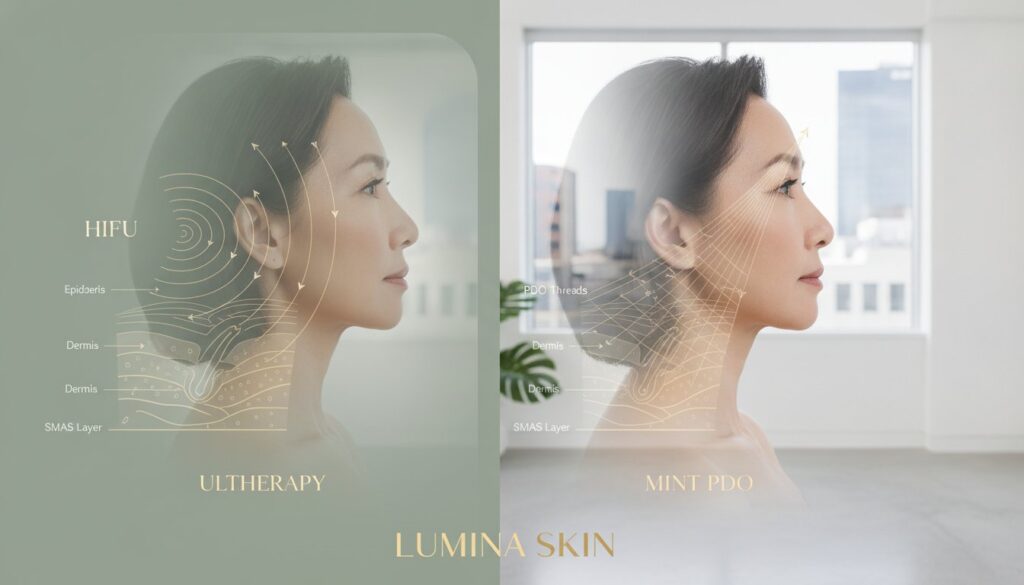
The most effective approach to non-surgical facial rejuvenation isn’t found in choosing one technology over another, but in identifying which biological mechanism your specific tissue profile requires. Many Melbourne patients feel understandably overwhelmed by the technical distinctions between energy-based stimulation and mechanical repositioning. When evaluating hifu vs thread lift melbourne options, it’s common to feel concerned about recovery durations and whether a procedure meets the rigorous AHPRA safety standards essential for clinical excellence.
You deserve a transparent overview of how these treatments interact with your anatomy to restore jawline definition and dermal density. This article provides a technical analysis of the biological mechanisms, clinical outcomes, and suitability of both High Intensity Focused Ultrasound and PDO thread lifting. We will examine how controlled thermal injury compares to physical tissue anchoring. This ensures you have the evidence-based insight necessary to achieve natural-looking rejuvenation and long-term structural support while prioritising your safety and skin health.
- Distinguish between the biological mechanism of High Intensity Focused Ultrasound, which induces thermal coagulation to stimulate collagen, and the mechanical repositioning provided by PDO thread lifting.
- Compare hifu vs thread lift melbourne through a clinical assessment of how energy-based SMAS tightening differs from the structural suspension of bio-absorbable polymers.
- Analyse the clinical longevity of each procedure, noting that HIFU results typically persist for 12 to 18 months, while PDO threads offer suspension for approximately 18 to 24 months.
- Understand the necessity of 2026 AHPRA regulatory compliance when seeking non-surgical facelifts within a medical-grade Melbourne clinic.
Understanding Non-Surgical Facial Rejuvenation in Melbourne
The pursuit of facial rejuvenation without invasive surgery has led to the development of sophisticated modalities that target the underlying structures of the face. For patients evaluating hifu vs thread lift melbourne, the choice depends on whether the tissue requires energy-based stimulation or mechanical repositioning. Both techniques focus on the Superficial Muscular Aponeurotic System (SMAS), which is the fibrous layer that connects facial muscles to the skin. By addressing the SMAS, clinicians can achieve a lifting effect previously only possible through surgical intervention. The ultimate clinical goal is to address facial descent and skin laxity while maintaining a natural appearance.
High-Intensity Focused Ultrasound (HIFU) functions as an energy-based modality. It delivers precise ultrasound waves to create points of thermal coagulation within the deep dermis and SMAS. This process triggers a natural wound-healing response, resulting in the production of new collagen. Conversely, PDO thread lifting is a mechanical suspension technique. It involves the insertion of bio-absorbable polymers into the subcutaneous tissue. These threads provide immediate structural support and reposition descended tissue while simultaneously encouraging long-term biological regeneration. Understanding these fundamental differences is the first step in a professional consultation.
The Anatomy of Facial Descent
Facial ageing is primarily driven by the progressive depletion of collagen and the degradation of elastin fibres. This loss of structural integrity causes the skin to lose its resilience. As we age, gravity exerts a constant downward force on the malar fat pads, leading to their migration. This results in a loss of cheek volume and the development of jowls along the jawline. It’s vital to distinguish between superficial skin laxity, which affects the skin’s surface texture, and deep structural sagging. While HIFU is excellent for tightening the skin and SMAS, thread lifts are often more effective for physically lifting fat pads that have shifted due to gravity. A comprehensive understanding of this pathophysiology ensures that the chosen hifu vs thread lift melbourne protocol matches the patient’s specific anatomical needs.
The Role of Medical-Grade Aesthetics
A successful outcome relies on a thorough professional clinical assessment. With over 26 years of industry experience, our practitioners understand that patient suitability is determined by tissue density, the degree of descent, and individual healing capacities. We often observe that the best results come from a multi-modal approach. For instance, combining these lifting techniques with Rejuran can enhance the regenerative process by improving cellular repair. This clinical synergy supports the skin’s biological health while the lifting procedures address structural concerns. Choosing a medical-grade environment ensures that every step of the treatment plan is backed by technical proficiency and a commitment to patient safety.
High Intensity Focused Ultrasound (HIFU): Deep Tissue Remodelling
High Intensity Focused Ultrasound (HIFU) represents a significant advancement in non-surgical tissue tightening. Unlike mechanical interventions, HIFU utilises micro-focused ultrasound energy to create precise thermal coagulation points (TCPs) within the skin’s deeper architecture. This energy effectively bypasses the epidermis, allowing clinicians to target the Superficial Muscular Aponeurotic System (SMAS) at depths of 3.0mm to 4.5mm. By delivering energy directly to this foundational layer, the treatment initiates a profound biological response without disrupting the skin’s surface.
The biological reaction is characterised by a controlled wound-healing cascade that promotes both neocollagenesis and neovascularisation. When the ultrasound energy reaches the target depth, it generates heat that causes immediate contraction of existing collagen fibres. This provides a subtle, immediate lifting effect. However, the most significant clinical outcomes occur during the subsequent months as the body repairs the thermal coagulation points. A clinical study comparing HIFU and thread lift protocols highlights that while threads provide immediate suspension, HIFU excels at increasing dermal thickness through sustained cellular remodelling and improved microcirculation.
The Science of Thermal Coagulation
To trigger cellular regeneration effectively, the tissue must reach a specific temperature range between 65°C and 70°C. This level of heat is sufficient to denature aged collagen while remaining safe for the surrounding anatomical structures. Clinical-grade HIFU devices ensure this energy is delivered with millimetre precision, maintaining a high safety profile. Neocollagenesis is the physiological process of new collagen formation that occurs over a period of three to six months following the initial thermal stimulus.
Suitability for HIFU Treatment
The ideal candidate for this modality typically presents with mild to moderate skin laxity and maintains sufficient dermal thickness to support the remodelling process. Patients often enquire about the sensation during treatment; most describe it as a localised feeling of heat or tingling, generally rated between 2 and 4 on a 10-point discomfort scale. The primary clinical advantage of HIFU lies in its ability to improve tissue density and overall skin quality from the inside out. For those considering hifu vs thread lift melbourne options, HIFU serves as an excellent foundational treatment for those not yet requiring mechanical repositioning. Our experienced team can help you determine the most effective clinical pathway for your skin concerns during a professional assessment.
PDO Thread Lifting: Structural Suspension and Biological Support
While HIFU focuses on deep thermal stimulus, PDO thread lifting provides a direct mechanical solution for tissue that has physically descended. PDO, or Polydioxanone, is a bio-absorbable polymer that has been utilised in cardiothoracic surgery for decades due to its high tensile strength and safety profile. When evaluating the merits of hifu vs thread lift melbourne, it’s essential to understand that threads offer immediate structural suspension by physically anchoring the subcutaneous tissue. This makes them a primary choice for patients requiring visible repositioning of the facial architecture.
The procedure involves the precise insertion of these threads via a fine cannula into the subcutaneous layer. Specialised threads feature “cogs” or “barbs” designed to engage with the SMAS and fatty tissue, allowing the practitioner to physically lift and secure malar fat pads or sharpen a softened jawline. Beyond this immediate mechanical effect, the presence of the thread triggers a secondary biological response. This includes neovascularisation, which improves localised blood flow, and the deposition of new collagen along the thread’s path. A clinical study on combination HIFU and thread lift therapy suggests that this structural reinforcement is particularly effective when the skin has already been primed by energy-based treatments to improve dermal density.
Over a period of six to nine months, the threads undergo hydrolysis and are naturally absorbed by the body. However, the clinical lifting effect persists well beyond the life of the thread itself. This is because the biodegradation process leaves behind a robust collagen scaffold that continues to support the facial structures. This dual-action approach ensures that patients receive both an immediate aesthetic improvement and a long-term biological benefit as the skin’s internal framework is rebuilt.
Mechanical Tissue Repositioning
The primary distinction between these modalities is the immediacy of the result. Unlike the gradual tightening observed with ultrasound energy, threads provide an instant elevation of the mid-face and neck. Success in thread lifting depends heavily on meticulous vector planning. Practitioners must calculate the exact angles of tension to ensure the lift appears natural and avoids the distorted or “pulled” look associated with poor technique. This repositioning is especially beneficial for addressing deep nasolabial folds and marionette lines where tissue volume has shifted downwards due to gravity.
Recovery and Clinical Aftercare
Patients should prepare for a recovery period of approximately three to seven days. Localised swelling, minor bruising, and a temporary sensation of tightness are expected clinical responses as the threads integrate into the dermal tissue. To maintain thread stability during the critical first fortnight, we advise specific post-treatment restrictions. These include avoiding strenuous exercise, delaying dental appointments, and ensuring you don’t sleep on your face. Adhering to these guidelines ensures the cogs remain securely engaged while the initial collagen response begins to stabilise the new tissue position.
Choosing Between HIFU and Thread Lifts: A Clinical Decision Framework
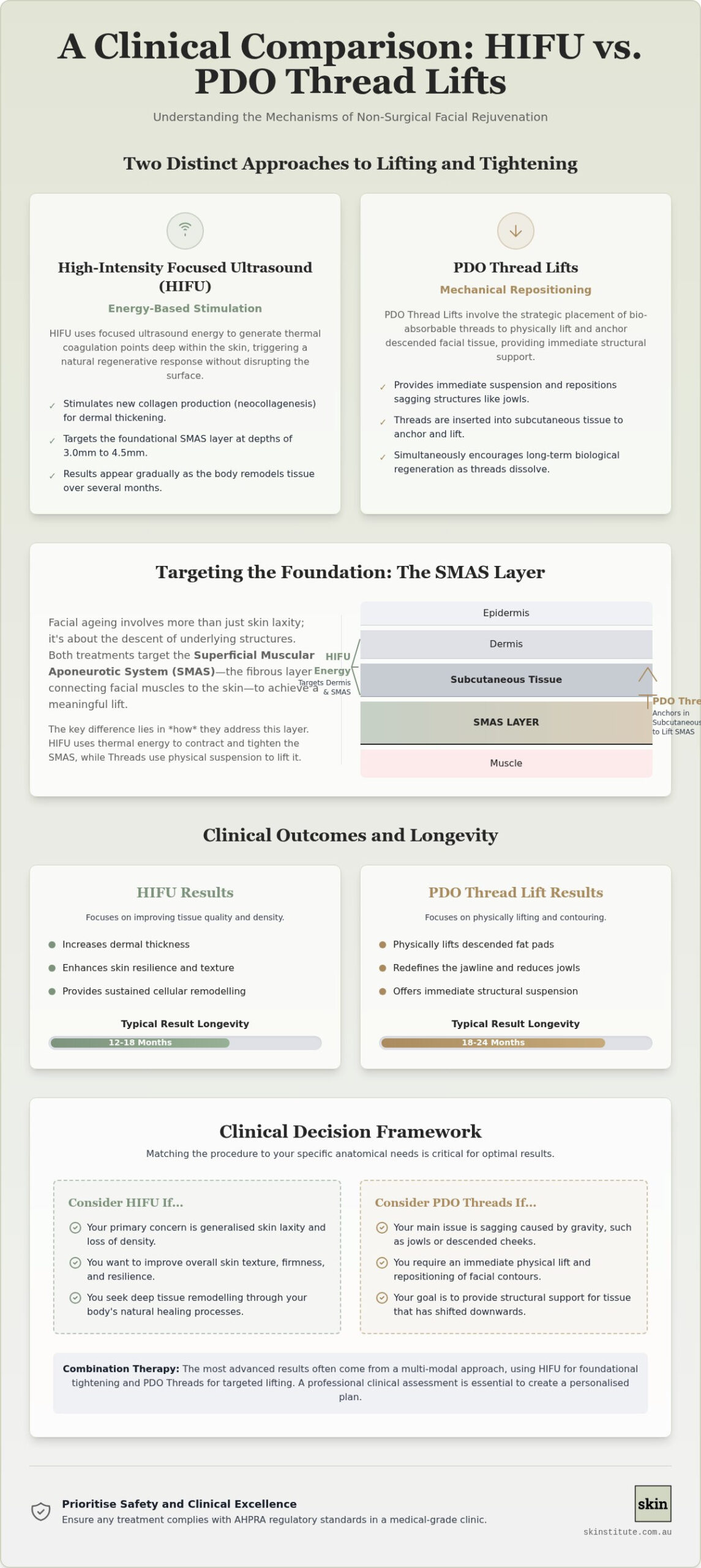
Determining the most effective hifu vs thread lift melbourne protocol requires an objective analysis of the patient’s tissue quality and the specific stage of their facial ageing. The clinical decision revolves around whether the primary concern is dermal thinning or physical tissue migration. While both modalities target the SMAS layer, their methods of action are distinct. High Intensity Focused Ultrasound relies on thermal energy to stimulate biological tightening from within. In contrast, PDO thread lifting provides an immediate mechanical suspension to reposition descended fat pads and skin.
The longevity of results also serves as a key differentiator in the decision-making process. Clinical observations indicate that the tightening effects of HIFU typically persist for 12 to 18 months, depending on the patient’s regenerative capacity. PDO threads generally offer a longer duration of structural support, often lasting between 18 and 24 months as the resulting collagen scaffold maintains the lift. For patients with surface-level texture concerns or significant photo-ageing, we may also recommend incorporating Fractional CO2 Laser therapy to address the epidermis while the deeper layers are being remodelled.
Patient Profile Analysis
Patient suitability is often dictated by the weight and density of the facial tissue. Individuals in the early stages of ageing, characterised by mild laxity and a loss of skin “bounce,” are often ideal candidates for HIFU. This preventative approach focuses on increasing dermal density before significant descent occurs. Patients exhibiting structural descent, such as prominent jowls or sunken cheeks, usually require the mechanical repositioning provided by threads. It’s also important to consider facial volume; patients with significant fat loss may require a hybrid approach where HIFU tightens the envelope before threads or other modalities restore the structural foundation.
Clinical Comparison Table
The following table outlines the practical differences between these two clinical pathways. While both are non-surgical, it’s vital to note that thread lifting involves a slightly more invasive entry point than the completely non-invasive ultrasound energy of HIFU.
| Feature | HIFU (Ultrasound) | PDO Thread Lift |
|---|---|---|
| Procedure Time | 30 to 90 minutes | 45 to 90 minutes |
| Anaesthesia | None or Topical | Local Anaesthetic |
| Result Onset | 8 to 12 weeks (Gradual) | Immediate (Mechanical) |
| Downtime | Minimal to None | 3 to 7 days |
The most biologically sound results often emerge from a “Hybrid Approach.” By utilising HIFU to improve tissue density and tighten the SMAS, we create a firmer foundation for the subsequent insertion of PDO threads. This synergy ensures that the threads have high-quality tissue to anchor into, which can enhance the longevity and stability of the lift. To explore which clinical pathway aligns with your aesthetic goals, you can book a comprehensive consultation with our experienced practitioners.
Regulatory Standards and Combination Therapies in Melbourne
The Australian aesthetic landscape has undergone significant transformation with the implementation of the 2026 AHPRA regulations for non-surgical cosmetic procedures. These standards mandate a higher level of clinical oversight and practitioner qualification to ensure patient safety across all modalities. When considering hifu vs thread lift melbourne, it is vital to select a medical-grade environment where these rigorous safety protocols are integrated into every treatment. A professional clinic prioritises the management of patient health through evidence-based practices and a thorough understanding of facial anatomy.
The Skinstitute Standard of Care
Our clinical methodology is built upon more than 26 years of industry experience in the Melbourne aesthetic sector. This extensive history allows us to conduct a comprehensive consultation process that accurately assesses each patient’s unique facial pathophysiology. We don’t merely apply a procedure; we analyse the degree of tissue descent, dermal thickness, and cellular health to determine the most appropriate intervention. Our commitment to natural-looking results is reflected in our use of conservative and precise techniques, ensuring that the facial architecture is supported rather than distorted.
Synergistic Treatments for Total Rejuvenation
Achieving optimal outcomes in hifu vs thread lift melbourne comparisons often involves looking at how different treatments work in tandem. While HIFU and threads address structural laxity, bio-stimulators like Rejuran can be utilised to enhance cellular health and repair the dermal matrix. This combination ensures that the skin is biologically capable of supporting the mechanical or thermal changes induced by lifting procedures. Additionally, incorporating skin needling into a post-lift maintenance plan helps to preserve the integrity of the dermal layers and promotes ongoing collagen synthesis.
Expanding your understanding of non-invasive options can also involve looking at alternative energy sources; for example, those interested in the latest clinical advancements from international providers like AgeRefine Clinic can explore Onda Pro to see how microwave technology is utilised for skin rejuvenation.
A holistic rejuvenation strategy considers the skin’s health at every level, from the deep SMAS layer to the epidermis. By integrating these various modalities, we can provide a bespoke pathway that addresses both immediate structural concerns and long-term tissue density. To begin your journey with an evidence-based assessment, we invite you to organise a clinical consultation at our Melbourne centre.
Establishing a Foundation for Structural Integrity
Identifying the correct modality for your aesthetic concerns requires a nuanced understanding of how ultrasound energy and mechanical suspension interact with the SMAS layer. When comparing hifu vs thread lift melbourne, the objective is to determine whether your tissue requires the deep thermal remodelling of HIFU or the immediate repositioning offered by PDO threads. Our clinical team leverages over 26 years of aesthetic expertise to assess your facial pathophysiology and develop a bespoke treatment plan that prioritises natural results.
By adhering to AHPRA-compliant clinical protocols, we ensure that every procedure meets the highest safety standards in the industry. Whether you require a single modality or a synergistic combination of treatments, our focus remains on long-term tissue health and structural stability. It’s a journey that prioritises precision over quick fixes. We invite you to Book a Clinical Consultation at Skinstitute Melbourne to discuss your specific goals within a professional, medical-grade environment. Taking this step ensures your rejuvenation journey is guided by technical proficiency and evidence-based care.
Frequently Asked Questions
Is HIFU or a thread lift better for a double chin and jowls?
The selection between these modalities depends on whether the primary concern is adipose tissue volume or structural descent. High Intensity Focused Ultrasound is often more effective for reducing submental fat and tightening the skin envelope around the jawline. Conversely, a thread lift is the preferred method for physically repositioning descended jowl tissue that requires mechanical elevation to restore a defined facial contour.
How long do the results of a non-surgical lift last in Melbourne patients?
Longevity is influenced by the patient’s individual biological response and the specific modality utilised. Clinical observations indicate that the tightening effects of HIFU typically persist for 12 to 18 months. Results from a PDO thread lift often remain visible for 18 to 24 months, as the collagen scaffold created during the biodegradation process continues to provide structural support long after the threads have dissolved.
Can I have HIFU and a thread lift during the same appointment?
Staging these treatments is the standard clinical recommendation to ensure optimal tissue recovery and safety. When evaluating hifu vs thread lift melbourne pathways, we generally perform HIFU as a foundational treatment to improve dermal density. Once the initial phase of neocollagenesis has commenced, typically several weeks later, the thread lift can be performed to anchor into the newly strengthened tissue.
Are PDO threads safe, and what are the potential side effects?
PDO threads are composed of a bio-absorbable polymer with a long-standing safety record in cardiothoracic surgery. Potential side effects are usually transient and localised, including minor bruising, swelling, or a temporary sensation of tightness. Rare complications, such as minor asymmetry or transient neuralgia, occur in less than 1% of cases when the procedure is conducted by a qualified and experienced practitioner.
What is the recovery time for a thread lift compared to HIFU?
HIFU is a non-invasive procedure that typically requires no downtime, allowing patients to resume their professional and social activities immediately. In contrast, a thread lift is a minimally invasive technique that necessitates a recovery period of approximately 3 to 7 days. This time allows for the resolution of localised swelling and ensures the threads can integrate securely into the subcutaneous tissue.
How much does a thread lift or HIFU cost in Melbourne?
The financial investment for these treatments is determined by the specific requirements of the patient’s facial anatomy. Factors such as the number of threads required for a lift or the specific energy protocols needed for ultrasound tightening vary significantly between individuals. We provide a bespoke quote following a comprehensive clinical assessment to ensure the treatment plan is tailored to your unique aesthetic objectives.
Does HIFU hurt more than a thread lift?
These treatments involve different sensory experiences rather than varying levels of acute pain. Most patients describe the sensation of HIFU as a localised feeling of heat or tingling, generally rated at a 2 to 4 out of 10 on a discomfort scale. Thread lifting is performed using local anaesthetic to numb the entry points and treatment tracks, meaning patients may feel pressure or tugging but should remain comfortable throughout.
Are there any age restrictions for non-surgical facial lifting?
There is no specific chronological age limit, as suitability is determined by the degree of tissue laxity and the skin’s regenerative capacity. While many patients seeking these treatments are between their 30s and 60s, the clinical decision is based on a physical evaluation. We assess whether the skin has sufficient structural integrity to respond to thermal stimulus or support mechanical suspension before recommending a protocol.