Cosmetic injections in Melbourne for facial balance and volume
October 20, 2026
Questions to Ask at a Cosmetic Consultation About Risks
October 22, 2026
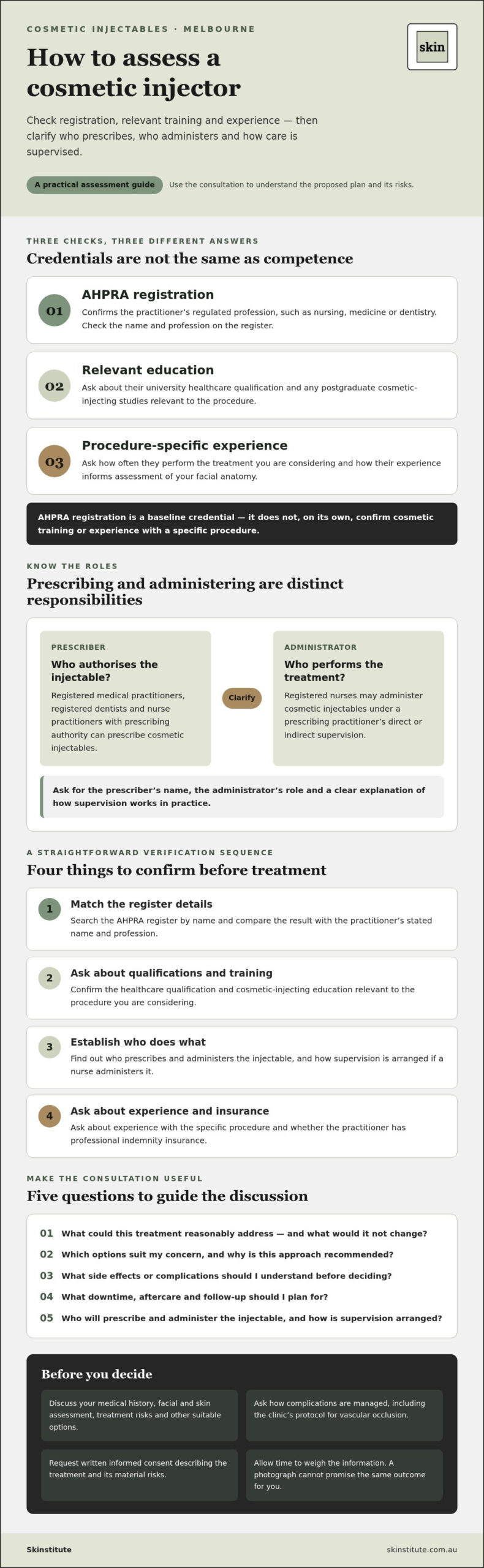
Choosing the right cosmetic injector in Melbourne starts with checking the practitioner’s healthcare registration and understanding who prescribes and administers the treatment. In Australia, registered medical practitioners, registered dentists and nurse practitioners with prescribing authority can prescribe cosmetic injectables. Registered nurses may administer them under a prescribing practitioner’s direct or indirect supervision.
Look beyond clinic images and promotional language when assessing a practitioner. Consider their relevant training, experience with the procedure you’re interested in, and how clearly they explain their recommendations and potential risks.
This guide covers practical questions to ask before treatment, how to verify registration and qualifications, and what to look for in clinical oversight. It also explains the different roles involved in injectable care, helping you assess the information, weigh your priorities and decide whether to proceed.
Key Takeaways
- Use the consultation to assess whether the proposed treatment suits your facial anatomy, medical history and desired outcome.
- Look up the practitioner’s current AHPRA registration and confirm their qualifications and training are relevant to cosmetic injectables.
- Ask how the clinic manages hygiene, complications and follow-up care before deciding to proceed.
- Review examples of the practitioner’s work and ask about their experience with the specific treatment you are considering.
- Clarify who will prescribe and administer the injectable, and how clinical supervision is arranged.
1. Questions to ask before treatment
A useful consultation should clarify what you want to change and whether injectables suit your facial anatomy. Before wrinkle injections, ask the practitioner to explain the proposed treatment, expected outcome, possible side effects and other suitable options. The discussion should cover your medical history, a facial and skin assessment, and treatment risks. It should not be a brief review immediately before an injection.
Describe your concern in practical terms, such as a wrinkle that appears when you move your face or a change in facial volume. Ask how the recommendation relates to your features, skin quality and preferences. Choosing the right cosmetic injector in Melbourne also means understanding why a particular treatment is recommended, rather than assuming the same technique suits everyone.
Use these questions to guide the discussion:
- What could this treatment reasonably address, and what would it not change?
- Which options suit my concern, and why do you recommend this approach?
- What side effects or complications should I understand before deciding?
- What downtime could affect work or other plans, and what should I do if a reaction occurs?
- Who will prescribe the injectable, who will administer it, and how is supervision arranged?
Ask the practitioner to explain the proposed product and technique, including why they suit the treatment area. For example, an approach to a wrinkle caused by muscle movement differs from one addressing volume loss. You can also ask to see before-and-after photographs of previous patients. Compare the results with your preferences, but remember that an image cannot promise the same outcome for you.
Discuss your timeline before agreeing to treatment. If you have an event or travel planned, ask how recovery and follow-up might affect your plans. The practitioner should explain realistic results, possible side effects, downtime and what to do if a reaction occurs. Before proceeding, you should receive written informed consent that describes the treatment and its material risks.
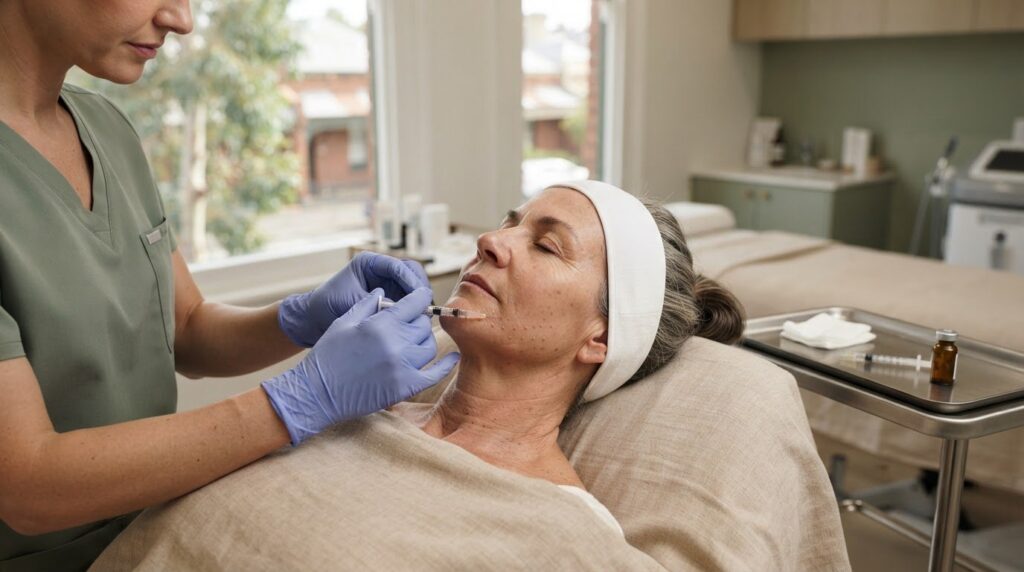
If a registered nurse will administer your cosmetic treatment, ask who the prescribing practitioner is and how supervision works. In Australia, registered nurses may administer cosmetic injectables under a prescribing practitioner’s direct or indirect supervision. A practical way to assess a cosmetic injector in Melbourne is to expect a clear explanation of everyone’s role in your care.
Ask how complications are managed, including the clinic’s protocol for vascular occlusion, a serious complication involving impaired blood flow. Find out what follow-up care and written aftercare instructions you will receive. A considered consultation gives you time to weigh the information and decide whether the proposed plan aligns with your goals.
2. How Do You Verify a Cosmetic Injector’s Registration and Licence?
In Australia, start by checking that the practitioner has current registration with the Australian Health Practitioner Regulation Agency (AHPRA). Registration identifies a practitioner’s profession, such as nursing, medicine or dentistry. It does not establish whether they have specific training and experience in cosmetic procedures involving facial anatomy.
Search the AHPRA register using the practitioner’s name, then compare the result with the name and profession they give you. If the details differ, ask for an explanation before proceeding. Registration is a baseline credential, not proof that someone has postgraduate cosmetic training or experience with your proposed treatment.
Ask which healthcare qualification the injector holds and what cosmetic-injecting education they have completed. Relevant qualifications for cosmetic injectors include a university degree in Registered Nursing, Medicine, Dermatology or Dentistry, together with postgraduate cosmetic-injecting studies. Ask about the qualifications and training relevant to the procedures you’re considering, rather than relying on a general claim of being “qualified”.
Check that the practitioner’s professional role matches the work they will perform. A registered nurse, for example, may administer cosmetic injectables under the direct or indirect supervision of a prescribing practitioner. The nurse is not the prescriber. Ask who prescribes the injectable, who administers it and how supervision works in practice.
Registration, qualifications and treatment competence answer different questions. AHPRA registration relates to the practitioner’s regulated profession; postgraduate education indicates additional cosmetic training; and experience relates to performing the specific procedure. Ask how often the practitioner performs your proposed treatment and how their training informs their assessment of your facial anatomy. A certificate alone does not answer those questions.
Before booking treatment, use a simple verification sequence:
- Find the practitioner’s AHPRA registration and check that the name and profession match.
- Ask what university healthcare qualification and postgraduate cosmetic-injecting studies they have completed.
- Confirm who will prescribe and administer the injectable, including the nurse’s supervision arrangement where relevant.
- Ask whether the practitioner has professional indemnity insurance and what experience they have with the specific procedure.
These steps help distinguish a recognised healthcare qualification from training specific to cosmetic injectables. Appropriate nursing or medical registration, for example, does not show how much experience a practitioner has with a particular facial area. Combine register details with clear answers about training, role and procedure-specific experience before making your decision.
3. Is It Safe to Get Injectables from a Non-Medical Professional?
Cosmetic injectables should be performed or supervised by a registered medical practitioner. A beauty therapist cannot independently perform anti-wrinkle injections. Before booking, establish whether the person performing the procedure is a registered healthcare professional and what clinical oversight applies. This distinction matters because injectable treatment involves medical products, facial anatomy and potential complications.
Warning signs include pressure to proceed without an assessment, evasive answers about supervision, or a treatment room that appears unsuitable for clinical procedures. Be cautious if the injector dismisses questions about complications, hygiene or follow-up. A provider should explain safety procedures in practical terms, not rely on general assurances or focus only on the intended aesthetic result.
Look over the treatment environment when you attend. The room should be clean and organised, with equipment appropriate to the procedure and clear hygiene practices. Ask how the team prepares the treatment area, handles instruments and maintains equipment. These details show how infection-control measures are incorporated into your appointment. The clinic should also keep consistent records of your treatment history, including what was administered and when.
Ask specific questions about emergency planning. Find out whether the clinic stocks hyaluronidase for emergency filler dissolution, and whether emergency equipment includes adrenaline and ideally oxygen. Ask who would recognise a complication, make clinical decisions and carry out the response. The explanation should cover roles and actions, rather than simply assuring you that staff are trained.
Medical oversight should be clear before treatment begins. Ask whether the prescribing practitioner is on site or has a documented, proximate supervisory arrangement at the clinic. Clarify how the injector would contact that practitioner during the procedure and who is responsible for follow-up. This helps distinguish a named supervisor from a vague reference to the clinic’s medical team.
- Observe whether the treatment space is clean and prepared for clinical care.
- Ask how instruments, equipment and treatment records are managed.
- Clarify emergency supplies and the clinic’s response process.
- Establish who handles follow-up if a concern arises after the appointment.
Continuity of care matters after you leave. Ask how to reach the team responsible for your treatment and how your records support future appointments. Written aftercare instructions should explain what to do if a reaction occurs. Before proceeding, make sure you understand the follow-up arrangements and the clinic’s process for addressing concerns.
Consider the location in practical terms, too. Choose somewhere you can return to for planned follow-up, rather than treating convenience or appearance as evidence of safety. If a clinic cannot explain its hygiene procedures, supervisory arrangements or emergency response, essential questions remain unanswered. Pause your decision until you understand how those safeguards work.
4. How Do You Know If Your Cosmetic Injector Is Qualified?
Assess an injector’s qualifications in the context of their education, regular practice and the procedure you’re considering. A general claim of experience does not show whether someone routinely performs your treatment. Ask about their specific experience with the injectable and facial area involved, then listen for a clear explanation of how that experience informs their approach.
An experienced cosmetic injector typically performs 20 to 50 or more injectable procedures per month. This is a useful prompt for discussion, not a stand-alone measure of competence. Ask which procedures make up their practice and how often they treat the area you have in mind. Regular work with a particular technique can build familiarity with anatomical variation and treatment planning, but sound judgement still matters.
Ask the injector to explain how they assess your facial features before choosing a technique. For dermal filler, for example, the practitioner should explain how facial proportions, tissue structure and your intended outcome inform the plan. Ask what other approaches they considered and why the recommendation suits your concern. A reasoned explanation is more useful than a promise that one technique suits everyone.
Review a portfolio with a specific purpose. Look for examples of the same type of treatment and area, and consider whether the outcomes reflect the aesthetic approach you prefer. Ask how the images relate to the practitioner’s usual work, since social media may show selected transformations rather than the full range of results. A varied portfolio can help you judge consistency, but photographs cannot predict your individual outcome.
Professional development is another area to explore. Ask how the injector keeps their knowledge of cosmetic techniques and anatomy current, and whether they attend relevant conferences or workshops. Ongoing education can introduce practitioners to new approaches and support reflection on their work. Ask them to describe a recent learning activity and how it influenced their treatment planning, without assuming attendance alone establishes competence.
- Discuss experience with the exact injectable and treatment area you are considering.
- Ask how facial anatomy and individual variation shape technique selection.
- Compare relevant portfolio examples with your preferences, not idealised images.
- Ask how continuing education informs the practitioner’s current approach.
Outcomes depend on factors including the product used, the practitioner’s training and experience, and their treatment approach. No single credential or impressive image captures all three. Look for explanations that connect these factors to your goals, and ask about limitations as well as potential benefits. The answers should help you understand the reasoning behind the plan, not simply persuade you to accept it.
Consider whether the injector communicates in a way that supports an informed choice. Clear answers about technique, expected outcomes and relevant limitations show how they apply their knowledge to your case. Take time to compare the information with your preferences before deciding whether the proposed treatment is right for you.
5. Who can prescribe and administer cosmetic injectables
In Australia, registered medical practitioners, registered dentists and nurse practitioners with prescribing authority can prescribe cosmetic injectables. A registered nurse may administer them under the direct or indirect supervision of a prescribing practitioner. The prescriber and injector may be different people, so establish each person’s role before treatment.
Prescribing and administration are separate responsibilities. A doctor or other authorised prescriber assesses whether a prescription injectable is appropriate and prescribes it; a registered nurse may administer it under the required supervision arrangement. A beauty therapist cannot independently perform anti-wrinkle injections. Ask the clinic to identify the prescriber and the person who will perform your procedure.
Prescription medicines should not be presented or promoted as consumer treatments. Clinic information can instead explain the consultation, suitability assessment, treatment process and relevant risks. This helps you assess whether the information supports a clinical decision rather than encouraging a particular medicine or outcome.
Before booking, confirm that the practitioner’s registration matches the role they describe. A doctor, dentist or nurse practitioner who prescribes should have prescribing authority; a nurse administering injections should be registered and work under a prescribing practitioner’s direct or indirect supervision. Ask how that supervision operates, including who is responsible for clinical decisions.
These roles matter across different injectable procedures. For dermal fillers and anti-wrinkle injections, it can be helpful to clarify who is responsible for prescribing and administering the treatment. Ask who reviews your health history, assesses your facial anatomy and explains the proposed treatment. The clinic should describe these responsibilities clearly, rather than using vague labels such as “medical team”.
Use this role check during your appointment:
- Ask for the prescriber’s name, profession and prescribing role.
- Confirm whether a registered nurse or the prescriber will administer the injectable.
- If a nurse will inject, ask whether supervision is direct or indirect and who oversees care.
- Ask who you should contact about a treatment concern or follow-up.
Clear answers help you understand who is accountable at each stage, from prescription through administration and follow-up. They also distinguish a healthcare professional’s registration from their specific role in your treatment. If the clinic cannot explain who prescribes and who injects, pause before proceeding and ask for a clear explanation.
For a clinical discussion about prescription injectables, consider booking an assessment that explains the prescriber’s role, the administration process and your treatment options.
Skinstitute: Prescription injectables
Skinstitute offers prescription injectables for people seeking a clinically assessed approach to facial treatment in Melbourne. A face-to-face consultation is an opportunity to discuss your concerns, review facial anatomy and consider whether an injectable approach suits your goals. Your practitioner can explain the options, relevant risks and the roles of the prescriber and administrator, helping you make an informed decision before proceeding.
If an injectable is not the most appropriate option, Skinstitute also offers PDO Thread Lifting, Fractional CO2 and High Intensity Focused Ultrasound (HIFU). These procedures address different aesthetic concerns, so suitability depends on an individual assessment rather than a one-size-fits-all plan.
Contact Skinstitute to discuss your concerns and arrange a consultation.
Make an informed next move
Choosing the right cosmetic injector in Melbourne involves more than selecting a procedure. Consider what matters to you, whether it’s a specific change, a measured approach or a discussion of alternatives. Take time to identify your priorities, then use your consultation to understand how the proposed option relates to them.
Skinstitute offers prescription injectables, PDO Thread Lifting and Fractional CO2. These are distinct clinical options, and the appropriate pathway depends on the concern being addressed. A discussion can help you consider which option to explore, what its purpose is and whether it aligns with your preferences.
You can take the next step without committing to treatment. Contact Skinstitute to discuss your options and decide whether a clinical conversation is right for you. A thoughtful decision starts with clear information and your own priorities.
Frequently Asked Questions
How Do You Find a Reputable Cosmetic Injector Near You?
Start with recommendations from people you trust, then assess the practitioner’s credentials and approach independently. In Melbourne, compare how clinics explain their services, show treatment examples and describe follow-up care. Reviews can reveal recurring themes, but they cannot confirm a practitioner’s registration or suitability for your needs. Use them as an initial filter, then arrange a consultation to discuss your concern before deciding.
How Do You Know If Your Cosmetic Injector Is Qualified?
Look for current registration in a relevant healthcare profession, postgraduate cosmetic-injecting training and experience with your proposed procedure. Ask for the name of the qualification and training, rather than relying on titles such as “aesthetic specialist”. Someone experienced with one injectable treatment, for example, may have different practical expertise from someone treating another area. Review examples of that specific work and ask how the practitioner maintains their skills.
How Do You Read Reviews Without Being Misled?
Read detailed reviews from different dates, noting whether they describe the consultation, communication and follow-up rather than only the result. A cluster of five-star reviews posted within the same week with little detail calls for a cautious reading. Consider negative feedback too, and how the clinic responds. Reviews offer personal impressions, not clinical evidence, so weigh them alongside registration and a direct discussion with the practitioner.
How Do You Verify a Cosmetic Injector’s Registration and Licence?
Use the Australian Health Practitioner Regulation Agency (AHPRA) public register. Search the practitioner’s full name, then compare the listed profession and registration status with the details provided by the clinic. If several people have similar names, use other identifying details on the register to distinguish them. Registration confirms a regulated healthcare profession; it does not, by itself, demonstrate specific cosmetic training or experience with a particular procedure.
Is It Safe to Get Injectables from a Non-Medical Professional?
Cosmetic injectables should be administered or supervised by a registered medical practitioner, and a beauty therapist cannot independently perform anti-wrinkle injections. Before an appointment, establish the injector’s healthcare role and who provides medical oversight. If a provider cannot explain who prescribes the injectable or how supervision works, do not proceed until those responsibilities are clear. A non-medical setting or title alone does not demonstrate appropriate clinical oversight.
Should a Cosmetic Injector Be a Doctor or Nurse?
Not necessarily. The key is each practitioner’s qualification and role. In Australia, registered medical practitioners, registered dentists and nurse practitioners with prescribing authority can prescribe cosmetic injectables. A registered nurse may administer them under a prescribing practitioner’s direct or indirect supervision. Ask who will assess you, prescribe and perform the injection. A doctor’s title alone does not establish experience with your specific treatment.
What Are the Red Flags When Choosing a Cosmetic Injector?
Be cautious if a clinic pressures you to proceed immediately, avoids questions about qualifications or cannot explain who prescribes the injectable. Other warning signs include promises of guaranteed results, no discussion of complications, or unclear hygiene and emergency procedures. For example, a provider should explain what happens if a filler complication occurs. Take time to consider the information instead of accepting pressure as part of the appointment.