How to find a reputable cosmetic injector in Melbourne
October 21, 2026
How to Avoid Looking Overdone With Filler by Timing Touch-Ups
October 23, 2026
A cosmetic consultation should give you enough information to make a considered decision, not simply lead to treatment. The questions to ask at a cosmetic consultation should clarify whether a treatment suits your goals, what alternatives are available and what to understand before proceeding. Use the discussion to identify what matters most to you and whether the proposed approach addresses it.
Preparing a few priorities can make the appointment more useful. Think about the concern you want assessed, the change you hope for and any practical limits that may shape your choice. You don’t need to arrive with a treatment selected. An open discussion can help define the concern and establish what you still need to know.
This guide offers practical prompts for discussing treatment suitability, practitioner roles, registration, health information and the purpose of an assessment. It also covers how to discuss possible complications and what to do if answers feel unclear or rushed. Use the points relevant to you, take time to reflect afterwards and decide when you feel adequately informed.
Key Takeaways
- Ask for a clear explanation of likely benefits, possible side effects, recovery and what support is available if a complication occurs.
- Clarify who will perform the treatment, their relevant experience and how responsibilities are shared across the treatment team.
- Check the practitioner’s current AHPRA registration and understand how their professional scope relates to the procedure being considered.
- Prepare a complete account of your health conditions, medications, supplements and allergies so suitability can be assessed.
- Use the consultation to discuss your goals, skin or anatomical concerns, alternatives and whether doing nothing is also a reasonable option.
Discussing risks and possible side effects
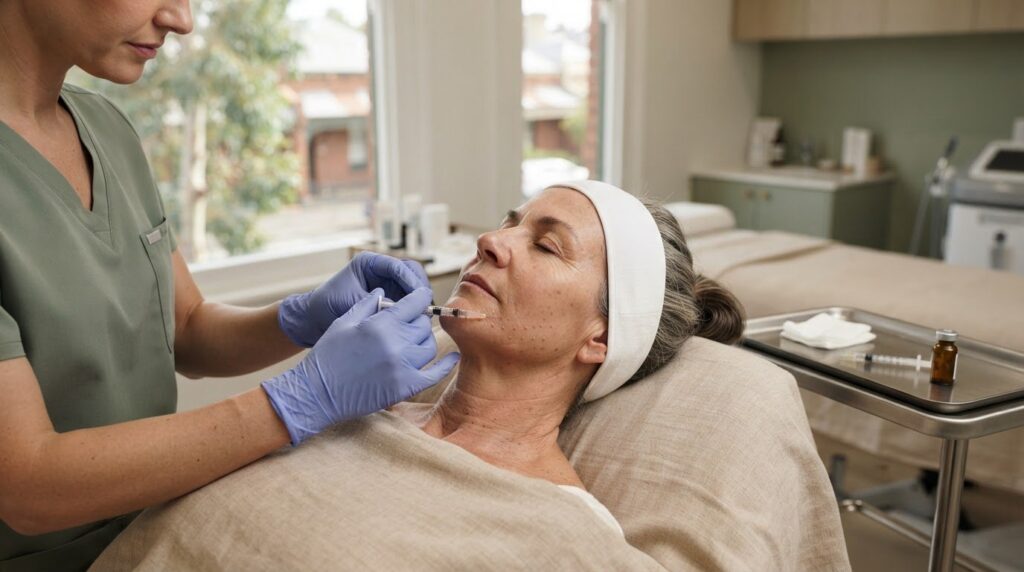
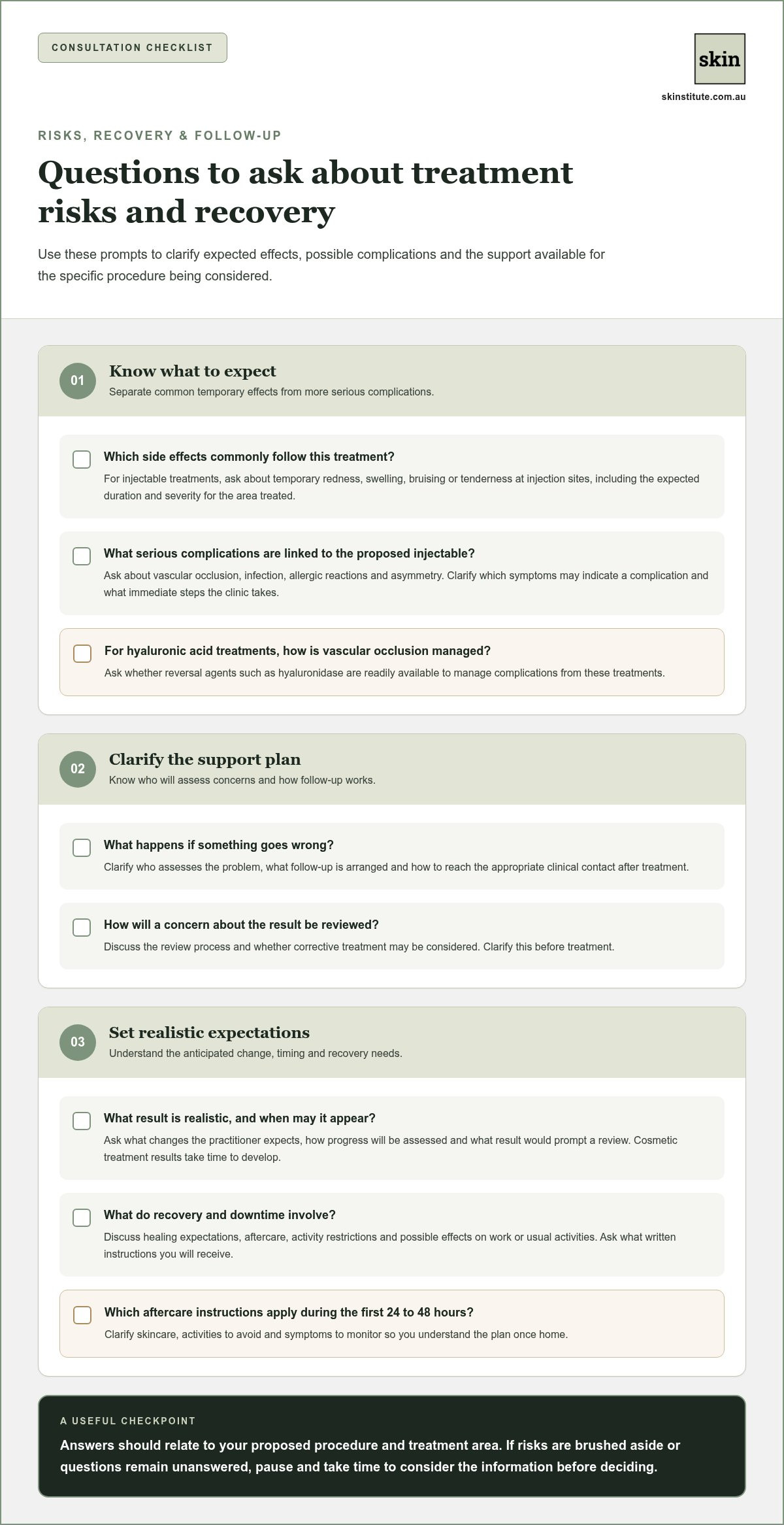
Ask the practitioner to explain the likely benefits, risks and recovery for the specific treatment proposed. Distinguish common temporary effects from serious complications, and ask what to do if an unexpected symptom develops. For injectable treatment, for example, the discussion should cover injection-site effects as well as less common complications, rather than treating risk as a formality.
Use these prompts to make the discussion specific to your procedure:
- Ask which side effects commonly follow the treatment. Injectable treatments can cause temporary redness, swelling, bruising or tenderness at injection sites. Ask what duration and severity to expect for the area being treated.
- Ask about serious complications linked to the proposed injectable. These can include vascular occlusion, infection, allergic reactions and asymmetry. Ask which symptoms could indicate a complication and what immediate steps the clinic takes.
- For hyaluronic acid treatments, ask how vascular occlusion is managed. A clinic managing complications from these treatments should have reversal agents such as hyaluronidase readily available.
- Ask how the practitioner responds if something goes wrong. Clarify who assesses the problem, what follow-up is arranged, and how you can reach the appropriate clinical contact after treatment.
- Ask what happens if you are dissatisfied with the result. Discuss how the concern would be reviewed and whether corrective treatment may be considered. Clarify the process before treatment, not after an unwanted outcome.
- Ask what result is realistic and when it may appear. Cosmetic treatment results take time to develop. Ask what changes the practitioner expects, how progress will be assessed, and what result would prompt a review.
- Ask what recovery and downtime involve. Discuss healing expectations, aftercare, activity restrictions and how the treatment may affect work or usual activities. Ask what written instructions you will receive.
- Ask which aftercare instructions apply during the first 24 to 48 hours. Clarify skincare, activities to avoid and symptoms to monitor, so you know how to follow the plan once home.
Answers should relate to the proposed procedure and treatment area, not rely on broad reassurance. Ask the practitioner to explain unfamiliar terms, including the difference between a complication and an expected temporary effect. If risks are brushed aside or your questions remain unanswered, pause before deciding. Take time to consider the information and discuss unresolved concerns before proceeding.
Who performs the procedure and who is on the surgical team
Before cosmetic injectables or another non-surgical treatment, ask who assesses you, who performs the procedure and what each person does. For surgical care, clarify which surgeon is responsible and who else is on the treatment team. Knowing who makes clinical decisions and who carries them out helps you understand responsibility throughout your care.
Ask about experience with the exact procedure, not just general work in cosmetic practice. Useful questions include:
- How often have you performed this procedure? Ask whether the practitioner regularly treats the area and concern you want assessed, such as facial volume changes or uneven skin texture.
- What training is relevant to this technique? Ask the practitioner to explain how their experience applies to your treatment goals and the anatomical area involved.
- Who will perform each part of my treatment? Clarify whether the person consulting with you will also carry out the procedure, and whether any task is delegated.
- Who supervises the procedure and makes clinical decisions? If several practitioners are involved, ask who is responsible for the treatment plan and who you should speak with about concerns.
- For surgery, who provides anaesthesia and what are their qualifications? Also ask which team members will be present and how the team responds to an emergency during the procedure.
- Can I see examples of results for similar concerns? Ask whether images show comparable anatomy and goals, and how the examples relate to the procedure being discussed.
Consider experience alongside suitability. Ask why the practitioner considers the procedure appropriate for you, which features of your anatomy inform that view, and what might make another option more suitable. A practitioner should be willing to decline a procedure they believe will not benefit you. That response can help distinguish an individual assessment from a standard recommendation.
Ask what alternatives could address your concern, including non-invasive options or no treatment. For example, a concern about skin texture may call for a different approach from a concern about facial structure. Ask why one option better fits your goal and what limitations each option has. This helps you judge whether the recommendation reflects your needs.
Use the answers to decide whether you understand who is involved and why. You can take time to consider the proposed approach without making an immediate commitment. If you are considering prescription injectables, a discussion of prescription injectable treatments can help clarify the treatment approach and practitioner’s role.
Checking a practitioner’s profession and AHPRA registration
In Australia, cosmetic practitioners should hold current AHPRA registration, which you can verify online; you can ask for the practitioner’s registration number. Some cosmetic treatments and procedures have a mandatory cooling-off period. Before deciding, discuss the proposed treatment, benefits, risks and alternatives, and make sure you have time to consider the information without pressure.
Registration is a practical first check, but it does not replace questions about professional scope and experience. For injectable cosmetic treatments in Australia, the practitioner should be a registered medical practitioner, a registered nurse under medical supervision, or a dentist working within their scope. Ask which profession the practitioner belongs to and how their role relates to the procedure you are considering.
Use the appointment to make a focused assessment:
- Request the practitioner’s AHPRA registration number. Use the public register to check that registration is current and that the listed identity matches the person you will see.
- Ask about relevant training and continuing education. Find out how their education relates to your specific concern, such as facial injectables or treatment for skin texture.
- Clarify supervision and responsibility. If a nurse will perform an injectable treatment, ask who provides medical supervision and who is responsible for the clinical plan.
- Ask about professional memberships in context. Membership of the Australasian College of Cosmetic Surgery and Medicine is one example of a professional body associated with continuing education in cosmetic medicine.
- Notice how your concerns are handled. A reasonable discussion should allow time for questions, explain relevant options and respect your decision not to proceed.
Research can supplement a registration check. Read a range of reviews, ask people you trust about their experiences and use impartial information to understand the treatment before your appointment. Treat online comments as one part of your assessment, not proof of clinical skill. Ask the practitioner how their experience applies to your anatomy, goals and proposed procedure.
Informed consent is a discussion, not just a signature on paperwork. Before agreeing, understand the proposed treatment, its expected benefits, possible risks, alternatives and relevant recovery considerations. Ask for clarification if unfamiliar terms or forms make the procedure unclear. You can take time to reflect, and a consultation does not commit you to treatment.
For Melbourne patients considering cosmetic care, key steps include checking current registration, understanding the practitioner’s professional role and assessing how clearly they address your concerns. A practitioner who listens, explains the reasoning behind a recommendation and gives you space to decide supports a more informed appointment.
Sharing health history, medications, supplements and allergies
Your medical history helps the practitioner assess suitability and plan around relevant health factors. Before the appointment, prepare a current list of medical conditions, medicines, supplements, herbs, teas and vitamins. Include allergies, previous cosmetic treatments and any past reactions. For example, a previous allergy or treatment complication may affect the discussion of suitable options and recovery.
Ask whether you can complete medical paperwork before your consultation, then answer every question accurately and fully. Include medicines that may seem unrelated to cosmetic care, such as blood-thinning medicines or immunosuppressants, because they can affect treatment safety and recovery. Some supplements may also be relevant. If you’re unsure how to describe a medicine or condition, bring its name and ask the practitioner to explain its relevance.
- Record each current medicine and supplement. Include prescription medicines, vitamins, herbal products and teas, so the practitioner can review the full list.
- List allergies and previous reactions. Name the allergen and describe what happened, such as a skin reaction after an earlier treatment.
- Note current and past health conditions. Pregnancy, breastfeeding, certain autoimmune conditions and active skin infections can affect suitability for some treatments.
- Include previous cosmetic procedures. Note the treatment and any response or recovery issue, helping the practitioner understand your clinical background.
- Bring reference images if they clarify your goals. Use them to explain the change you have in mind, while discussing how your own anatomy may affect the options.
During the assessment, be prepared to discuss the condition of the treatment area. An active skin infection, for example, may affect whether a treatment is appropriate at that time. Ask focused questions about health factors: could a condition, medicine or allergy change the treatment plan, suitability or recovery? Ask the practitioner to explain the reason for any recommendation or restriction.
Tell the practitioner about health or medicine changes since completing the paperwork, including a new medicine or newly identified allergy. A form completed before the appointment reflects only the information you provided at that time. Keep your notes accessible during the consultation, and correct anything incomplete or outdated before discussing treatment.
Preparing these details supports a specific discussion of your concerns and options. It also helps the practitioner distinguish your preferred outcome from factors that may affect suitability. Write down questions in advance, such as whether a condition or supplement changes the proposed approach, and ask for clear explanations before deciding.
Purpose and benefits of a cosmetic consultation
A consultation is an assessment and planning discussion, not automatically a treatment appointment. Its purpose is to connect your concerns and goals with an appropriate approach, taking your skin, anatomy, health and lifestyle into account. For example, a practitioner assessing uneven texture may examine your skin before discussing options. This makes the discussion specific to you rather than relying on a general description of a treatment.
Explain what you hope to change and what you want to preserve. Facial volume concerns call for a different discussion from sun damage or acne scarring. Your work, daily activities and ability to manage recovery can also affect which options are practical. Ask how each recommendation relates to your goal and what it is intended to address. The questions to ask at a cosmetic consultation should help you understand the reasoning behind the proposed plan.
- Ask what the assessment identifies about your skin or anatomy. Skin type, texture and condition can guide which options may address the concern being assessed.
- Discuss alternatives, including doing nothing. Comparing treatment with no treatment helps you consider whether the expected change is worthwhile to you.
- Ask what results to expect and when they may appear. Cosmetic treatment results take time to develop, so clarify the expected sequence rather than assuming an immediate change.
- Ask how many sessions may be needed. Knowing the possible session plan helps you understand the time commitment and how treatment may be staged.
- Discuss recovery and aftercare before choosing an option. Ask what healing involves and which instructions apply to the proposed treatment.
- Explain how your goals and lifestyle affect your priorities. Someone with limited flexibility for recovery may weigh options differently from someone able to accommodate downtime.
Cosmetic surgery and non-surgical treatments differ in procedure and recovery, so focus the discussion on the option you are considering. Ask which alternatives could address the same concern, including less invasive approaches where relevant. Useful questions to ask at a cosmetic consultation include what each option is intended to change, what it cannot address and why it may suit your anatomy. Comparing options helps you assess recommendations against your priorities, rather than choosing by procedure name alone.
Use the consultation to gather information, not make an immediate commitment. You can leave, reflect on the proposed plan and decide later whether to proceed. A useful outcome may be a treatment option, a decision to consider alternatives or the conclusion that no treatment is right for you now. Each gives you a clearer basis for deciding what to do next.
Skinstitute: Prescription injectables
Skinstitute provides prescription injectables and other medical-grade aesthetic procedures for people considering non-surgical cosmetic treatment in Melbourne. A face-to-face consultation helps shape a treatment plan around your concerns, anatomy and suitability, so you can discuss the proposed approach before deciding whether to proceed.
Depending on your assessment and goals, options may include prescription injectables, PDO Thread Lifting, Fractional CO2 or High Intensity Focused Ultrasound (HIFU). Each addresses different concerns, and the appropriate choice depends on the area being treated and the outcome you seek. Use your consultation to ask about expected results, risks, recovery and alternatives for the specific option discussed.
To discuss your concerns and possible treatment options, contact Skinstitute.
Use your consultation to make a considered decision
Before deciding, make a practical record of the discussion: note the proposed approach, the reasons for it and anything you still need clarified. This gives you space to consider whether the plan reflects your priorities, rather than deciding based on one part of the conversation. The questions to ask at a cosmetic consultation can guide your reflection, but your comfort with the recommendation matters too.
Take time to review the information after the appointment. If an explanation felt unclear or your goals have changed, raise that before agreeing to treatment. A considered decision means understanding what the procedure is intended to address and feeling comfortable with the next step.
If you would like to discuss your consultation with Skinstitute, contact the Skinstitute team. You can take the next step at a pace that feels right for you.
Frequently Asked Questions
Are there any recommended alternatives to this procedure?
Yes, ask which alternatives address the same concern and how their trade-offs differ. Depending on the issue, options may include a different non-surgical approach, staged treatment or no treatment. For example, a concern about skin texture calls for a different discussion from facial volume changes. Ask what each option is intended to change, what it cannot address and how the practitioner arrived at a recommendation for your goals.
Are you a board-certified plastic surgeon?
For a non-surgical cosmetic treatment, ask which registered professional will assess and perform it, and whether their qualifications and scope cover the procedure. In Australia, you can request the practitioner’s AHPRA registration number and check their current registration. “Board-certified” may not explain the specific training relevant to a treatment, so ask about experience with the exact procedure and treatment area you are considering.
Do you have any before and after photos of patients I can view?
Ask to view images relevant to the treatment and concern you are discussing. Check whether they show the same procedure, a comparable treatment area and similar starting features. Ask how long after treatment each image was taken, since swelling or healing can affect appearance. Images can help you understand the practitioner’s approach, but they show individual outcomes, not a template for your result.
How can you tell a consultation is rushing you?
A consultation may feel rushed if the practitioner moves to booking before understanding your goals, interrupts your questions or does not clearly explain the proposed treatment. Notice whether you have time to discuss alternatives, risks and recovery, and whether the practitioner considers your answers. Pressure to decide or proceed immediately is a reason to pause. You can leave without booking and reflect before making a decision.
How have you handled complications from procedures in the past?
Ask the practitioner how they assess a complication, who would manage it and what follow-up is available. Make the question specific: “If a patient developed an unexpected reaction after this treatment, what would happen next?” The explanation should describe a practical response, not dismiss the possibility. Also ask how concerns are documented and how to reach the appropriate clinical contact after treatment.
How often have you performed this procedure?
Ask about the practitioner’s experience with the exact procedure and treatment area, rather than cosmetic work in general. You might ask how recently they have performed it and whether they routinely treat concerns like yours. Then ask how that experience informs their technique, assessment and follow-up. The answer should help you understand their familiarity with the procedure, not just provide a number without context.
What are the risks involved with this procedure?
Ask about risks specific to the treatment, the area involved and your health circumstances. With injectable procedures, temporary redness, swelling, bruising or tenderness can occur; serious complications can include vascular occlusion, infection, allergic reactions or asymmetry. Ask which symptoms need attention, what steps the clinic takes if a complication occurs and how the risks relate to the expected benefit before consenting.
What should I ask about a surgeon’s experience and before-and-after results?
Ask about training, experience with the exact procedure and work with people whose concerns and physical characteristics resemble yours. For photographs, ask whether they show the same procedure and treatment area, and when they were taken. You can also ask what follow-up occurred and whether the images show outcomes over time. These details put examples in context and help you discuss their relevance to your situation.