Fractional CO2 Laser Cost Melbourne: A Clinical Pricing and Value Guide
September 8, 2026
City Skin Clinic vs Skinstitute for Fillers: A Clinical Comparison of Melbourne Aesthetic Practices
September 10, 2026
The assumption that fractional CO2 laser resurfacing is an inherently unbearable experience is one of the most persistent misconceptions in modern medical aesthetics. When prospective patients ask, “is fractional co2 laser painful”, they are often reacting to unverified anecdotes rather than clinical reality. It’s entirely natural to feel apprehensive about a procedure that employs thermal energy to vaporise microscopic channels into the dermal layers, particularly when online narratives focus on an intense burning sensation.
We understand that this anxiety often stems from a lack of technical clarity regarding modern pain management. This article provides a transparent, medical-grade analysis of the sensory experience, moving beyond marketing generalisations to explain how professional protocols control physiological responses. You’ll gain a comprehensive understanding of the topical and local anaesthetic options available in a Melbourne clinical setting. We also provide a realistic timeline for the post-treatment phase, ensuring you know exactly what to expect as your skin transitions through the necessary inflammatory response toward regeneration. This objective overview ensures you can approach your skin goals with confidence and physiological preparation.
Key Takeaways
- Define the sensation as a series of controlled thermal pulses characterised by heat and prickling, providing a realistic expectation of the physiological experience.
- Discover how professional clinics address the question of whether is fractional co2 laser painful through high-potency topical anaesthetics and precise preparation protocols.
- Prepare for the post-operative “sunburn” phase, focusing on the critical first 48 hours when the skin’s regenerative response is most active.
- Compare the sensory profiles of CO2 laser against other common treatments like Skin Needling and HIFU to determine which modality suits your comfort levels.
- Understand the role of practitioner experience in adjusting technical laser settings, such as dwell time and pitch, to ensure safety and maximise patient comfort.
Understanding the Sensation: What Does Fractional CO2 Laser Actually Feel Like?
Fractional CO2 laser resurfacing is a sophisticated medical procedure that utilises a carbon dioxide laser to deliver precise columns of thermal energy into the dermal layers. Unlike traditional fully ablative lasers that remove the entire skin surface, fractional technology targets only a specific percentage of the tissue. This distinction is vital when patients ask, is fractional co2 laser painful? While the sensation is certainly more intense than a standard dermal treatment, the fractional approach significantly reduces the overall physical trauma compared to older, fully ablative methods.
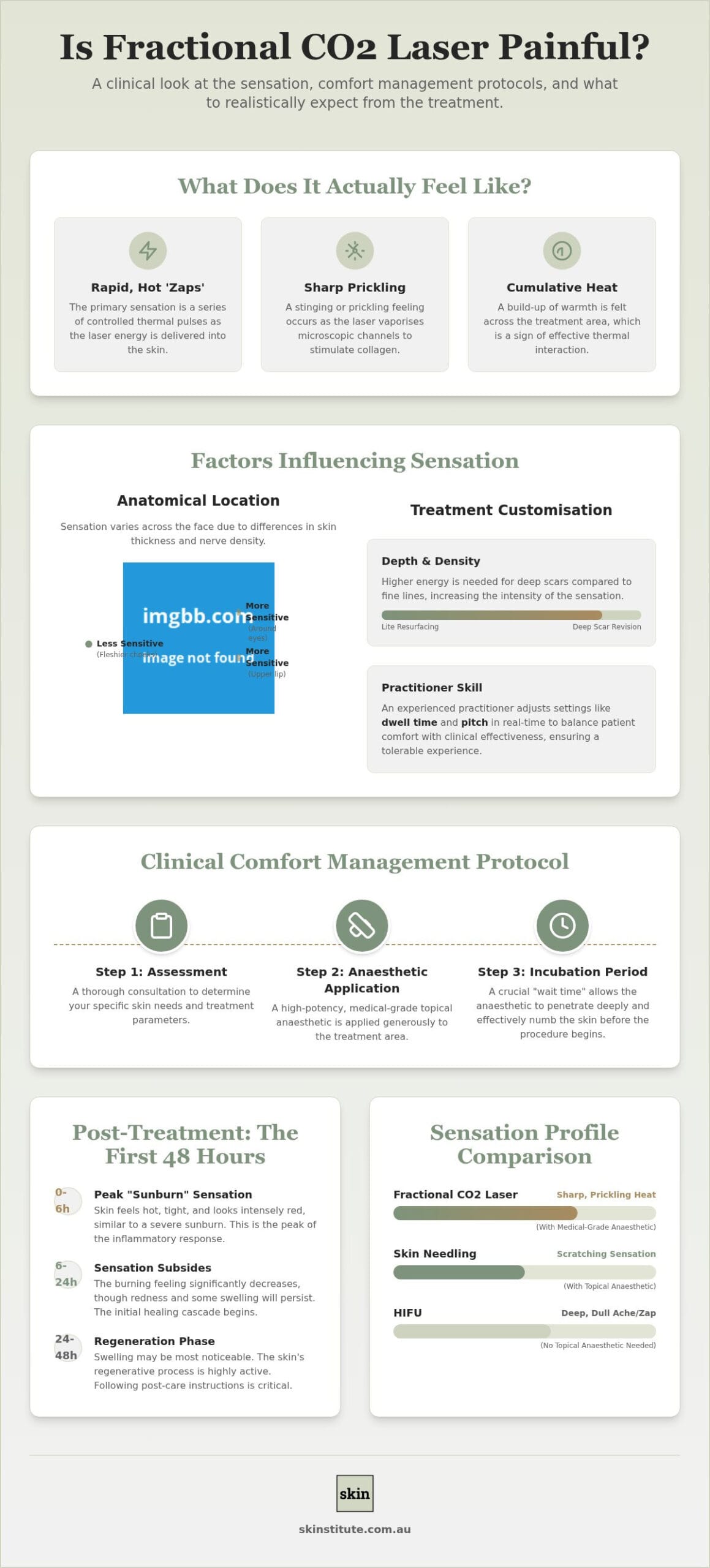
The primary sensation is typically described as a series of rapid, hot “zaps” or a sharp “prickling” feeling. This occurs because the laser light is absorbed by the water within your skin cells, which then converts to heat. This process is a fundamental component of Photorejuvenation, where controlled thermal injury triggers the body’s natural healing cascade. It’s a clinical necessity; without this thermal interaction, the skin wouldn’t receive the signal to produce new collagen and elastin fibres.
The Role of Thermal Energy in Skin Resurfacing
During the procedure, the device creates thousands of Microscopic Treatment Zones (MTZs). These are tiny, deep columns of thermal damage that penetrate the skin. The heat isn’t an accidental byproduct; it’s the catalyst for dermal remodelling. You’ll likely notice a cumulative heat build-up as the practitioner moves across the treatment area. The “stinging” sensation felt during each pulse is the physiological result of the laser’s energy reaching the deeper layers to disrupt aged or scarred tissue. It’s a brief, manageable event that subsides almost immediately after the pulse ends.
Pain Variability: Depth, Density, and Skin Thickness
Discomfort isn’t uniform across the face. Treating deep acne scars requires higher energy density and deeper penetration than addressing superficial fine lines, which naturally increases the sensory input. Anatomical location also plays a significant role in how one perceives if is fractional co2 laser painful. Consider these factors:
- Nerve Density: Areas with thinner skin and higher nerve density, such as the upper lip or the periorbital region around the eyes, are typically more sensitive than the fleshier parts of the cheeks.
- Tissue Bridges: Modern fractional systems leave “bridges” of untouched skin between the thermal columns. These healthy tissue islands assist in rapid healing and help dissipate heat more effectively than older technologies.
- Energy Settings: The depth of the treatment is customised. A deeper resurfacing for structural damage will feel more intense than a “lite” session designed for texture improvement.
Ultimately, the sensation is a manageable clinical event. A practitioner’s ability to adjust the laser’s dwell time and pitch based on the specific anatomical zone ensures the treatment remains within a tolerable range for the patient.
Clinical Pain Management: How We Organise Your Comfort
Clinical management of patient comfort is a structured process that begins long before the laser is activated. When individuals investigate whether is fractional co2 laser painful, they often overlook the rigorous pharmacological and technical measures employed to mitigate sensory input. Our Melbourne clinic prioritises a systematic approach to anaesthesia, ensuring that the biological response to thermal energy is controlled and the patient remains comfortable throughout the session. This professional protocol is what separates a medical-grade treatment from less regulated environments.
Medical-Grade Topical Anaesthetics
The efficacy of pain management relies heavily on the use of high-potency, compounded topical anaesthetics. Unlike over-the-counter numbing creams, medical-grade formulations contain specific concentrations of lidocaine, prilocaine, or tetracaine designed to penetrate the stratum corneum and reach the deeper dermal layers. This is a standard clinical protocol for Laser Carbon Dioxide Resurfacing. The most critical factor in this phase is the “wait time”. We allow the anaesthetic to remain on the skin for 45 to 60 minutes, often under occlusion, to ensure maximum absorption. Rushing this step is a common clinical error that can lead to unnecessary discomfort; patience in preparation is essential for a positive outcome.
Active Cooling Systems and Post-Laser Care
To further neutralise the thermal sensation during the procedure, we utilise active cooling systems such as Zimmer coolers. These devices deliver a continuous stream of chilled air to the treatment area, which effectively distracts the nerves and lowers the surface temperature of the skin. This dual approach, pharmacological numbing combined with mechanical cooling, transforms the experience from one of intense heat to a manageable prickling sensation. It’s this technical combination that provides a reassuring sense of stability for those concerned about the “burning” sensation described in online forums.
Following the procedure, we immediately apply specialised post-laser balms that contain occlusive agents and anti-inflammatory properties to soothe the skin barrier. Maintaining internal hydration and staying in a temperature-controlled environment for the first 24 hours can significantly reduce the residual “heat” sensation. If you’re concerned about your specific sensitivity levels, you can organise a professional consultation to discuss a personalised comfort plan.
The role of the practitioner is equally vital. With over 26 years of experience, our clinicians understand how to interpret patient feedback and adjust the laser’s parameters in real-time. This level of technical proficiency ensures that the treatment is effective without exceeding the patient’s threshold for discomfort. Transparency regarding the process helps reduce anxiety, as knowing what to expect is often the most effective tool in pain management. We provide a clear roadmap of the procedure so there are no surprises during the treatment.
The Post-Treatment Phase: Managing the “Sunburn” Sensation
The sensation immediately following a fractional CO2 laser session is distinct from the prickling felt during the procedure. As the topical anaesthesia begins to dissipate, the skin undergoes a predictable inflammatory response characterised by a feeling of intense heat and significant tightness. This phase is often described as a severe sunburn, where the skin feels physically “hot” to the touch. This is a natural biological reaction to the controlled thermal columns created during treatment, signifying that the regenerative process has been successfully initiated.
When patients inquire whether is fractional co2 laser painful in the days following the appointment, it’s essential to differentiate between acute pain and a robust inflammatory response. The first 24 to 48 hours represent the most physically active window for the tissue. During this time, the body increases blood flow to the area to facilitate repair, resulting in redness and swelling. Adhering to clinical recommendations for patient comfort is vital during this period to manage these sensations without suppressing the necessary wound-healing cascade.
The 72-Hour Sensation Timeline
Understanding the physiological progression of recovery helps reduce anxiety and allows for better preparation at home. The sensory experience typically follows this pattern:
- Hours 1 to 4: This is the peak heat phase. The skin feels very warm and may throb slightly. Using cool (not freezing) compresses and staying in a temperature-controlled environment helps neutralise this discomfort.
- Days 1 to 2: Heat subsides, replaced by intense tightness and swelling. The skin begins to feel rough, similar to the texture of fine sandpaper, as the microscopic treatment zones begin to dry.
- Days 3 to 5: The sensation shifts toward itching as the old tissue begins to exfoliate. It’s critical not to pick or scrub the skin during this transition to avoid secondary irritation or scarring.
Clinical Aftercare to Minimise Discomfort
Effective post-treatment management focuses on protecting the compromised skin barrier and soothing exposed nerve endings. We advise patients to utilise bland, occlusive ointments that create a protective seal over the treated area. This prevents trans-epidermal water loss and shields the sensitive new skin from environmental irritants. Avoiding active ingredients such as retinols, Vitamin C, or exfoliating acids is non-negotiable for at least seven to ten days, as these can cause significant stinging and prolong the inflammatory phase.
While the “sunburn” feeling is expected, certain sensations require professional attention. If you experience a sudden increase in pain after the first 48 hours, or if you notice any unusual discharge or persistent heat that doesn’t respond to cooling, contact your clinical provider immediately. Our Melbourne practitioners remain available to guide you through these nuances, ensuring your recovery remains on a safe and predictable trajectory.
Fractional CO2 vs. Other Treatments: A Pain Comparison
To provide a balanced answer to the question, is fractional co2 laser painful, it’s helpful to contrast the experience with other common medical-grade treatments. Skin Needling, for instance, relies on mechanical micro-perforations which produce a scratchy, repetitive sensation. In contrast, fractional CO2 is a thermal procedure that delivers concentrated energy to the dermis. While the procedural sensation of a laser is typically higher than needling, it is often considered a low-frequency solution. This means patients achieve more significant results in a single session, making the temporary intensity a logical trade-off for those prioritising clinical efficiency and long-term dermal remodelling.
Laser Resurfacing vs. High Intensity Focused Ultrasound (HIFU)
HIFU provides a different sensory profile entirely. While CO2 laser causes a sharp, superficial heat sensation on the skin’s surface, HIFU bypasses the epidermis to target the SMAS layer. This results in a deep, structural “aching” or “zapping” feeling, particularly over bony landmarks like the jawline. This deep ache can persist for several minutes after the pulse, whereas the heat from a CO2 laser is more immediate and dissipates faster when professional active cooling is applied. Our practitioners use their 26 years of Melbourne-based experience to guide this choice, ensuring the modality aligns with your comfort levels. For a broader overview of these technologies, consult our Skinstitute Melbourne: A Clinical Guide to Medical-Grade Aesthetic Treatments.
The Role of Bio-Stimulators in Reducing Downtime
We often integrate bio-stimulators such as Rejuran or Exosomes into the CO2 protocol to manage the post-operative experience. Rejuran, composed of polynucleotides, works at a DNA level to repair damaged skin cells, which is particularly effective after thermal laser exposure. Exosome therapy involves the application of potent cellular signals that trigger rapid tissue regeneration. This significantly shortens the inflammatory window, effectively reducing the time spent in the “sunburn” phase. By accelerating the closure of the microscopic treatment zones, we can minimise the period of skin sensitivity and itching. This advanced approach ensures that even if you’re concerned that is fractional co2 laser painful, the subsequent recovery is managed with technical precision to ensure maximum comfort.
Selecting the right treatment requires a balance between desired results and individual comfort thresholds. To determine if this high-performance treatment is right for your skin type and goals, book a professional consultation at our Melbourne clinic.
Why Experience Matters for a Comfortable CO2 Experience in Melbourne
The proficiency of the practitioner is the most significant variable in determining the sensory outcome of a procedure. While technology provides the tool, it’s the clinical judgement developed over 26 years of industry experience that ensures the treatment remains within a tolerable range. When patients ask, is fractional co2 laser painful, they’re often unaware that the physical sensation can be modulated through precise technical adjustments. At our Melbourne clinic, we don’t apply a universal setting to every patient; instead, we customise the laser’s dwell time and pitch based on the specific anatomical zone and the individual’s physiological response.
Dwell time refers to the duration the laser beam remains in contact with a single microscopic treatment zone. A shorter dwell time reduces thermal accumulation, which can lower the heat sensation without compromising the regenerative signal. Similarly, adjusting the “pitch”, the distance between each thermal column, allows us to manage the density of the treatment. By increasing the pitch in more sensitive areas, such as the periorbital region, we maintain the skin’s integrity and reduce the overall sensory load. This level of technical mastery is only possible through extensive clinical practice and a deep understanding of laser-tissue interaction.
The Consultation: Setting Realistic Expectations
A thorough skin analysis is the foundation of a comfortable experience. During your initial consultation, we assess your skin phototype, hydration levels, and structural concerns to determine the optimal energy parameters. This is also where we discuss your personal pain threshold. Transparency is a core component of our clinical philosophy; by providing a realistic roadmap of the sensations you’ll encounter, we help neutralise procedural anxiety. For a deeper look at the mechanics of this process, you can review our Fractional CO2 Laser Resurfacing Melbourne: A Clinical Guide to Skin Regeneration.
Your First Step Toward Skin Transformation
Preparing for your appointment involves more than just skin priming. We recommend patients arrive hydrated and in a calm state of mind, as anxiety can often lower one’s threshold for discomfort. Choosing a medical-grade clinical setting in Melbourne ensures you have access to TGA-approved, prescription-strength anaesthetics that are applied with professional precision. While the sensation of a fractional CO2 laser is a temporary clinical event, the long-term results, such as improved texture, reduced scarring, and enhanced collagen density, represent a significant return on that short-term investment. Managed discomfort is a controlled part of the journey toward profound skin health, facilitated by a team that prioritises your safety and clinical outcome above all else.
Advancing Your Journey Toward Dermal Regeneration
The decision to undergo fractional resurfacing involves a pragmatic assessment of technical discomfort against clinical outcomes. While the question of whether is fractional co2 laser painful is a primary concern for many, the reality is a precisely managed physiological event. Through the application of high-potency anaesthetic protocols and active cooling technology, the procedural sensation remains within a controlled, tolerable range. The subsequent inflammatory phase, while physically active, is a necessary catalyst for the production of new collagen and the resolution of structural skin concerns like acne scarring.
At our Melbourne clinic, we rely on over 26 years of clinical experience to ensure every session is tailored to the individual’s tolerance and skin requirements. Our use of medical-grade technology and professional-grade preparation protocols reflects our commitment to patient safety and technical proficiency. If you’re ready to address structural skin concerns with a team that prioritises seasoned expertise, we invite you to book a clinical consultation at our Melbourne clinic to discuss your skin resurfacing options. We look forward to supporting your transition toward healthier, regenerated skin.
Frequently Asked Questions
Is fractional CO2 laser more painful than a chemical peel?
Fractional CO2 laser resurfacing is generally more intensive than a standard superficial chemical peel. While a peel involves a chemical exfoliation sensation, the laser delivers concentrated thermal energy into the deeper dermal layers. This requires medical-grade topical anaesthesia to manage the acute “zapping” feeling. Although the procedural sensation is more significant, the clinical results for skin texture and collagen production are typically more profound than those achieved with non-ablative peels.
Do I need to take time off work after a fractional CO2 laser treatment?
Most patients require five to seven days of social downtime following a full-face treatment. During the first 48 hours, the skin exhibits significant redness and swelling, transitioning into a rough, “sandpaper” texture as the microscopic treatment zones heal. While you are not physically incapacitated, the visible peeling and inflammatory response mean most Melbourne professionals prefer to work from home or take a week off to recover in a temperature-controlled environment.
Can I take painkillers like paracetamol before my CO2 laser appointment?
You may take paracetamol prior to your appointment, but it is critical to avoid anti-inflammatory medications like ibuprofen or aspirin, as these can increase the risk of bruising. The most effective pain management comes from our clinical-grade topical anaesthetics and active cooling systems. Always disclose any medications or supplements you are taking during your consultation at our Melbourne clinic to ensure your comfort plan is safe and effective.
Will my skin feel hot for a long time after the procedure?
The sensation of intense heat, often compared to a severe sunburn, typically peaks during the first one to four hours post-treatment. This is a natural biological response to the thermal energy delivered during the session. By the second day, this “burning” feeling usually subsides, replaced by a sensation of extreme skin tightness. We provide specialised post-laser balms and clinical aftercare instructions to help neutralise this heat and protect the skin barrier.
Is the pain during CO2 laser treatment unbearable for people with sensitive skin?
The treatment is not unbearable for sensitive skin types, provided the practitioner adjusts the laser parameters correctly. When patients ask is fractional co2 laser painful for sensitive skin, we focus on customising the laser’s dwell time and pitch. With over 26 years of experience, our clinicians specialise in tailoring the energy density to match individual tolerance levels, ensuring the procedure remains a manageable clinical event rather than a distressing experience.
How long does the actual laser part of the appointment take?
The actual laser application for a full-face rejuvenation typically takes between 20 and 30 minutes. However, the total appointment time is closer to two hours. This is because we allocate 45 to 60 minutes for the high-potency topical anaesthetic to reach its full efficacy before we begin. Rushing this preparation phase is not an option in a medical-grade setting, as patient comfort relies on deep dermal penetration of the numbing agent.
Are there any areas of the face where the laser is more painful?
Yes, certain anatomical zones are more sensitive due to thinner skin and higher nerve density. The upper lip, the periorbital region around the eyes, and the forehead typically register more sensation than the fleshier areas of the cheeks. We account for this by applying extra anaesthetic to these zones and utilising active cooling more intensely during their treatment. This targeted approach ensures that the overall experience remains balanced and tolerable across the entire face.
Does the numbing cream completely block the sensation of the laser?
Medical-grade numbing cream significantly dulls the sensation but does not eliminate it entirely. You will still perceive a “prickling” or “zapping” feeling and a gradual build-up of heat as the treatment progresses. The objective of our professional anaesthetic protocol is to shift the experience from being is fractional co2 laser painful to a manageable, controlled sensation. This allows our Melbourne practitioners to reach the necessary depths for effective skin regeneration while maintaining patient comfort.