Fractional CO2 Laser Cost Melbourne: A Clinical Pricing and Value Guide
September 27, 2026
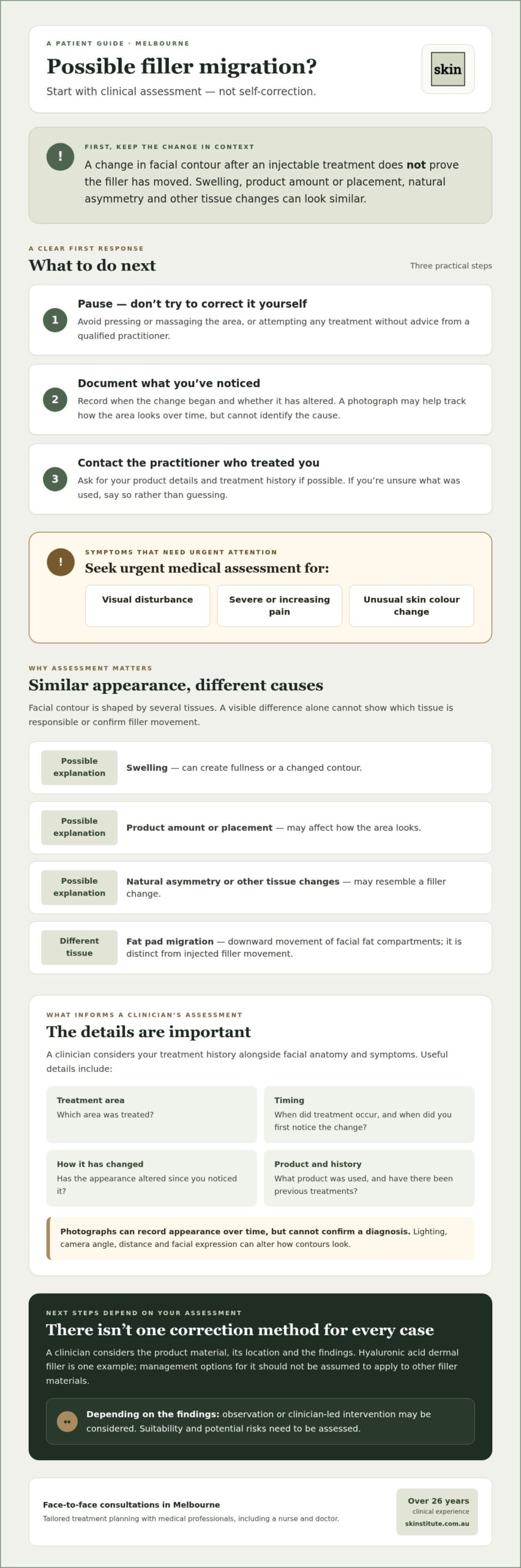
If you’re searching for “filler migration what to do”, start with a clinical assessment, not self-correction. A change in facial contour after an injectable treatment does not prove the product has migrated. Swelling, the amount or placement of product, and other causes can look similar. Avoid pressing or massaging the area or attempting any treatment without advice from a qualified practitioner.
It’s understandable to feel concerned about an unexpected change, particularly if it affects your appearance or causes discomfort. This guide explains how to document what you’ve noticed, who to contact and which symptoms need prompt or emergency assessment. Visual disturbance, severe or increasing pain, or an unusual change in skin colour warrants urgent medical assessment.
You’ll also learn how a clinician may distinguish suspected migration from swelling or another complication, and why next steps depend on the product, its location and your individual assessment. Not every product can be managed in the same way. In Melbourne, Skinstitute provides face-to-face consultations and tailored treatment planning with medical professionals, including a nurse and doctor, drawing on over 26 years of clinical experience.
Key Takeaways
- A change in facial contour can have several causes, so appearance alone can’t confirm filler migration.
- If you’re wondering what to do about possible filler migration, pause, document the change and contact the practitioner who treated you for assessment.
- Avoid pressing, massaging or attempting to correct the area yourself, as this may complicate assessment.
- A clinician considers your treatment history, symptoms, facial anatomy and the area involved before discussing next steps.
- Observation or clinician-led intervention may be considered depending on the findings. Different filler materials don’t all have the same management options.
Filler Migration: What Changes Might You Notice?
A change in facial shape after an injectable treatment can be concerning, but appearance alone can’t establish that filler has moved. Fullness, unevenness or a changed contour may have several explanations. A qualified clinician needs to interpret the finding in context.
Suspected filler migration is a visible or palpable change that may suggest product has moved from its original placement, but it is not a diagnosis you can confirm by appearance alone. When considering filler migration and what to do next, first clarify what has changed rather than assume the cause or try to correct it yourself.
What can look like migrated filler?
A fuller area, altered contour or apparent asymmetry may be consistent with a change in filler position, but these signs aren’t proof. Swelling after treatment, the amount or placement of product, natural facial asymmetry and other tissue changes can produce a similar appearance. A photograph may help record how the area looks over time, but it can’t reliably identify the underlying cause.
Timing and treatment location can help guide a clinical assessment. A clinician may ask when the change began, whether it has altered, which area was treated and what symptoms accompany it. These details provide useful context, but don’t confirm migration on their own. Not every change after treatment is a complication.
Filler movement is also different from fat pad migration, the downward movement of facial fat compartments that can occur as facial structure changes over time. Although both may affect facial contour, they involve different tissues and require clinical interpretation. For neutral background on the materials and uses of injectable filler, this overview provides foundational context.
Why does the filler type matter?
Management depends on the material used, its location and the clinician’s findings. Hyaluronic acid dermal filler is one example, but its possible management options shouldn’t be assumed to apply to other filler materials. There isn’t one correction method that suits every product or presentation, and any intervention has suitability considerations and potential risks.
If possible, ask the practitioner who performed your treatment for the product details and treatment history. This information can help a clinician assess the area and discuss appropriate next steps. If you’re unsure what was used, say so rather than guessing. A face-to-face clinical review can help distinguish a suspected filler change from swelling, placement effects or natural variation before any treatment decision is made.
Why Filler Migration Can Be Difficult to Confirm
Facial contour is shaped by several tissues, not just injectable material. Skin, underlying fat compartments and other soft tissues sit in layers and can change in response to treatment, swelling or natural variation. These changes may look alike, so a visible difference does not show which tissue is responsible.
To assess a suspected filler change, a clinician considers your treatment history alongside facial anatomy, because the same visible contour can have different causes depending on where and when it developed. The product’s characteristics and original injection location also inform the clinical interpretation. That’s why searching for “filler migration what to do” and comparing your appearance with an online image can’t reliably identify the cause.
How anatomy and treatment history inform assessment
Facial compartments are areas of soft tissue that contribute to the face’s shape and support. A change in one area can affect how neighbouring contours appear, even if the underlying cause is not filler movement. Fat pad migration describes the downward movement of facial fat compartments over time. It is distinct from a concern about injected material, although both can alter facial contours.
The clinician will want to know which area was treated, when the treatment occurred, when you first noticed the change and whether it has evolved. Details about the product and previous treatments can also help distinguish a local tissue response from a change that may involve filler. Swelling and other tissue changes may look similar, and their significance depends on examination and the broader history. The FDA-recognized risks include migration among potential complications. This US resource provides general information, not an individual diagnosis or Australian-specific advice.
Why photographs cannot confirm a diagnosis
Photographs can help show when you noticed a change, but they cannot establish its cause. Lighting and shadows may emphasise or soften contours, while camera angle, distance and facial expression can alter how fullness or asymmetry appears. Before-and-after images and comparisons with other people’s photographs have similar limitations: they don’t account for differences in anatomy, treatment details or image conditions.
If you take photographs to share with your practitioner, use consistent lighting, angle and expression where possible so changes are easier to compare. Treat images as supporting information, not a substitute for an in-person assessment. Melbourne patients seeking a face-to-face review can find information about Skinstitute’s clinical assessment before considering treatment options.
What to Do If You Suspect Filler Migration
If you’re unsure about filler migration and what to do, keep your response simple: pause, record what you’ve noticed and arrange clinical advice. Don’t assume the change is migration or try to correct it yourself. An assessment can help determine whether the appearance relates to filler or another cause, and whether any next step is appropriate.
- 1. Pause. Don’t massage, press, inject or otherwise manipulate the area. Avoid attempting a correction based on online advice.
- 2. Document the change. Note when it appeared and whether it seems stable, improving or worsening. Use photographs as supporting information, not a way to diagnose the cause.
- 3. Contact your treating practitioner. Explain what has changed and ask how to arrange a clinical review. Share your treatment date, the area treated, product details if known, any symptoms and relevant photographs.
What information should you give the treating practitioner?
Give the clearest account you can without trying to label the change. Include when you first noticed it, whether it has altered since then, where treatment was performed and what product was used, if you know. Describe any pain, swelling, skin colour changes or visual symptoms, including when they began. If you don’t have product information, say so. Your treating practitioner may be able to clarify the treatment history.
Which symptoms need urgent attention?
Seek urgent medical assessment for visual symptoms, severe pain, unusual skin colour changes or a concern that is rapidly worsening. Don’t wait for a routine review if these symptoms occur. A clinician should assess the situation and advise on the appropriate next step.
Sudden vision loss or another medical emergency in Australia requires an emergency response: call 000. This is different from contacting your practitioner about a stable change without emergency symptoms. If you’re uncertain how urgently you need to be assessed, describe your symptoms clearly when seeking medical advice rather than attempting to manage the area yourself.
How Clinicians Assess Suspected Filler Migration
A clinical review aims to understand what may be causing the change before any treatment is considered. The clinician will discuss your treatment history, when you noticed the concern and any symptoms, then assess the area in the context of your facial anatomy. Swelling, product placement and other tissue changes may resemble migration, so an initial impression needs to be considered alongside the full history and examination.
There isn’t one assessment method that suits every presentation. The clinician may ask for treatment or product records if available, particularly if the procedure was performed elsewhere. Be open about previous treatments and what you know about the material used. If you’re still asking “filler migration what to do”, a review can help clarify which explanations are plausible and whether further assessment or observation is appropriate.
What happens during a clinical review?
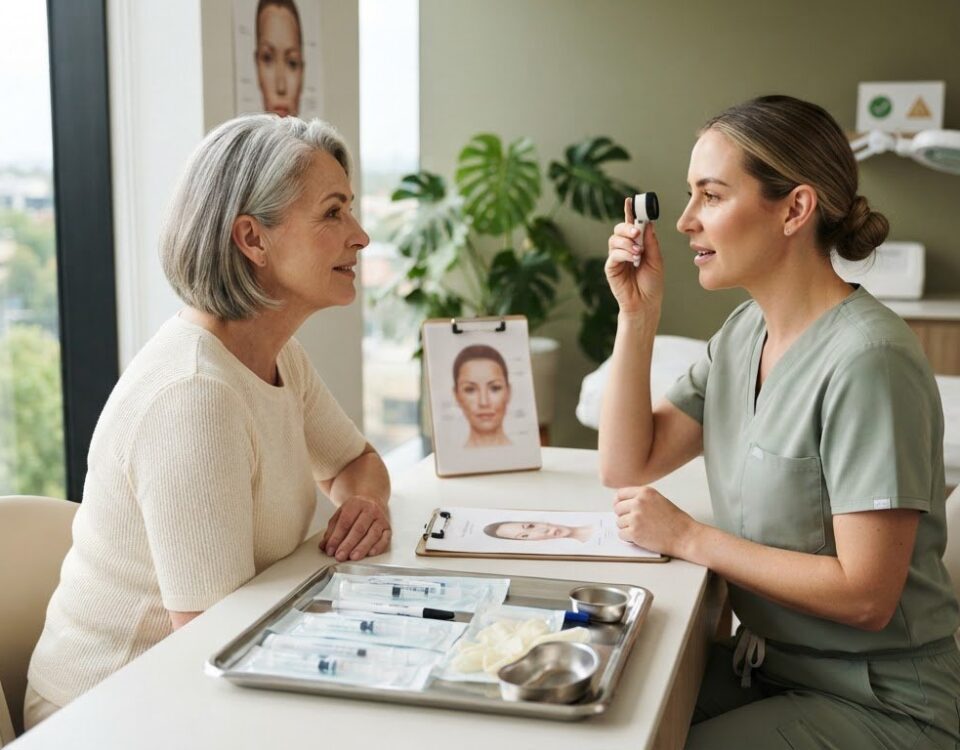
The conversation will usually cover the area treated, timing, product details if known, changes you’ve noticed and any related symptoms. The clinician then examines the concern as appropriate, considering its location and appearance alongside your facial anatomy. This can help distinguish suspected migration from swelling or a placement effect, although the cause may not be clear from one feature alone. Imaging or other tests aren’t assumed to be routine. Whether they’re relevant depends on the individual assessment.
Skinstitute is a Melbourne clinic with over 26 years of clinical experience. Its consultations are performed by medical professionals, including a nurse and doctor, with treatment planning tailored after a face-to-face consultation.
What should you ask before considering treatment?
Before deciding, make sure you understand the clinician’s reasoning and what the proposed approach involves. You can ask:
- What findings support this explanation, and could another cause still be possible?
- How does the known or suspected filler material affect the options?
- Am I suitable for the proposed intervention, and what risks should I consider?
- What recovery should I expect, and what follow-up may be needed?
- Is observation or another approach reasonable, and what are its limitations?
Options depend on examination findings, filler type, suitability and your preferences. An intervention may involve risks and recovery requirements, so ask for these to be explained in terms you understand. You don’t need to agree to treatment before your questions have been answered. Learn more about a face-to-face clinical assessment at Skinstitute.
Treatment Options and Your Next Step in Melbourne
There isn’t one correction plan for every suspected filler change. The clinician’s recommendation depends on the assessment findings, the material used, its location, the time since treatment and any symptoms. Depending on these factors, discussion may include monitoring the area or considering a clinician-led intervention. Treatment may not be indicated, particularly if the appearance has another explanation.
Why there is no single correction plan
Hyaluronic acid filler may have management options that aren’t appropriate for other filler materials. If a clinician confirms an issue involving this type of filler, they may discuss an intervention intended to break down the material. This isn’t suitable for every concern, and it shouldn’t be assumed to be a guaranteed or risk-free correction. Other materials may require a different approach, and some cannot be managed in the same way.
Observation may be appropriate when examination doesn’t indicate intervention, with follow-up guided by the clinician’s advice. Before deciding, discuss suitability, potential risks, realistic expectations and any recovery considerations. The aim is to choose a response based on clinical findings, not to treat a change simply because it looks different.
How to choose your next clinical appointment
Seek a qualified practitioner who can review your treatment history and assess the area of concern. Bring available product or treatment records and describe when the change began, how it has progressed and any symptoms. If you’re considering filler migration and what to do next, a face-to-face review can help establish whether the concern relates to filler and what options, if any, are suitable for you.
Skinstitute is a Melbourne aesthetic clinic with over 26 years of clinical experience. Its medical professionals, including a nurse and doctor, tailor treatment planning following a face-to-face consultation. This experience provides context for a clinical discussion, but it can’t predict a particular outcome or establish that a specific intervention is appropriate before assessment.
For broader information, consult Skinstitute’s Melbourne clinical guide to medical-grade aesthetic care. If you would like an individual assessment, learn more about arranging a clinical consultation with Skinstitute to discuss your concern and possible next steps.
Make Your Next Step an Informed One
A change in facial contour doesn’t confirm filler migration. Swelling, product placement and natural tissue changes can appear similar, so the most useful next step is a clinical assessment rather than self-correction. Share your treatment history and symptoms, and let a qualified practitioner consider the area, material and possible explanations before discussing management.
There isn’t one approach for every concern. Depending on the assessment, monitoring may be appropriate, while any intervention must be considered in light of the filler type, suitability, risks and expected recovery. Understanding filler migration what to do means recognising when professional assessment is needed and making treatment decisions with clear information.
Skinstitute has over 26 years of clinical experience in Melbourne. Consultations are performed by a team of medical professionals, including a nurse and doctor, with face-to-face, personalised treatment planning. To discuss your concern and possible next steps, arrange a clinical consultation with Skinstitute. A considered assessment can help you move forward with greater clarity.
Frequently Asked Questions
Can filler migration go away on its own?
It depends on what is causing the change and what material was used. Swelling or another temporary tissue change may settle, but a suspected change in filler should not be assumed to resolve without assessment. Appearance alone can’t confirm migration or predict what will happen. A qualified practitioner can review your treatment history and symptoms, then advise whether monitoring or another next step is appropriate.
What should I do immediately if I think my filler has migrated?
Pause and don’t massage, press or attempt to inject or correct the area yourself. Record when you first noticed the change and whether it is stable, improving or worsening. Contact the practitioner who treated you and share the treatment date, area, product details if known, symptoms and clear photographs. If you have severe pain, unusual skin colour changes or visual symptoms, seek urgent medical assessment.
How can I tell whether filler has migrated or the area is swollen?
You can’t reliably distinguish migration from swelling by appearance alone. Both can affect fullness, contour or symmetry, and other tissue changes may look similar. Timing, treatment area, symptoms and product details help inform an assessment, but photographs or online comparisons can’t confirm the cause. A qualified clinician can review your treatment history and examine the area to consider possible explanations and advise on suitable next steps.
Can migrated hyaluronic acid filler be dissolved?
A clinician may consider a prescription enzyme to break down hyaluronic acid filler if assessment findings support that option and it is suitable for the individual. This is a medical procedure with potential risks, and it isn’t appropriate for every concern. Other filler materials may have different management options and should not be assumed to respond in the same way. Discuss the product used, alternatives, risks and expected recovery with a qualified practitioner.
Is filler migration an emergency?
A visible change without urgent symptoms may be discussed with the treating practitioner, but severe pain, unusual skin colour changes or visual symptoms need prompt medical assessment. Sudden vision loss or another medical emergency in Australia requires an emergency response: call 000. Don’t wait for a routine appointment if symptoms are severe or rapidly worsening. If you’re unsure how urgent the situation is, seek medical advice and clearly describe your symptoms.
Should I massage a lump or suspected migrated filler?
No. Don’t massage, press or manipulate a lump or suspected migrated filler unless a qualified practitioner has specifically advised you to do so after assessing the situation. The cause may not be filler movement, and applying pressure could complicate assessment or aggravate the area. Instead, note when the lump appeared, whether it is changing and any accompanying symptoms, then contact your treating practitioner for guidance.
Can filler migration be corrected in one appointment?
There’s no reliable way to know before assessment. The appropriate plan depends on the cause of the change, filler material, location, symptoms and clinical findings. An intervention may not be indicated, and if one is considered, follow-up or further management may be needed. Skinstitute’s Melbourne consultations involve face-to-face, personalised treatment planning with medical professionals, including a nurse and doctor, backed by over 26 years of clinical experience.