Can Microneedling Make Skin Worse? What Healing Looks Like
November 12, 2026
How deep does fractional CO2 laser go, and what affects depth?
November 14, 2026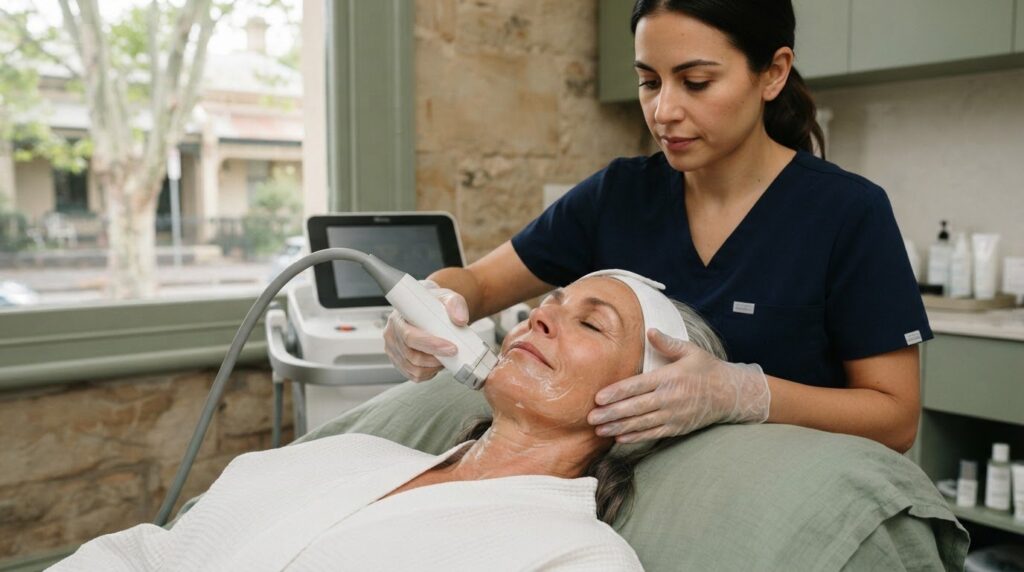
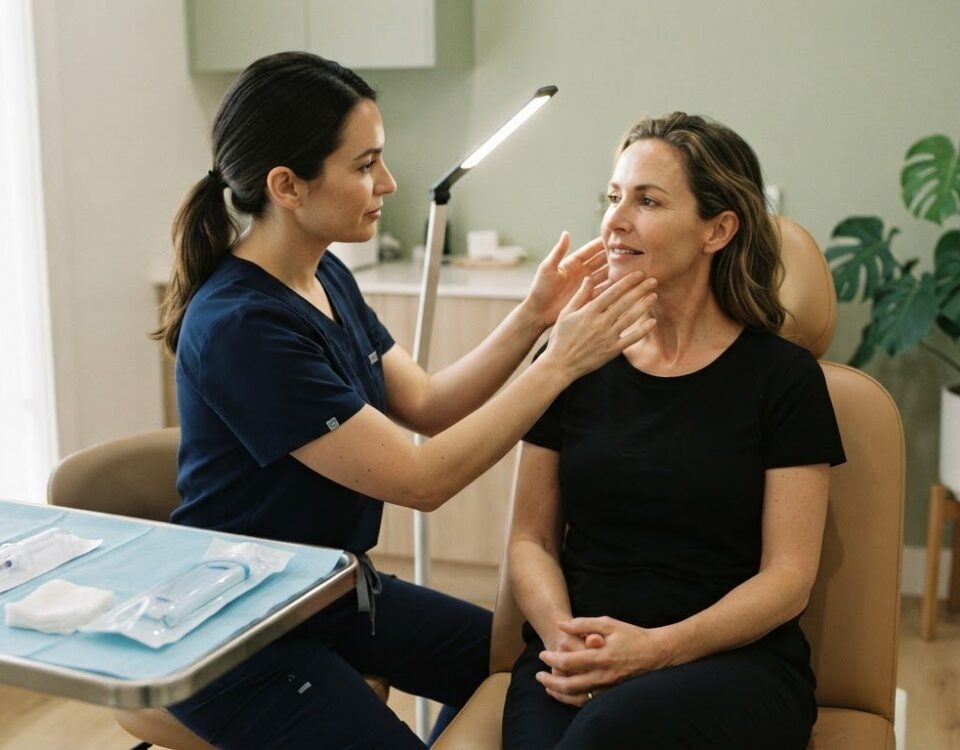
For people considering full face HIFU in Melbourne, the treatment area and plan are shaped by individual concerns and clinical assessment. “Full face” can cover different areas, so understanding the proposed scope is important when deciding whether HIFU may suit you.
It’s reasonable to understand what full-face treatment involves before deciding whether it suits your concerns. HIFU uses focused ultrasound energy to target deeper skin layers and stimulate collagen production without incisions. This guide explains how the treatment works, what shapes the treatment area and plan, and how a clinical assessment helps determine suitability and set realistic expectations for results and recovery.
Key Takeaways
- Learn how focused ultrasound targets deeper skin layers and stimulates collagen, without incisions.
- Understand how a clinical consultation assesses suitability and shapes a personalised treatment plan.
- Identify how treatment scope can differ across the face, double chin, neck and décolletage.
- Explore Skinstitute’s HIFU service and the next step for discussing treatment with the clinic.
What is HIFU Non-surgical Face Lifting?
HIFU uses focused ultrasound energy to heat selected tissue layers beneath the skin. This controlled stimulation encourages collagen production and may improve firmness and facial definition.
Treatment areas and intended results
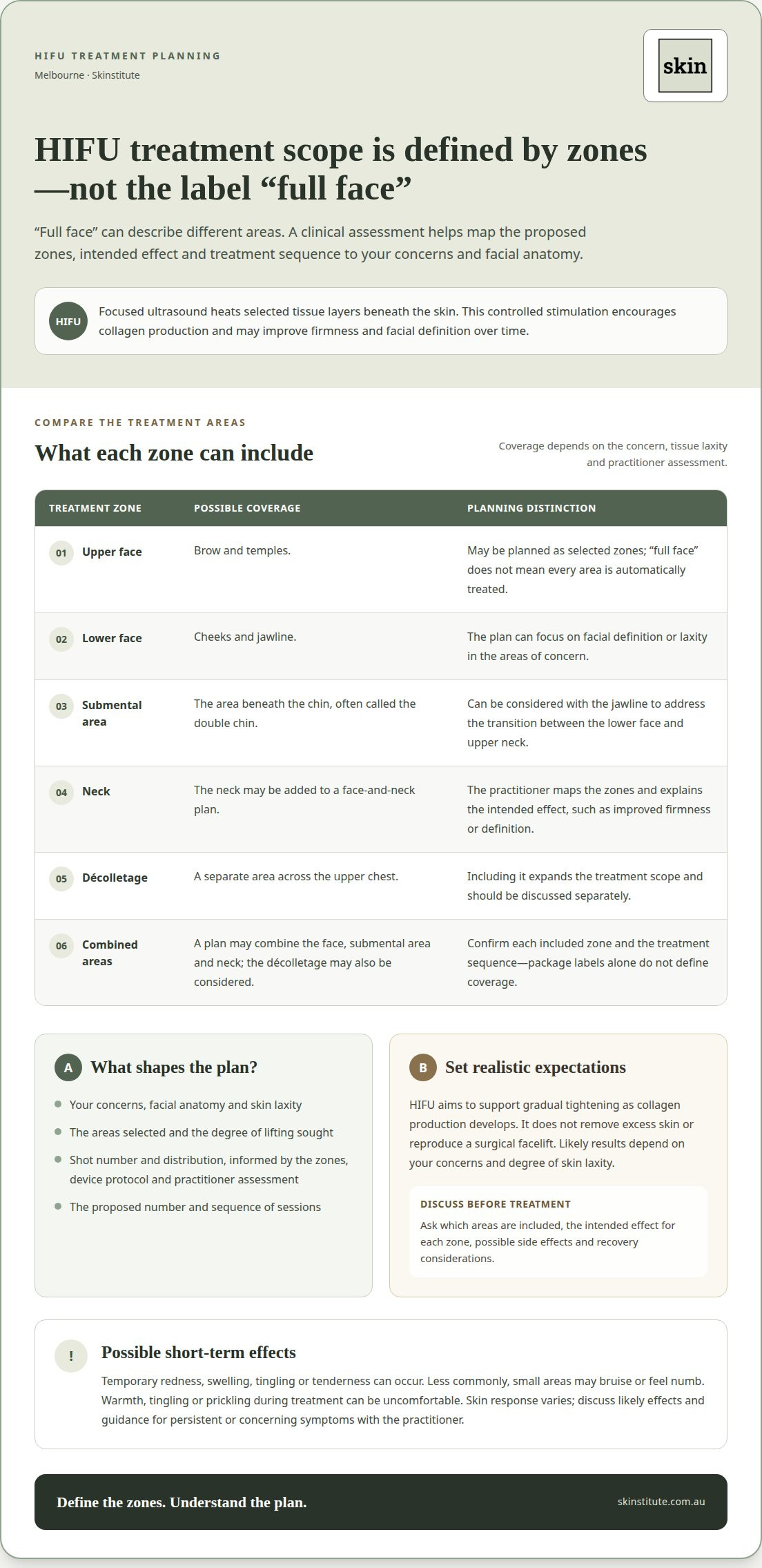
On the face, HIFU may address the brow, cheeks, jawline and area beneath the chin. Treatment may also target the neck and décolletage, depending on your concerns and clinical assessment. The intended effect is gradual tightening and lifting, rather than the immediate repositioning achieved through surgery. Fine lines and mild laxity may improve as collagen production develops. The planned areas determine where focused ultrasound is delivered and what results are realistic to expect.
Risks, side effects and downtime
Temporary redness, swelling, tingling or tenderness can occur after full-face HIFU. Less commonly, small areas may bruise or feel numb. Some people notice warmth, tingling or prickling during treatment, which can be uncomfortable. These effects generally settle without preventing ordinary activities. Skin response and sensitivity vary, so the practitioner should explain likely effects before treatment and provide guidance on persistent or concerning symptoms.
Full-face treatment scope
“Full face” describes the treatment area, not a standardised ultrasound plan. The upper face may include the brow and temples, while the lower face may include the cheeks, jawline and area beneath the chin. A plan may cover selected zones rather than every facial area. Coverage, tissue laxity and the desired degree of lifting shape the treatment approach. Adding the neck or décolletage expands the area being addressed and should be discussed separately.
Planning by treatment area
Shot count is one factor in treatment planning, as broader coverage may require more ultrasound placements. The number and distribution of shots depend on the selected zones, device protocol and practitioner’s assessment. A package may combine areas, such as the face and neck, but the included zones and treatment sequence matter more than the package label. Ask for a plan that identifies each area and explains its intended effect. This makes upper-face, lower-face and combined treatment scopes easier to distinguish.
How do I know whether HIFU is suitable for me?
HIFU suitability depends on your concerns, facial anatomy and treatment goals. A clinical consultation helps determine whether the proposed approach suits the areas you want addressed.
Clinical assessment and treatment scope
During assessment, the practitioner considers your concerns, skin laxity and desired degree of change. For example, someone focused on jawline definition may need a different plan from someone concerned about the cheeks and neck. Discussing these details helps define the treatment scope and clarify the intended outcome before you decide how to proceed.
Session planning and treatment goals
The proposed number and sequence of sessions depend on the areas being considered and your treatment goals. A consultation can establish whether a plan should focus on one zone or address several areas together. It also gives you an opportunity to discuss how progress may be assessed and whether the approach aligns with your priorities, rather than assuming everyone needs the same treatment sequence.
Comparing skin-tightening approaches
HIFU and other skin-tightening treatments use different approaches, so suitability is not determined by a treatment name alone. The practitioner considers your main concern, the area involved and the change you are seeking. For instance, someone concerned about lower-face laxity may need a different discussion from someone focused on skin texture. A clinical comparison should explain how each proposed approach relates to those goals.
Confirming your personalised plan
A consultation helps define the areas to be treated, the intended results and the treatment sequence. It should also cover relevant risks, possible side effects and recovery considerations, so you can make an informed decision. The practitioner can explain why a particular plan is appropriate for your concerns and whether HIFU is a reasonable option. For further context on HIFU assessment and planning, consider how your treatment goals relate to the proposed areas.
Full face, double chin, neck and décolletage
HIFU treatment areas can be planned separately or combined, depending on facial anatomy and the concern being addressed. Clear boundaries help define what a face-and-neck plan includes.
Full face, double chin and neck coverage
A combined plan may cover the forehead, cheeks, jawline, area beneath the chin and neck. The double chin refers to the submental area below the jaw. Including it may help address the transition between the lower face and upper neck, rather than treating each area in isolation.
The décolletage is a separate treatment area across the upper chest. It may be considered when concerns extend below the neck. A practitioner maps each proposed zone and discusses the intended effect, such as improved firmness or definition. “Hollywood face and neck rejuvenation” is a descriptive phrase, not a substitute for defining the areas included.
Full-face and neck treatment planning
Face-and-neck HIFU is planned around the tissues and zones being treated, not simply a broad label. For example, a plan might focus on the jawline and submental area, then extend to the neck. Adding the décolletage changes the treatment scope. The practitioner considers the skin and underlying tissue in each zone, then explains which areas are appropriate to include.
HIFU aims to stimulate collagen and support gradual tightening. It does not remove excess skin or reproduce a surgical facelift. Likely results depend on your concerns and degree of skin laxity. Discuss whether your aim is jawline definition, neck firmness or broader face-and-neck treatment, and clarify which areas the plan covers.
Downtime is generally limited, although temporary redness, swelling, tingling or tenderness may occur. A tailored assessment can clarify treatment scope and expected recovery. Discuss face and neck HIFU treatment as a next step.
Skinstitute: High Intensity Focused Ultrasound (HIFU)
Skinstitute provides High Intensity Focused Ultrasound (HIFU) for people considering non-surgical facial lifting and skin tightening. The first step is a face-to-face consultation with a nurse and doctor, where your concerns and treatment goals can be discussed before a plan is developed.
The consultation connects the area you want treated with an appropriate treatment scope. For example, you may be concerned about jawline definition, the area beneath the chin, facial laxity or changes across the neck. The practitioner can assess these concerns and discuss which areas may be included, what HIFU is intended to address, and whether the treatment aligns with your expectations.
A personalised plan matters because “full face” can describe different coverage. One person may focus on the lower face, while another may want the plan to include the neck. Skinstitute tailors treatment plans to each person following a face-to-face consultation. This discussion also helps you understand the proposed areas and treatment process before deciding how to proceed.
HIFU uses focused ultrasound energy to target deeper tissue layers and stimulate collagen production. It is a non-surgical approach, not a substitute for surgery, and results develop over time. The consultation should include a clear discussion of the intended outcome and treatment limits, alongside possible temporary effects such as redness, swelling, tingling or tenderness. This helps you make an informed decision based on your concerns, rather than a general description of facial rejuvenation.
Skinstitute also provides other medical aesthetic treatments, including PDO Thread Lifting, Fractional CO2 and prescription injectables. These are distinct services, not automatic additions to a HIFU plan. If your main concern is skin laxity or facial definition, discuss HIFU specifically and let the consultation establish whether its intended scope matches your goals. You can also use the discussion to clarify which areas are being considered and what the proposed plan aims to address.
Book a FREE consultation with Skinstitute to discuss your HIFU concerns and a personalised treatment plan.
Take the next step with a personalised plan
Deciding whether to proceed begins with identifying the changes that matter most to you. A clinical discussion can connect those priorities with a suitable approach and clarify what you would like to address before you decide.
Skinstitute offers PDO Thread Lifting, Fractional CO2 and prescription injectables as distinct treatment options. Their relevance depends on your concerns, so a personalised discussion can help keep the focus on the approach that best fits your goals.
To discuss your HIFU goals and possible next steps, contact Skinstitute about HIFU. A considered conversation can help you move forward with greater clarity.
Frequently Asked Questions
How does it work?
HIFU directs focused ultrasound energy to selected depths beneath the skin, where heat stimulates collagen and elastin production. The aim is to support gradual tissue firmness while leaving the skin surface intact. For example, a treatment plan can target the lower face without including the neck. The practitioner maps the areas and explains the intended effect for each one before treatment.
How many sessions do I need?
The number of HIFU sessions depends on the treatment plan and areas being addressed. HIFU results are typically seen after one session, although the appropriate approach can differ between people. During consultation, discuss whether your plan covers one area or several, such as the jawline and neck. The practitioner can explain the proposed sequence and how progress will be assessed.
How much does HIFU cost in Melbourne?
The cost of full face HIFU in Melbourne depends on the areas included and the treatment plan. A face-only session differs in scope from a plan that also treats the neck or décolletage. Skinstitute’s consultation can clarify which treatment area suits your concerns. Discuss the proposed scope and treatment details so you understand what the plan covers before deciding.
Is this treatment painful?
Some people feel warmth, tingling or prickling during HIFU, and the sensation may be uncomfortable. The experience can vary across treatment areas and between individuals. For example, sensations around the jawline may feel different from those on the cheeks. Discuss comfort concerns before your session, and tell the practitioner if the sensation becomes difficult to tolerate during treatment.
Is cheaper HIFU always better value?
No. A lower fee does not show whether a plan covers the areas you want treated or matches your goals. Compare the stated scope, such as face-only treatment versus face and neck, rather than relying on a package name alone. Clarify which areas are included and what the treatment is intended to address. These details make comparisons more useful than the headline price.
What should I expect during the treatment?
Expect the practitioner to position the treatment handpiece against the planned areas and deliver focused ultrasound energy. You may notice warmth, tingling or prickling as treatment progresses. The practitioner works across the agreed zones, such as the cheeks and jawline, and can discuss sensations during the session. Afterward, temporary redness, swelling, tingling or tenderness may occur, so follow the aftercare guidance provided.